How to Draw Advanced Manpu (Emotion Symbols) & Scared Faces: A Step-by-Step Guide by Japanese Pro Artists
If your characters' feelings are hard to read, or your scared faces just look surprised, this guide walks through a real Anime Art Academy lesson by a Japanese pro: how to combine manpu (emotion symbols) with the face, and fear from a nervous flinch to real terror.
 Real lesson material
The five stages at a glance
 01
 02
 03
 04
 05
Step 01 · Symbols add meaning
What do manpu (emotion symbols) do in an anime expression?
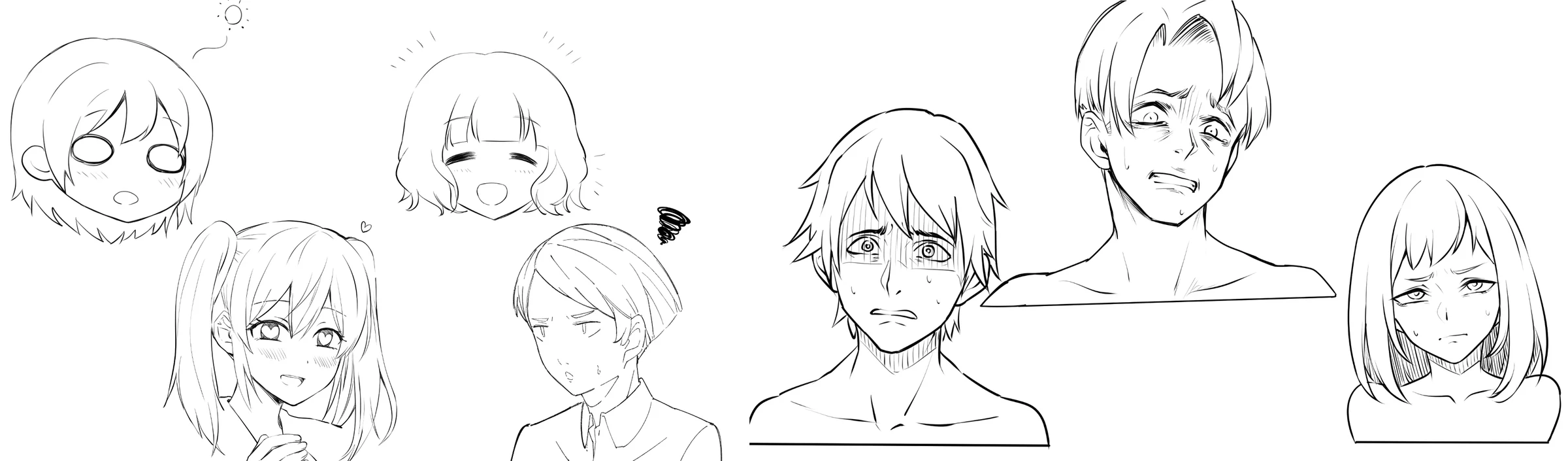
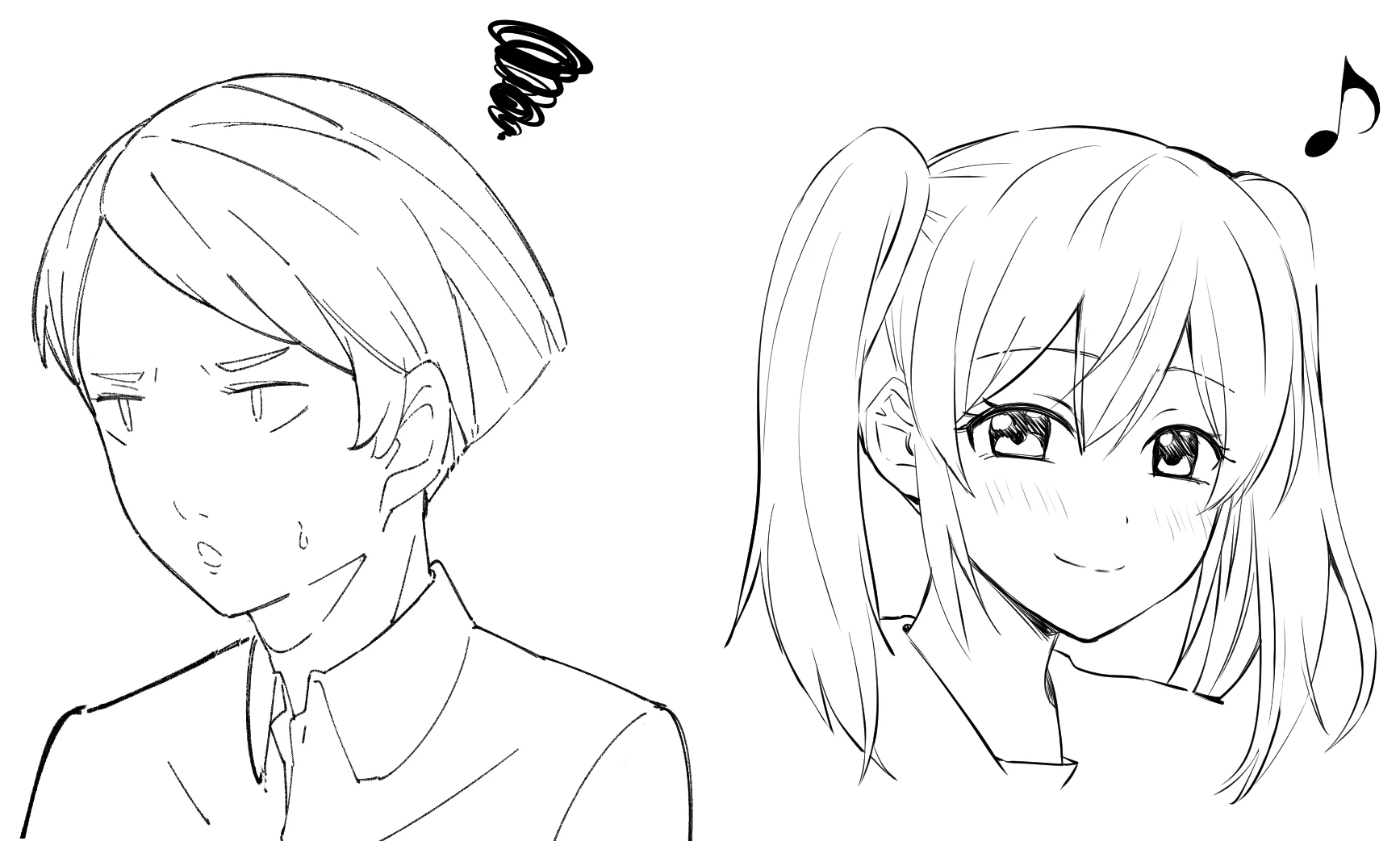
They tell the viewer exactly what a face means. The same kind of face reads as troubled with a black swirl, or happy with a music note.In the first image, two faces get one symbol each. On the left, a black swirl: now you can read that he has something troubling him. On the right, a music note: now she looks like she's in a good enough mood to hum a tune. Adding a symbol to a face gives the expression a clearer meaning.
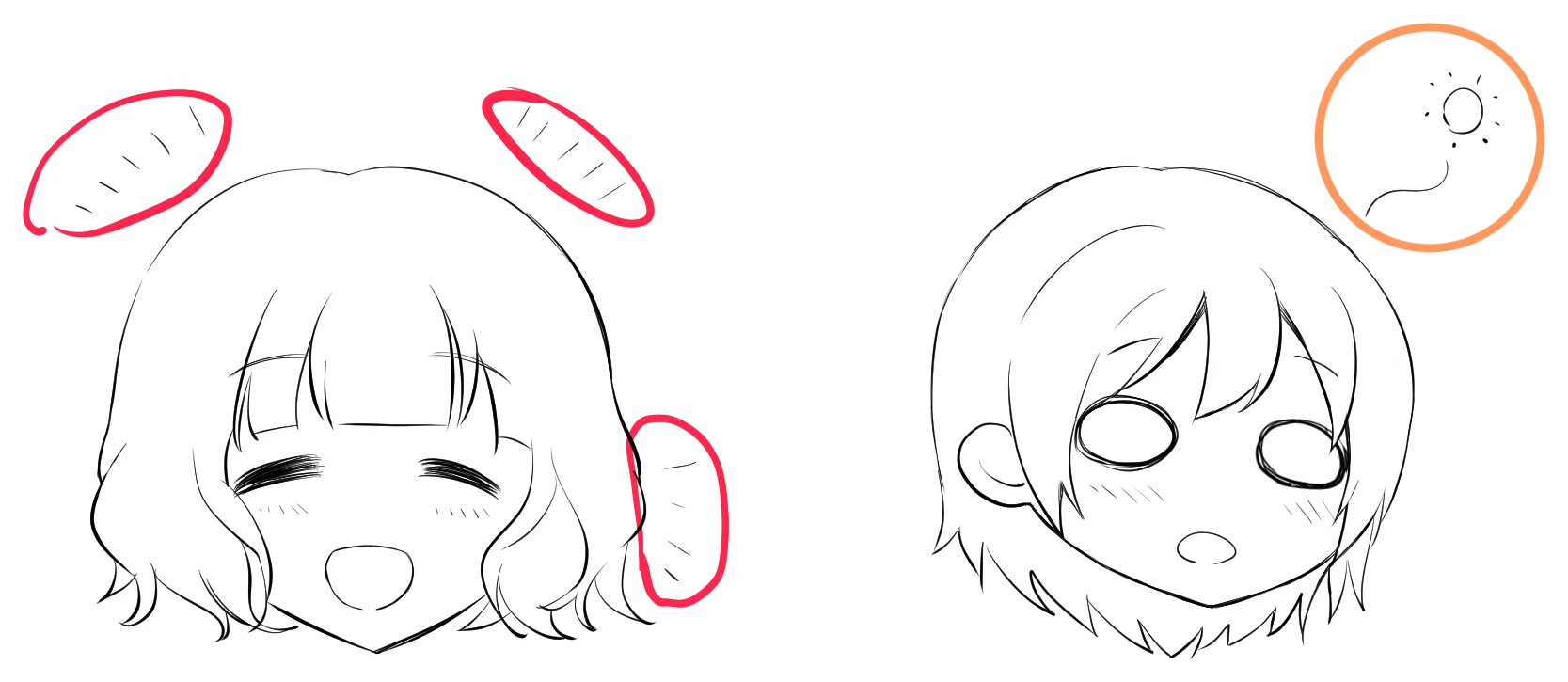
Symbols work on deformed, chibi-style faces too. In the second image, the orange circle marks a symbol that shows the character spacing out with a blank, dazed look. In red, radial lines around a smiling face show that the character keeps on laughing.
Real lesson material
 Real lesson material
Step 02 · Sparkles, yawns and flowers
How do sparkles, sleepy bubbles and flowers change a face?
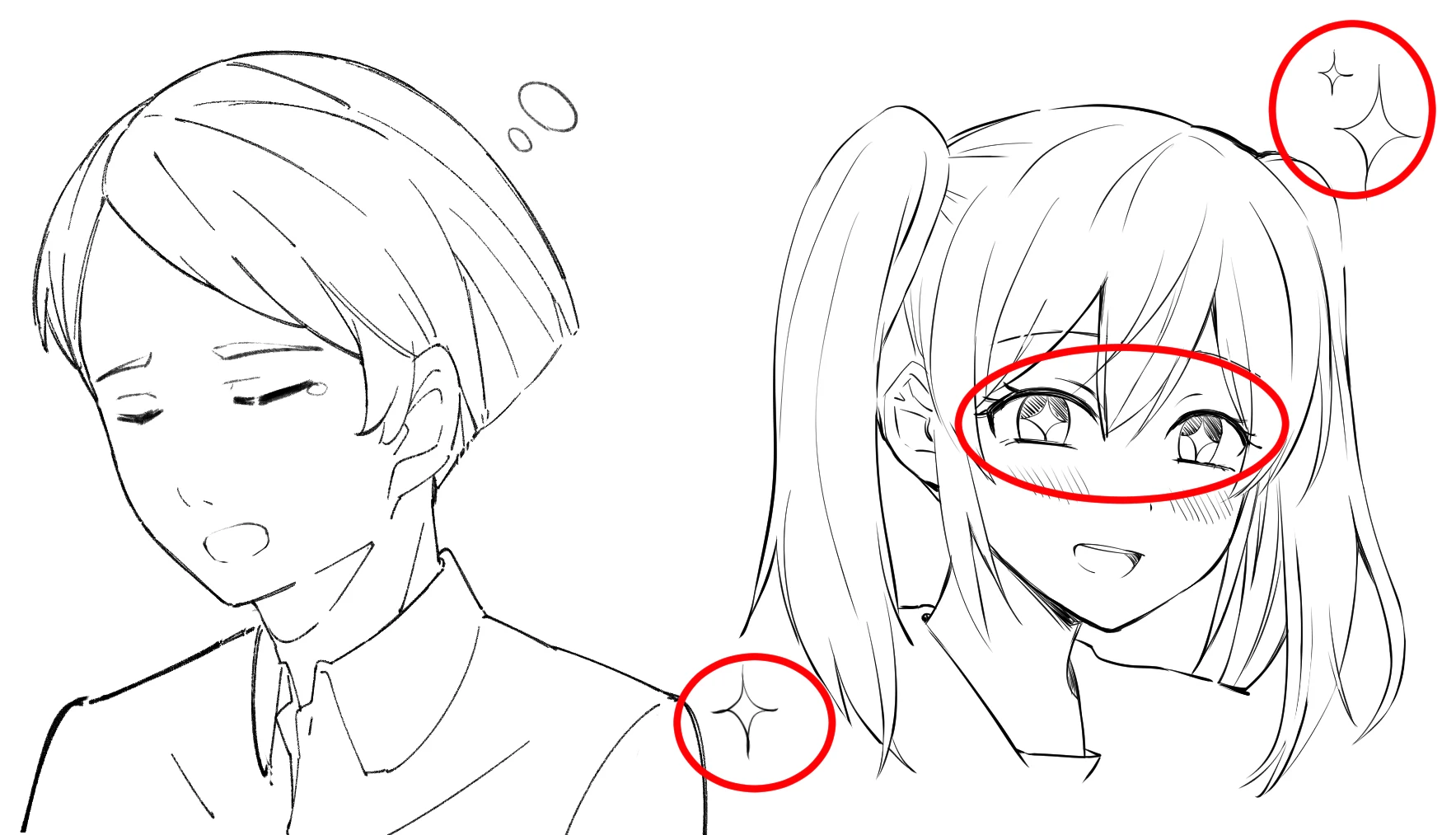
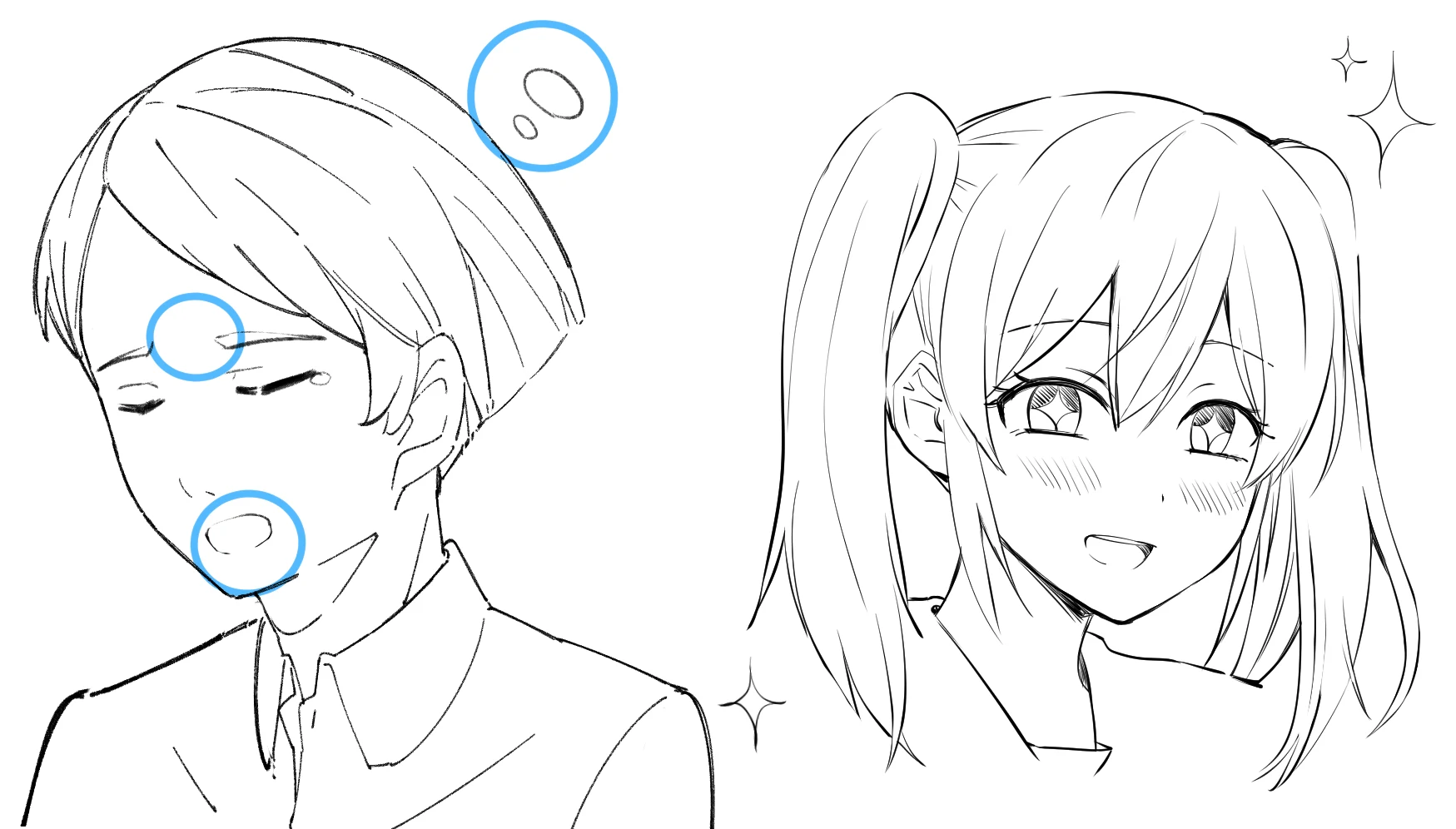
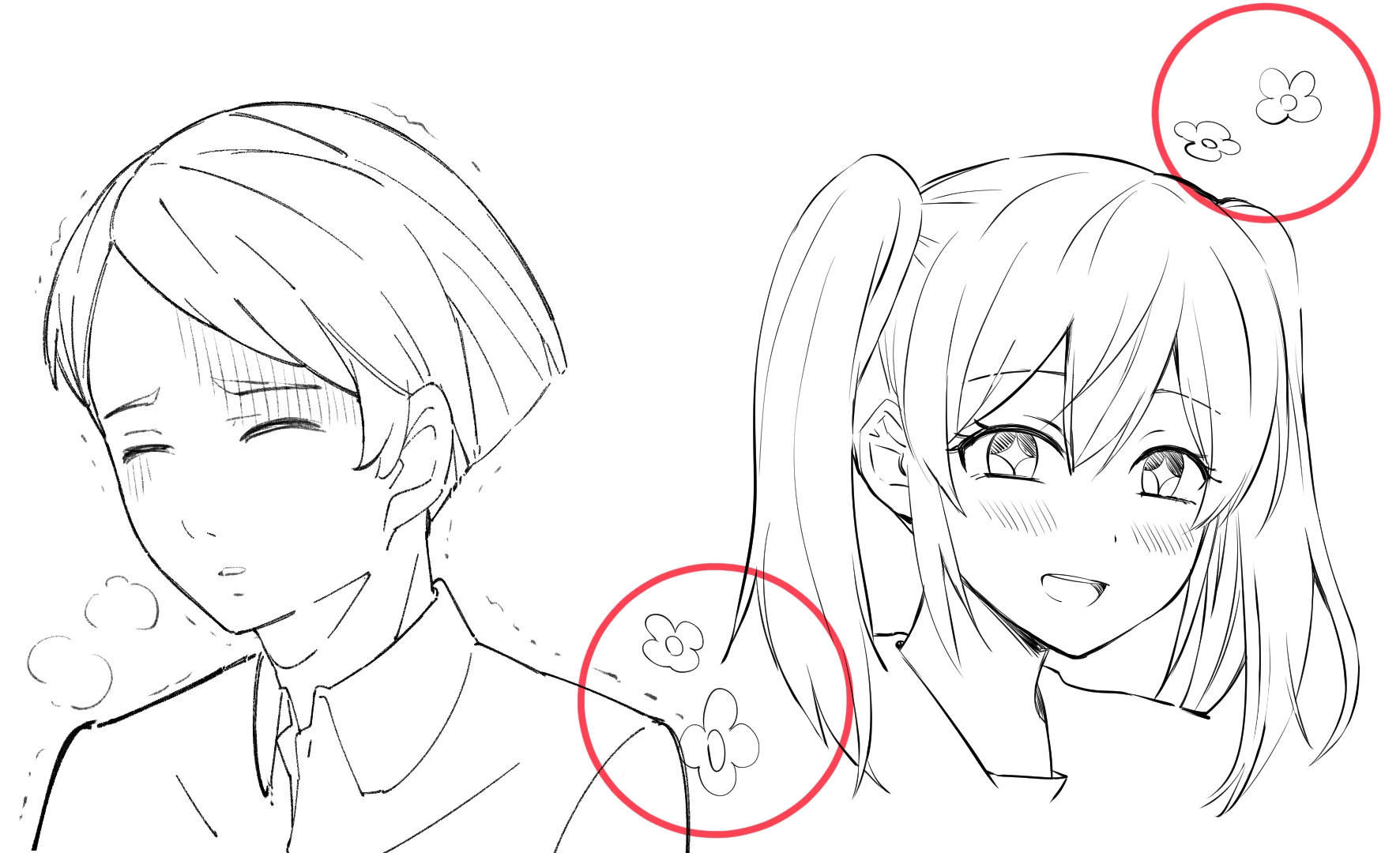
Sparkles in the eyes and around the face show admiration, a small bubble shows sleepiness, and flowers turn the mood happy and upbeat.In the first image, the boy on the left yawns sleepily and the girl on the right gazes at something she admires. In the red circles, sparkles in her eyes and around her face show admiration. A blush and a smiling mouth make the feeling stronger. In the second image, in the blue circles, the boy's inner brows pull together and his mouth opens wide in a yawn. The small bubble at the upper right tells the viewer he's sleepy.
In the third image, the girl from before has flowers drawn around her (red circles). Before, the feeling read as admiration. With flowers, it reads as something good happened, or she's simply in a great mood. Pure good vibes.
Real lesson material
 Real lesson material
 Real lesson material
Step 03 · Cold, hearts and blushing
How do you show a character who is cold, in love or embarrassed?
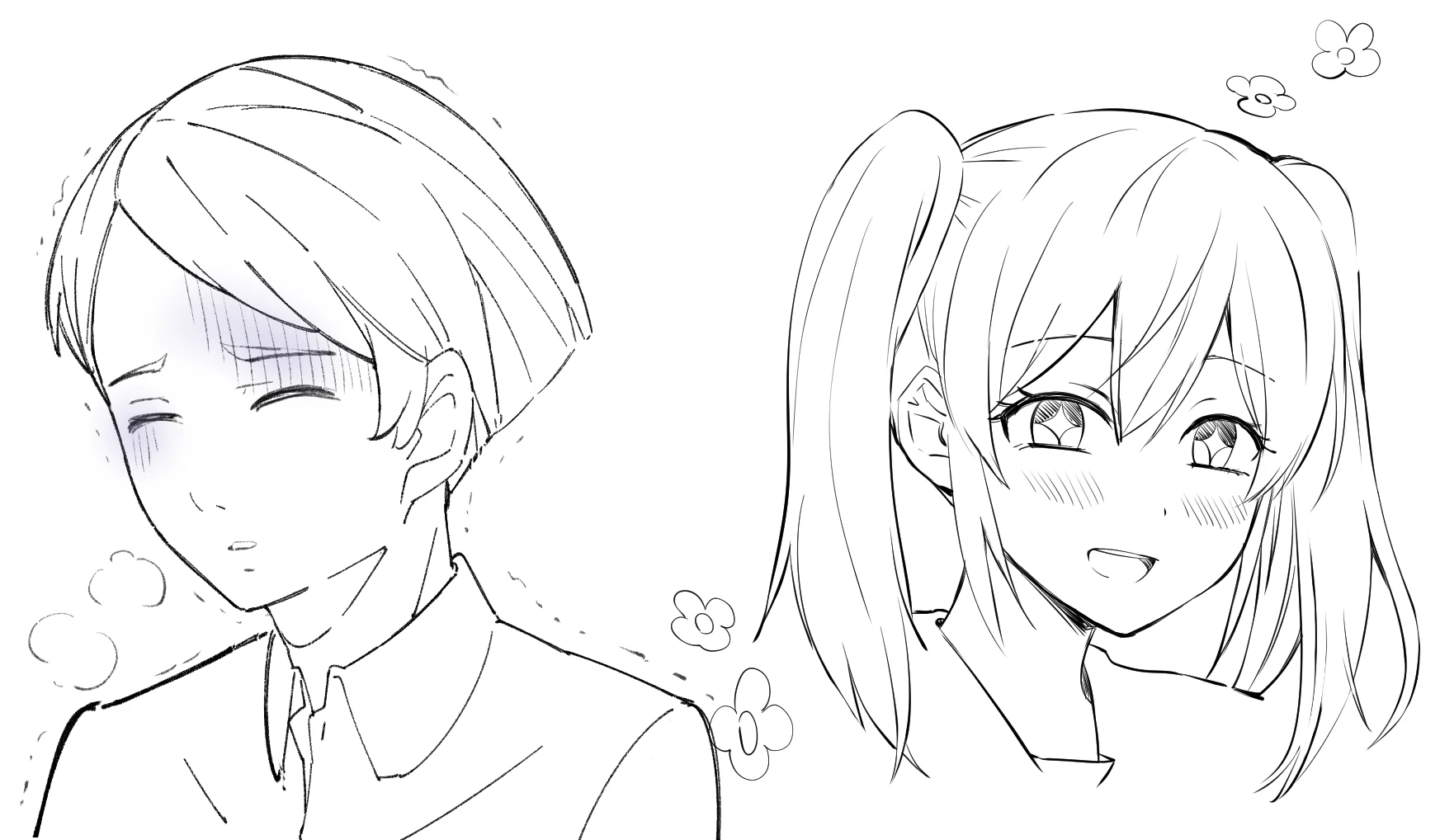
Add shiver marks, puffs of breath and pale vertical lines for cold, hearts and clasped hands for love, and a red face with flying sweat for embarrassment.In the first image, the boy has shiver marks and puffs of breath drawn around him, which show he's shaking from the cold. The vertical lines on his face add one more point: he's turned pale.
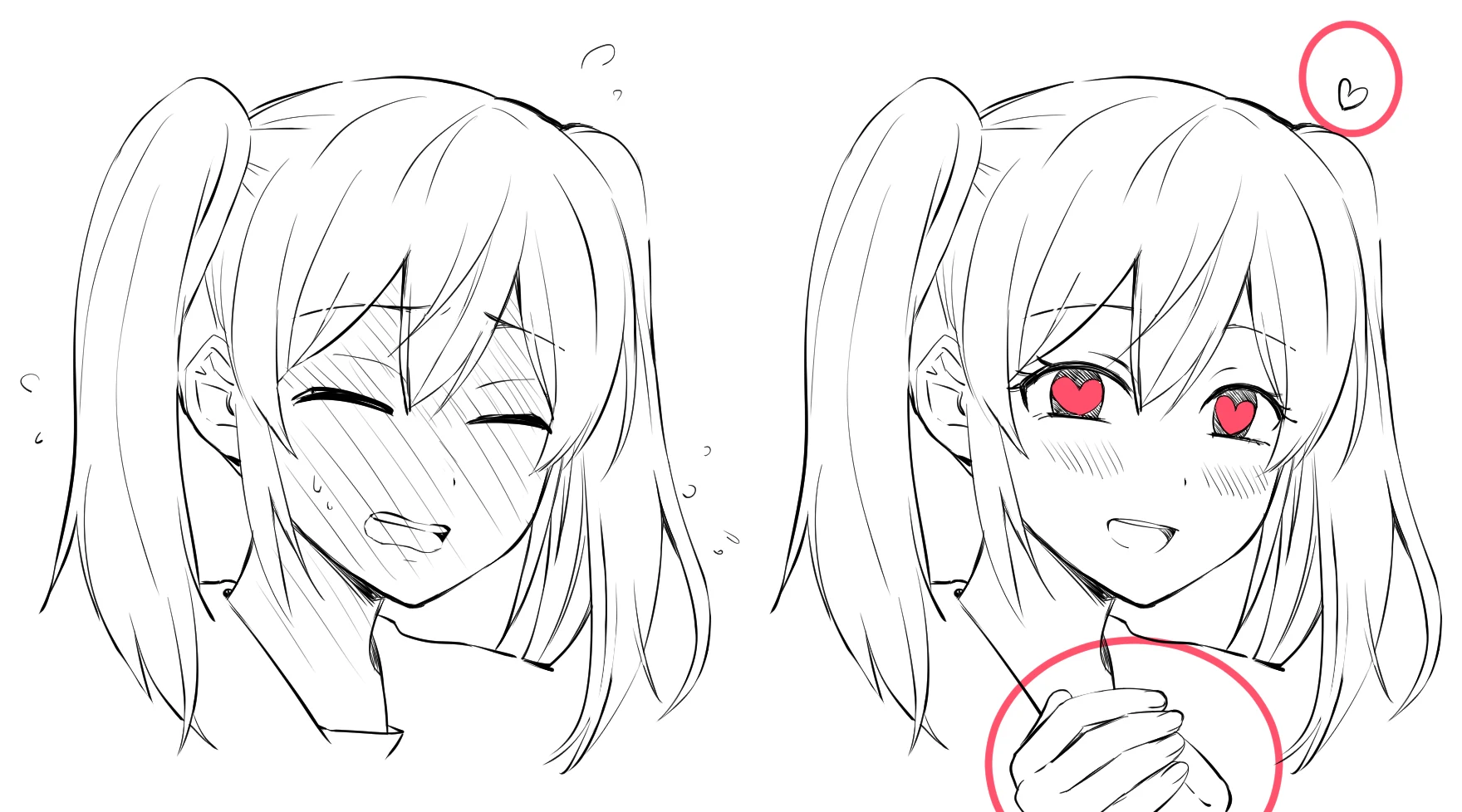
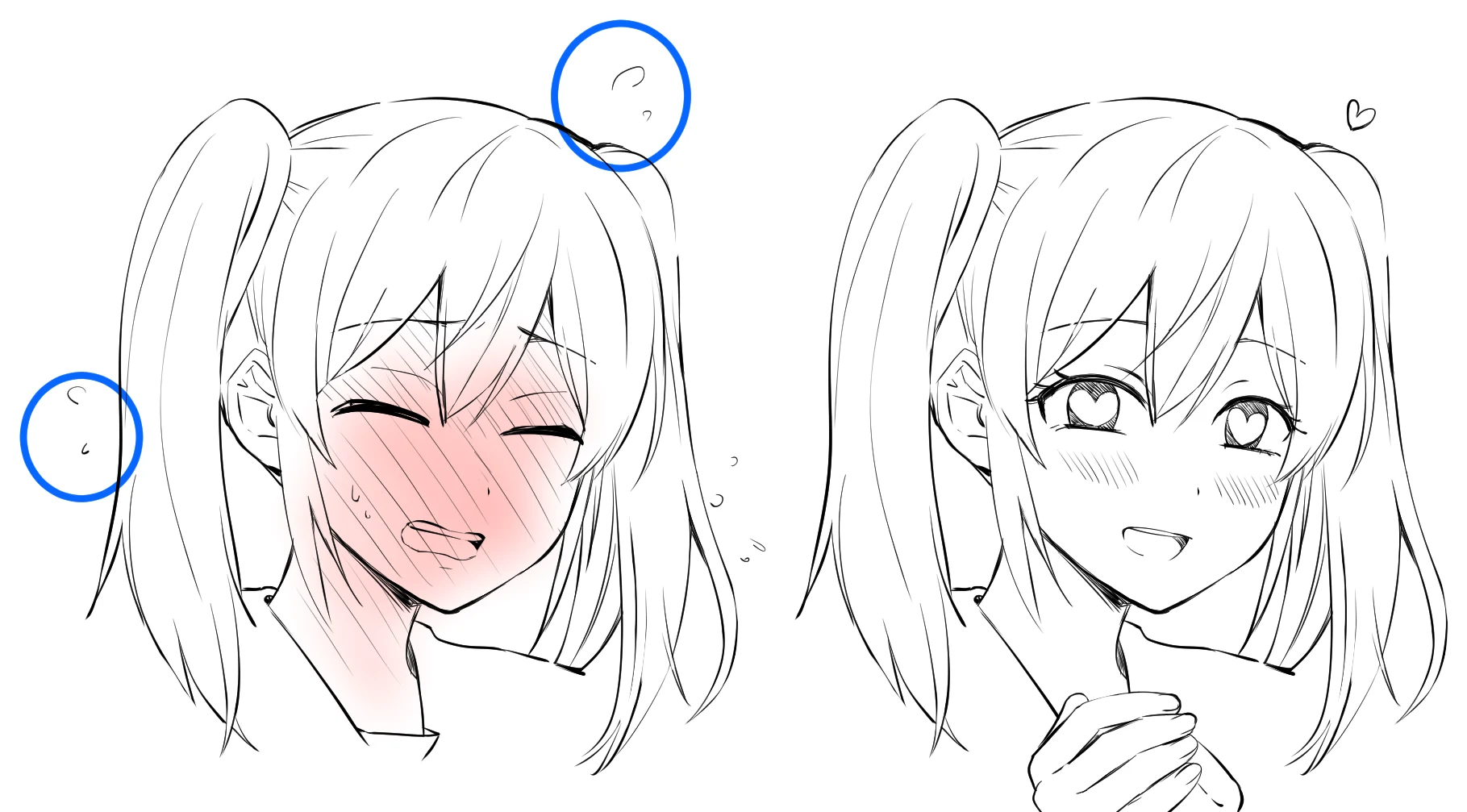
In the second image, the girl on the right has hearts in her eyes and around her face (red circles). She's looking at something she loves, or at someone she admires. Clasping her hands in front of her face makes the feeling even stronger. In the third image, the girl on the left blushes across her whole face, and sweat drops fly off her (blue circles). She's shy or embarrassed. Make the ears and neck bright red too, and the embarrassment reads even stronger.
 Real lesson material
 Real lesson material
Step 04 · The fear muscles
Which face muscles move in a scared face?
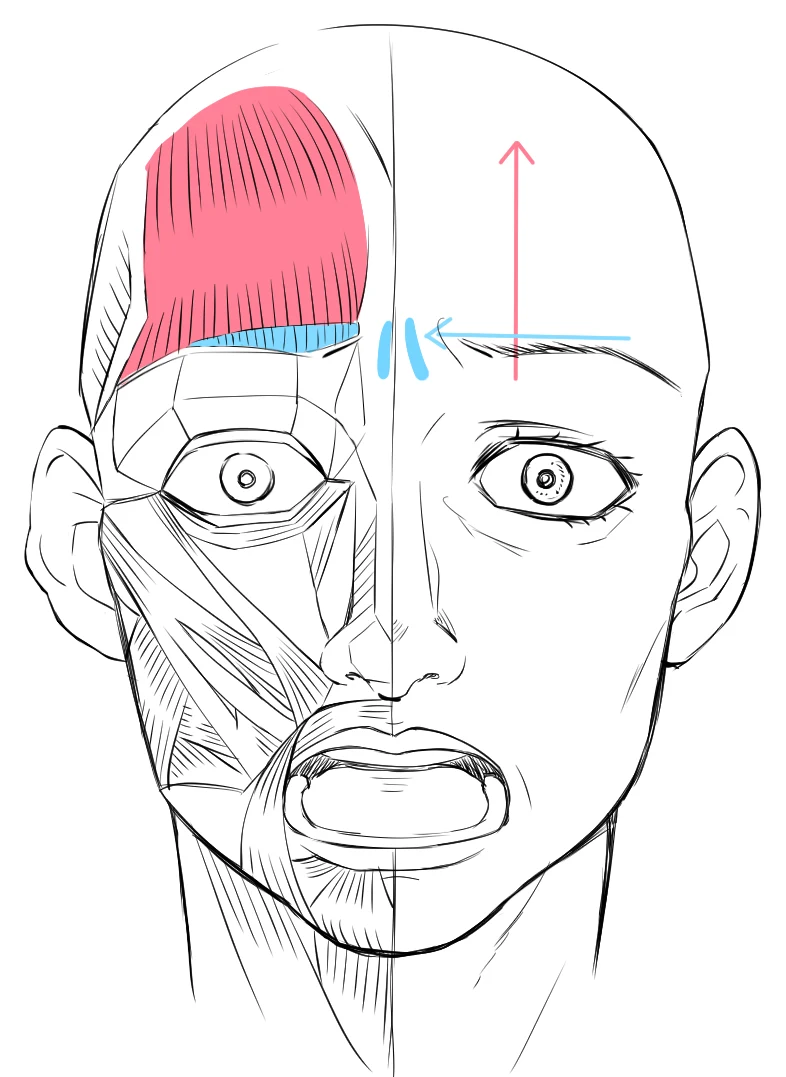
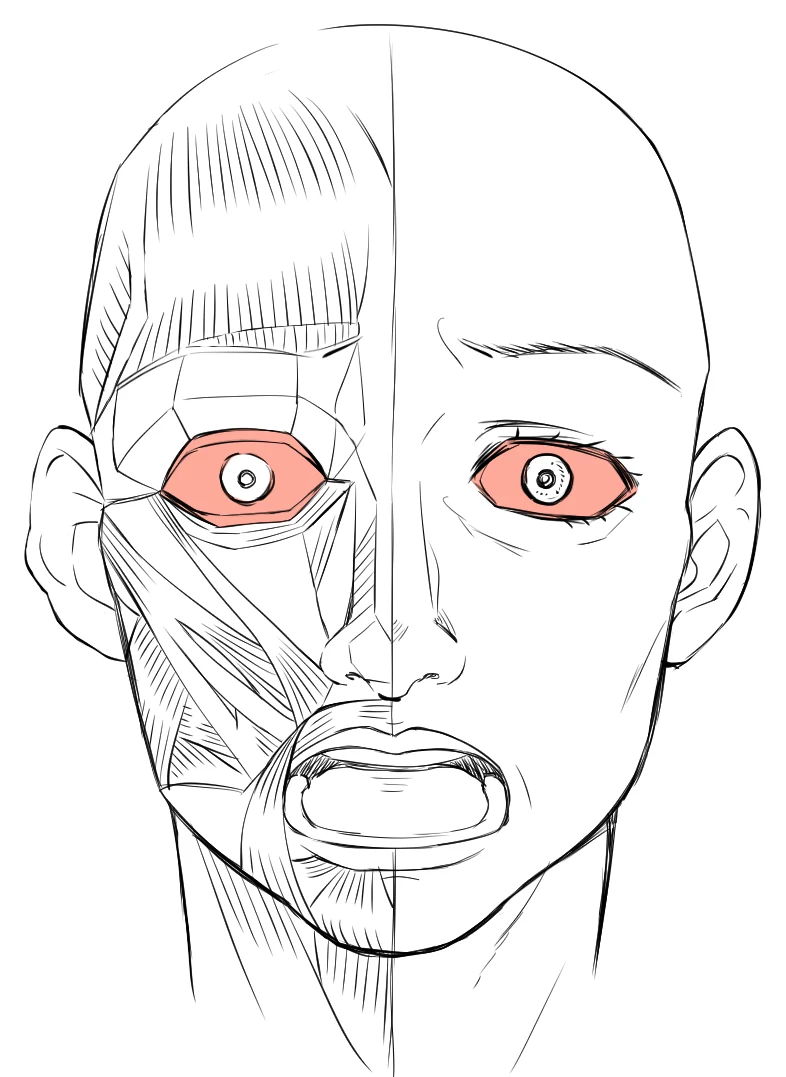
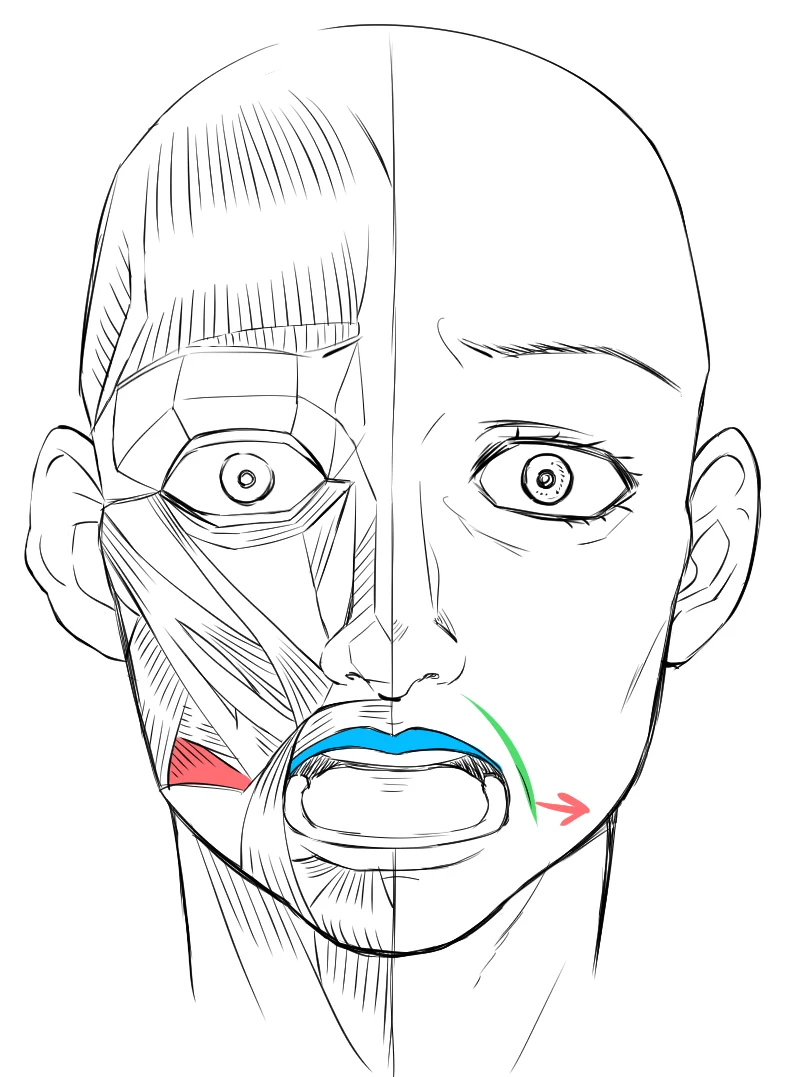
The frontalis lifts the brows while the corrugator pulls them together, the eyes open wide, and the risorius stretches the mouth sideways.The lesson also covers fear. In this lesson image, one half of the face is drawn as skin and the other half as muscle. In red, the frontalis pulls the brows up. At the same time, the corrugator contracts, the inner ends of the brows draw together, and vertical wrinkles form between them (blue). In the second image, the eyes open wide. That's the most important point for drawing fear.
At the mouth, in the third image, the risorius pulls the lower lip out to the sides (red arrow). The upper lip relaxes (blue). Because the mouth stretches wide sideways, wrinkles form, shown by the green line.
Real lesson material
 Real lesson material
 Real lesson material
Step 05 · Fear
How do you draw a scared anime face?
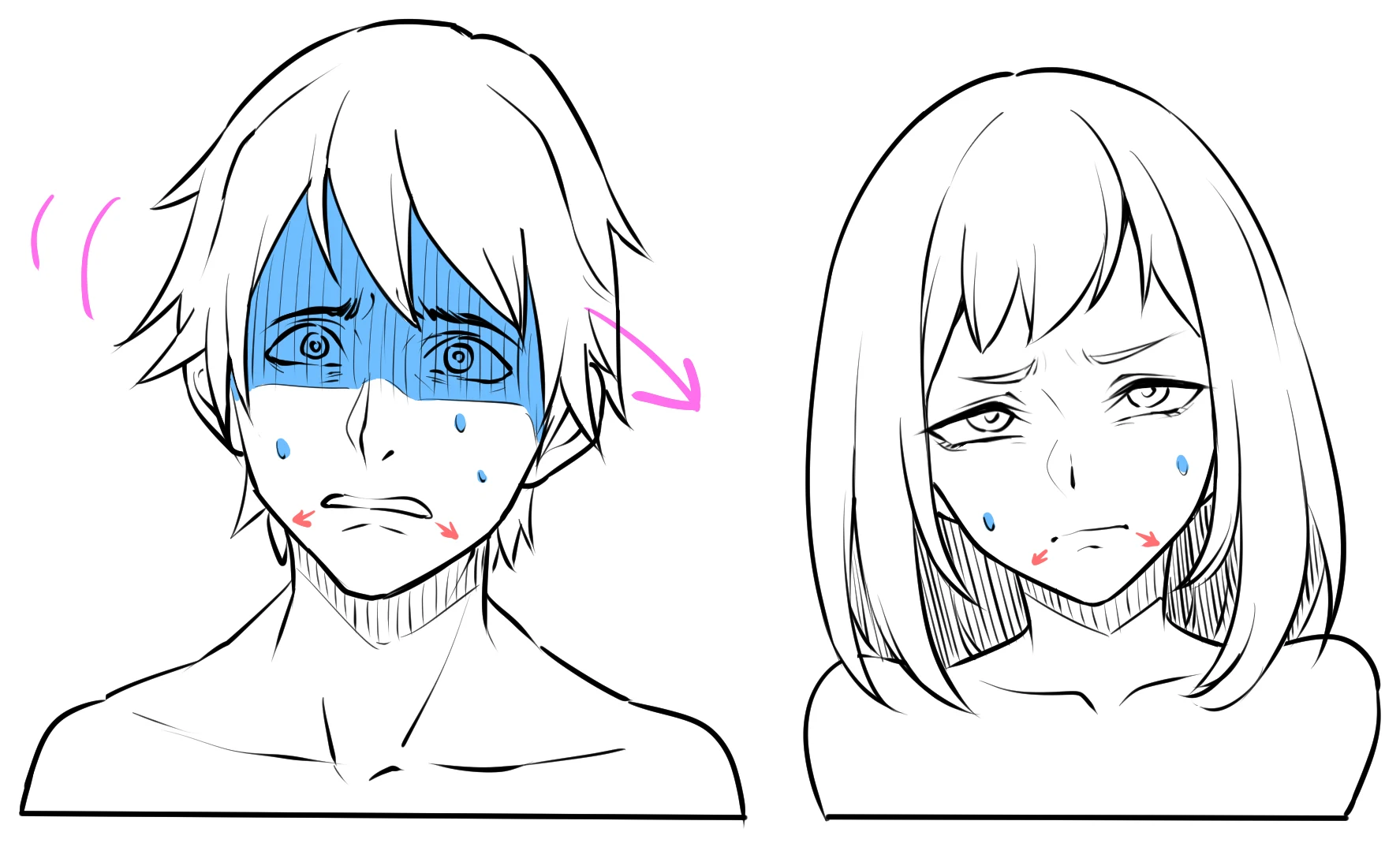
Raise the brows and pull them together, open the eyes wide, pull the mouth corners out and down, then add a pale face, sweat and a body pulling back.In the first image, the girl on the right shows a little fear and the boy on the left shows more. Both raise their brows and draw them together, and both open their eyes wide. The girl is looking up, but her lower eyelids are pulled down, so you can tell her eyes are wide open. The red arrows show the mouth corners spreading and dropping. In blue, a pale face and sweat show the fear. The boy pulls his head back, as if trying to get away from what scares him (pink).
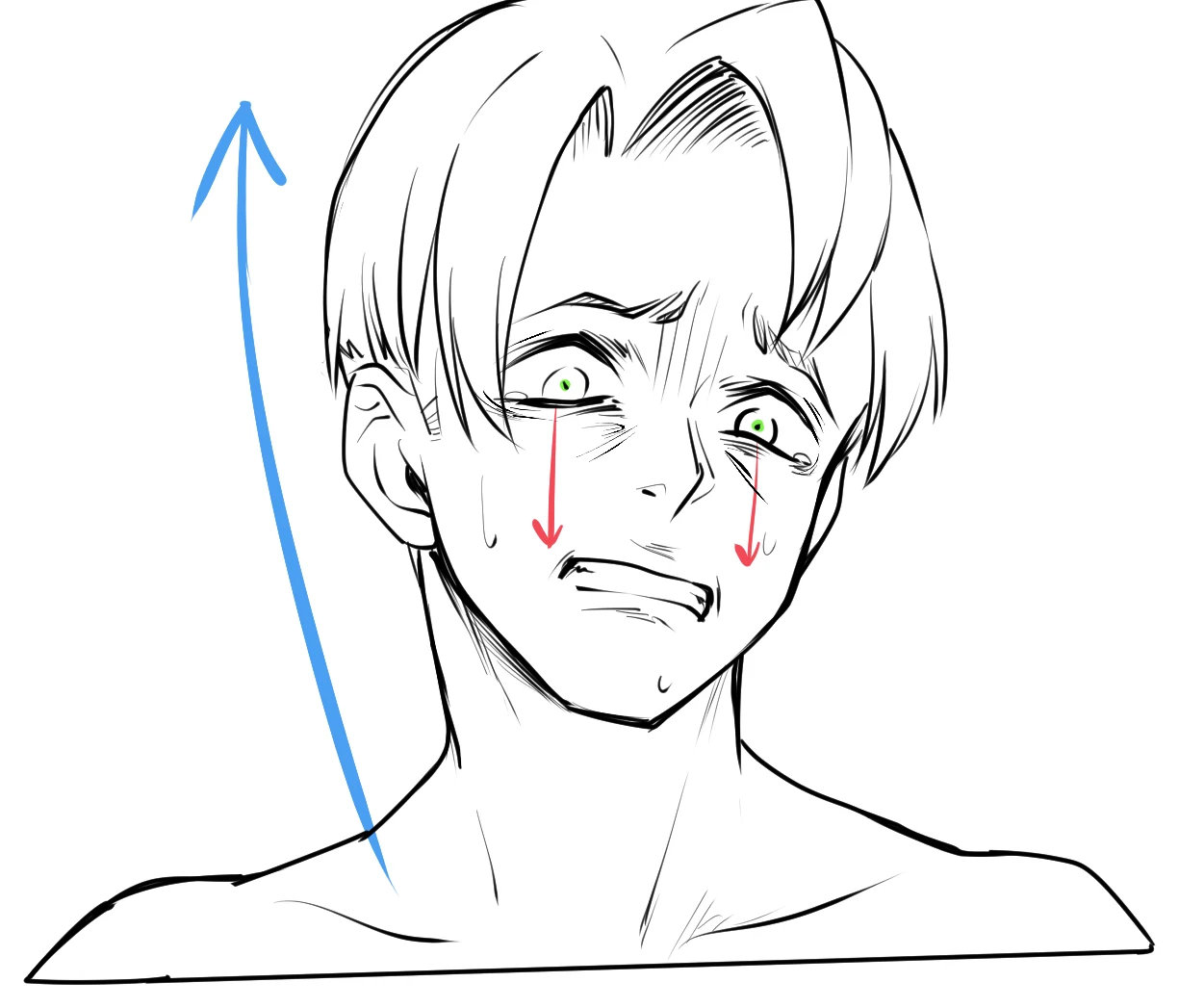
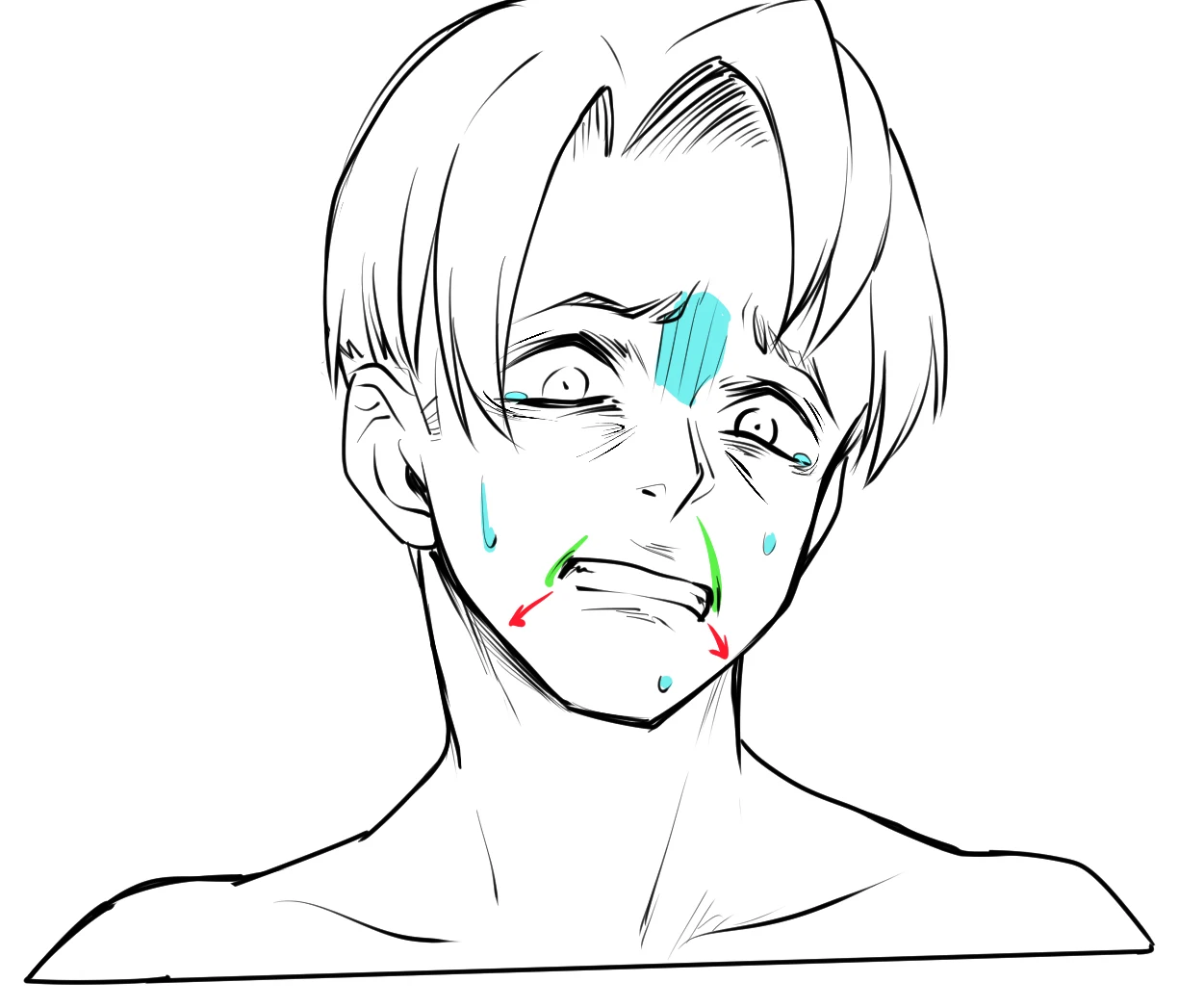
The second image shows stronger fear. This is horror-movie territory. The brows go way up with tension at the inner ends, and the eyes open wide. He clenches his teeth while the mouth corners drop (red arrows), and because the mouth is stretched sideways, the wrinkles are deep (green). Sweat and vertical lines make his face look pale and sick (light blue). Both are manpu: Sweat drops show cold sweat from fear, and vertical lines over the face, like the Vertical "gaaaan!" lines, show the color draining out of it. The stronger the fear, the more of them you can add. In the third image, his eyes look down while his face and body pull back along the blue arrow. What he fears is right where he's looking, and his body is trying to escape.
 Real lesson material
 Real lesson material
Same fear, different strength
Both are scared. A little fear shows in raised brows, wide eyes and a tense mouth. Strong fear clenches the teeth, deepens the wrinkles and turns the face pale.
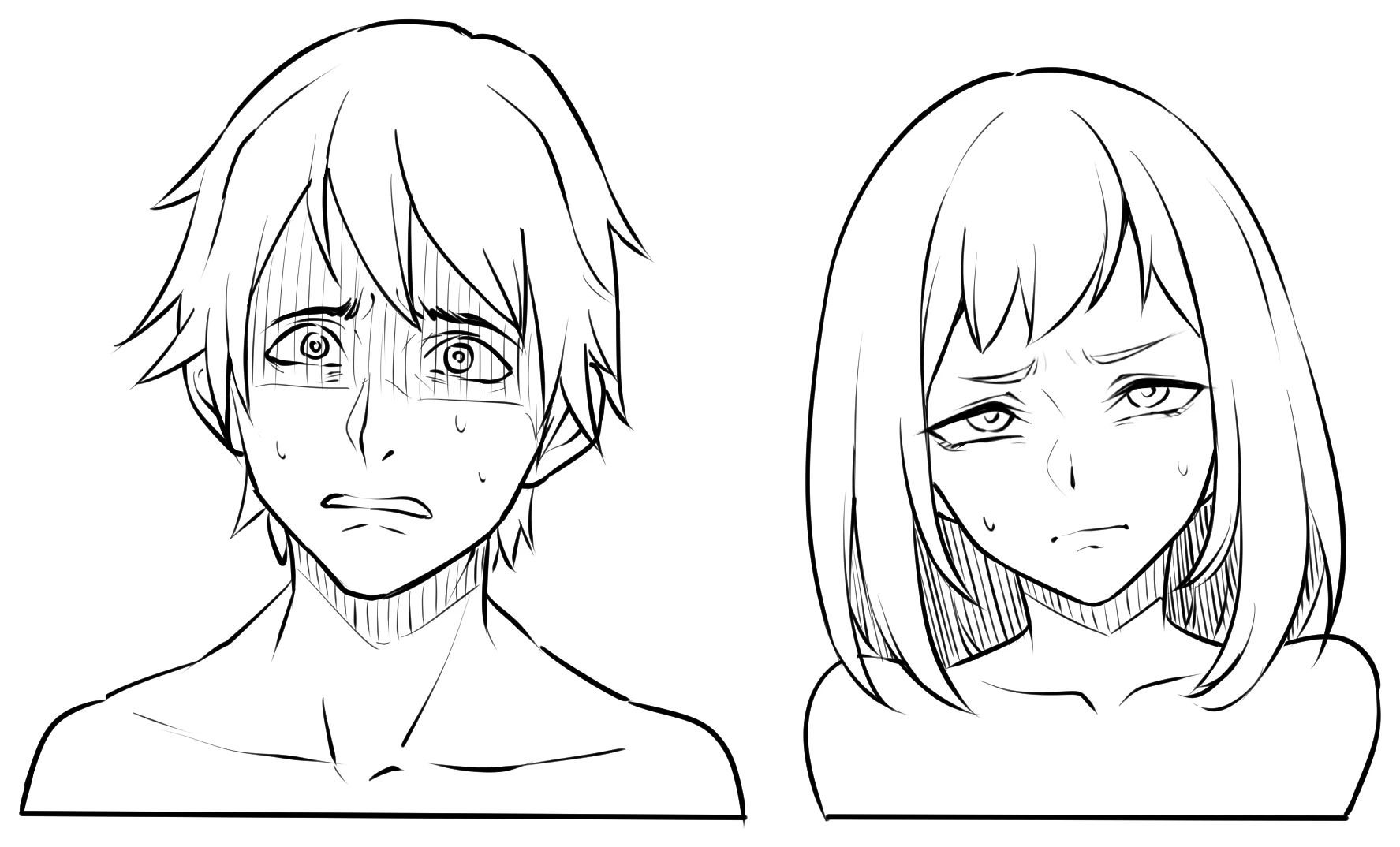
Fear: raised brows, wide eyes, a tense mouth.
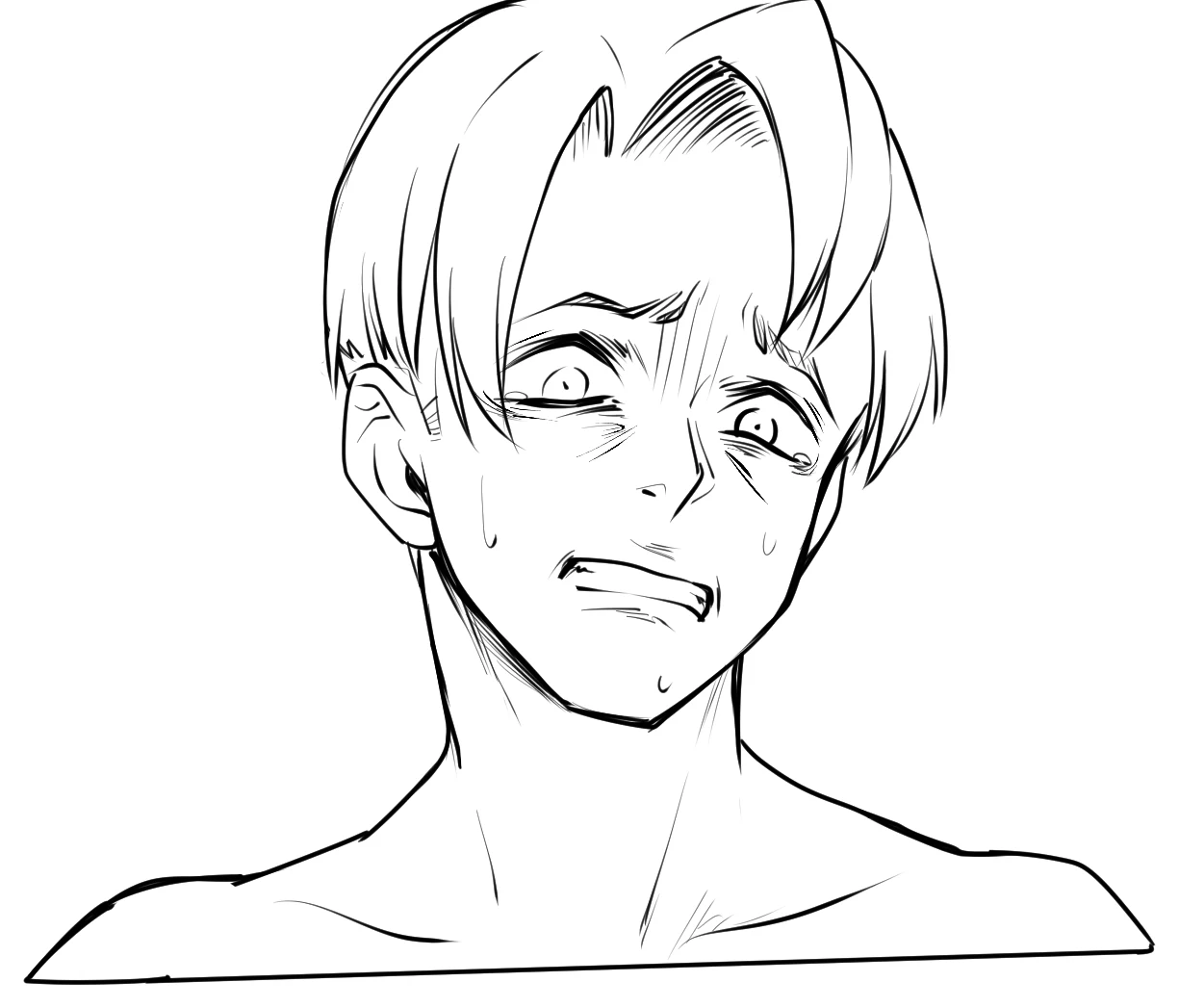
Strong fear: clenched teeth, deep wrinkles, a pale face.
Where people usually get stuck
My character's feeling is hard to read.
Add one symbol that names it: a black swirl for trouble, a music note for a good mood, sparkles for admiration, hearts for love, flowers for a happy mood.
My embarrassed face just looks happy.
Blush the whole face, not only the cheeks, and add flying sweat drops. Coloring the ears and neck red makes it read as embarrassment.
My scared face looks surprised.
Surprise lifts the brows. Fear lifts them and pulls the inner ends together at the same time. Add a mouth stretched sideways, a pale face and a body pulling back.
Advanced manpu and scared faces FAQ
What do the manpu (emotion symbols) around anime characters mean?
They spell out the feeling. In the lesson, a black swirl means the character is troubled, a music note means a good mood, sparkles mean admiration, a small bubble means sleepiness, flowers mean something good happened, hearts mean love or admiration, and shiver marks with puffs of breath mean the character is cold.
How do you draw a scared anime face?
Raise the brows with the frontalis while the corrugator pulls the inner ends together, open the eyes wide, and let the risorius stretch the mouth sideways. For stronger fear, add a pale face, sweat, clenched teeth and a body pulling back from what scares the character.
How do you draw an embarrassed anime character?
Blush the whole face and add sweat drops flying off the character. To push it further, make the ears and neck bright red as well.
How do I get feedback on my facial expression drawings?
When you join an Anime Art Academy course, a professional Japanese artist gives you personal advice and draws red-line corrections directly on your drawing. There is no limit on how many times you can submit. The only rule: post one drawing at a time, and wait for your teacher's reply before posting the next.