How to Draw Anime Backgrounds 2 (One-Point Perspective): A Step-by-Step Guide by Japanese Pro Artists
It's the simplest kind of perspective, and two-point and three-point are built on the same way of drawing. Below you'll set up the eye level and draw a box out of empty space, one line at a time.
 Real lesson image
The five stages at a glance
 01
 02
 03
 04
 05
Step 01 · What one-point perspective is
What is one-point perspective?
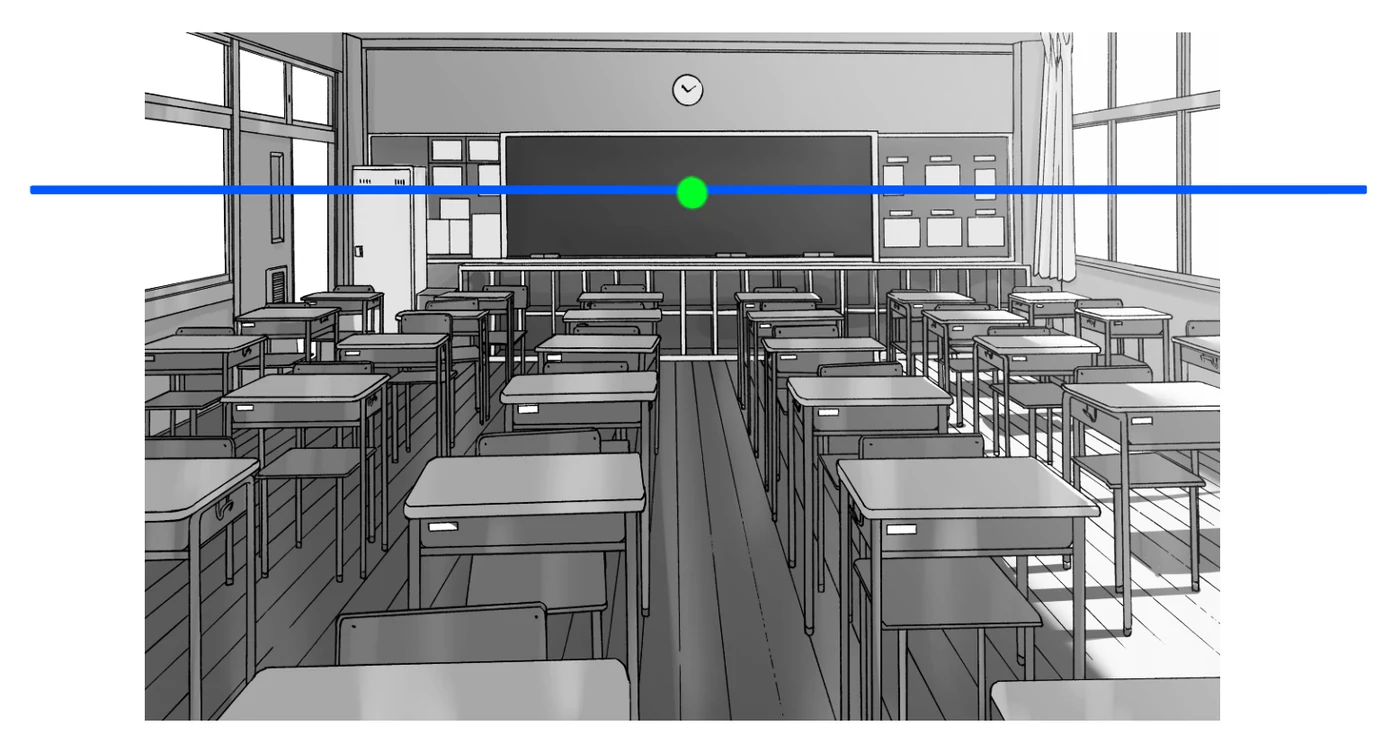
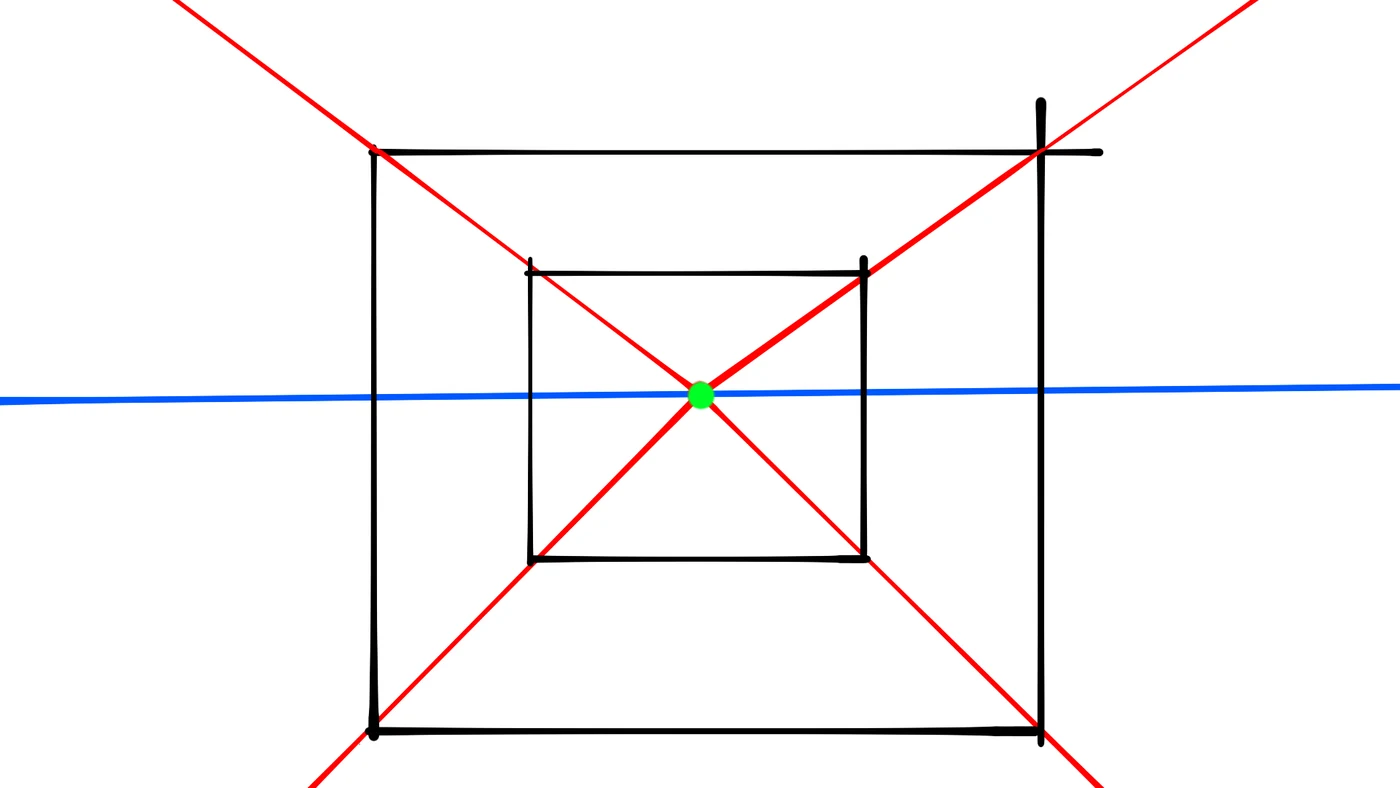
One-point perspective is the simplest kind of perspective: there is one vanishing point, and the viewer's line of sight runs straight toward it.The vanishing point sits on the horizon line, and the horizon line is at the same height as the viewer's eyes. In the classroom below, the green dot is that one point, and the lines of the desks, floor and walls all head into it.
That gives you two conditions to check. There is only one vanishing point. And the viewer is looking straight at it, not off to the side.
Real lesson image
 Real lesson image
Step 02 · Where you see it
Where do you see one-point perspective?
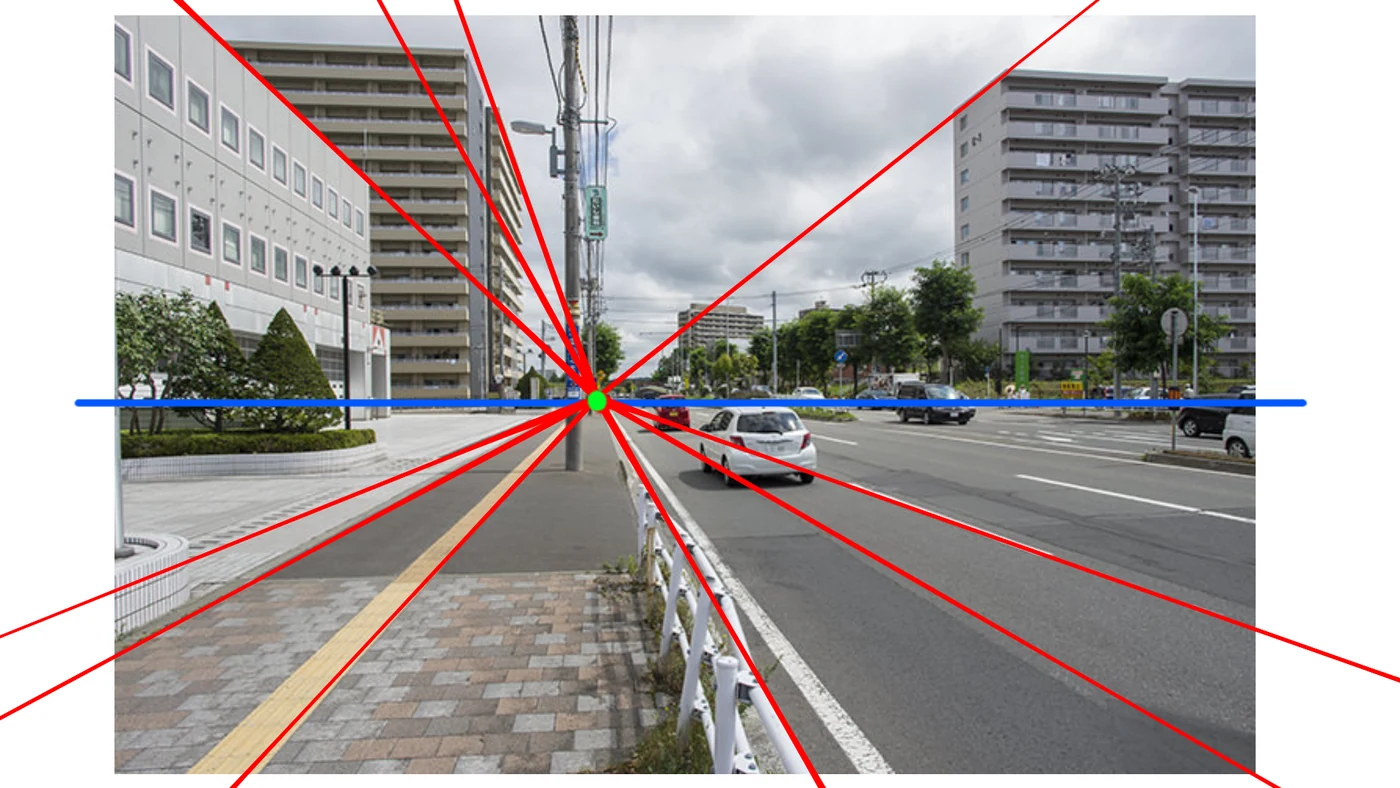
Not often. A true one-point view is hard to find in real life, because you rarely look straight at the vanishing point.Most real scenes end up as two-point perspective. In manga and illustration, too, artists usually reach for two-point or three-point when they want more depth. When you do spot one-point, it's usually the shot straight down a school hallway or a train car.
So why start here? Because one-point is the basic idea behind all of it. Learn to use the eye level, the vanishing point and the converging lines here, and the other two will make sense.
Real lesson image
Step 03 · Set the eye level
How do you start a one-point perspective drawing?
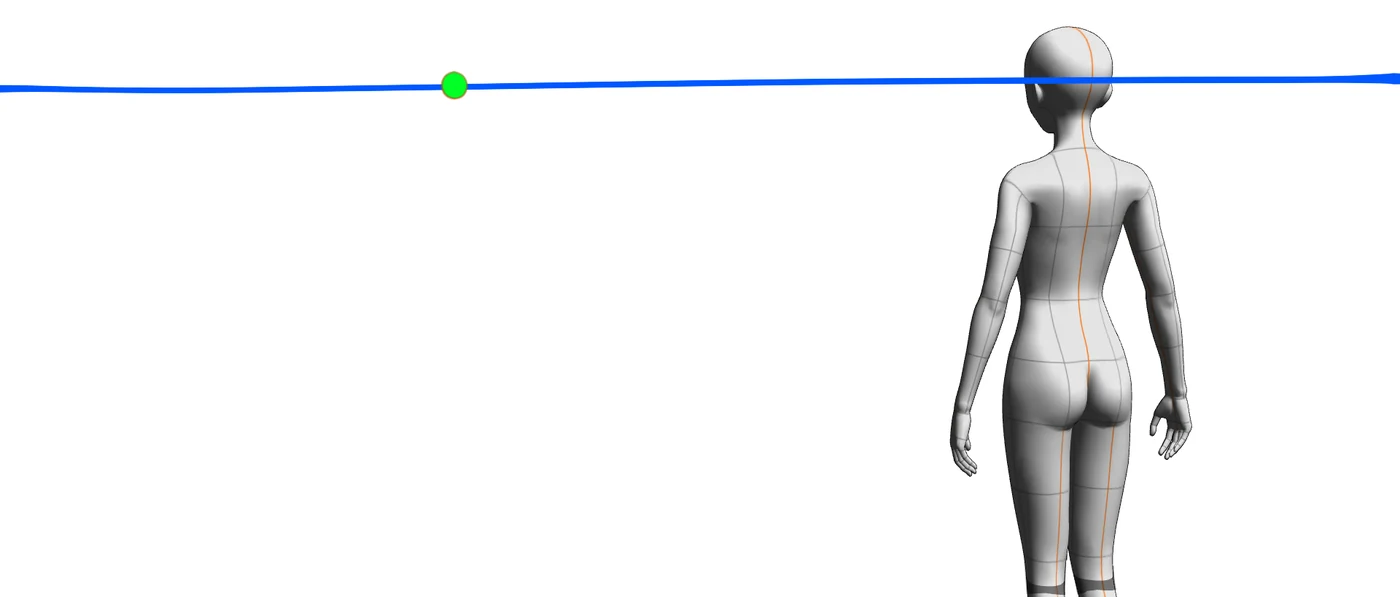
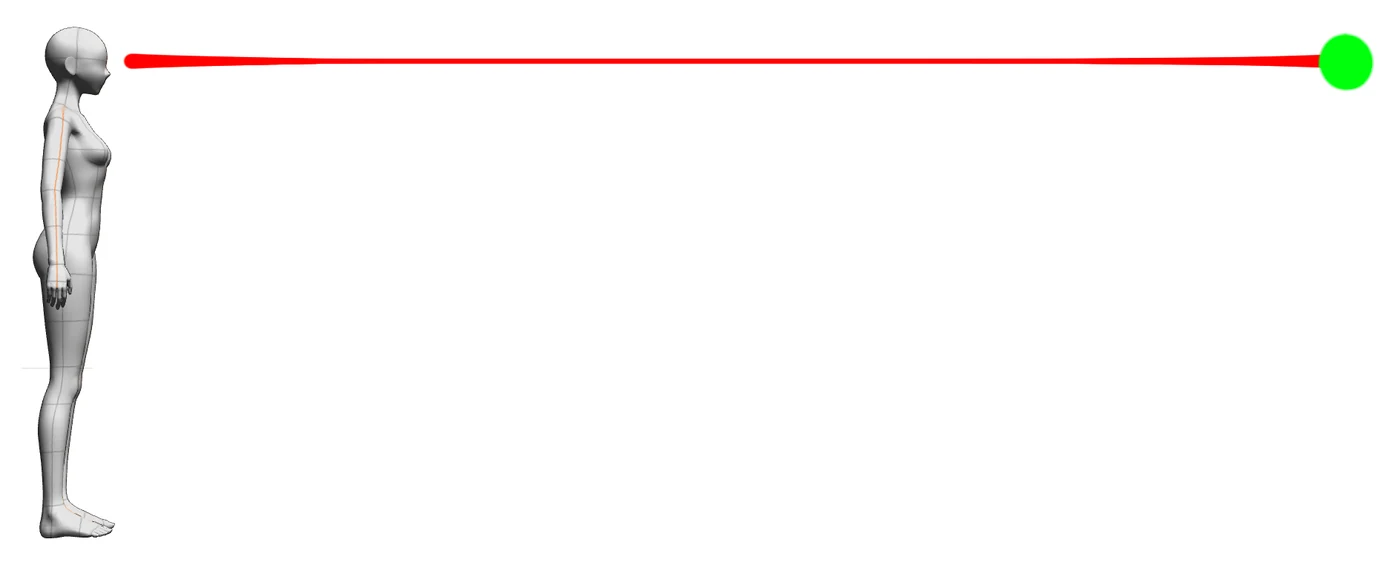
Draw a horizon line at the eye level, then decide where you're looking from.This time, put the horizon line around the middle of the page. Then choose the spot you're viewing the subject from. Act like a photographer: where would you stand to get a good picture?
One-point is the most basic way of thinking in perspective, and two-point and three-point build on how you draw it. It doesn't have to be perfect. But once you really understand it, you can use it on the human figure, too.
Real lesson image
 Real lesson image
Step 04 · Draw a box
How do you draw a box in one-point perspective?
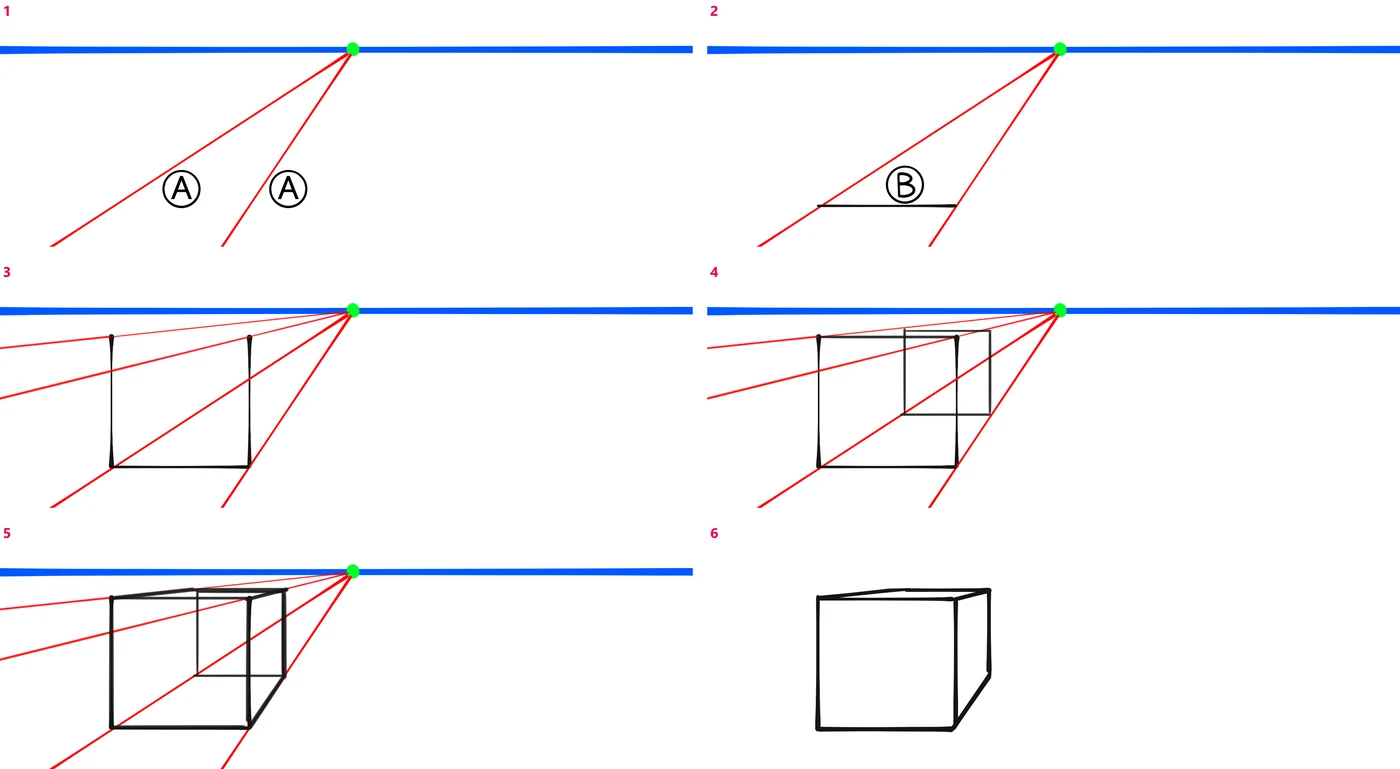
Pull a box out of empty space: converging lines first, then a front face, a back face, and connect them.1. Decide the eye level, put a vanishing point on the horizon line, and draw two converging lines (A) from it. You'll use more than one pair. 2. Draw a line B across them, parallel to the horizon. 3. Draw two more converging lines from the vanishing point, and draw the sides of the front face up to them.
4. Close the front face with one more parallel line, then make a second face the same way, farther back. 5. Using the converging lines as your guide, join the lines you need. 6. Erase the guides, and you have a box.
Real lesson image
Step 05 · Move the horizon and the point
What changes when you move the horizon and the vanishing point?
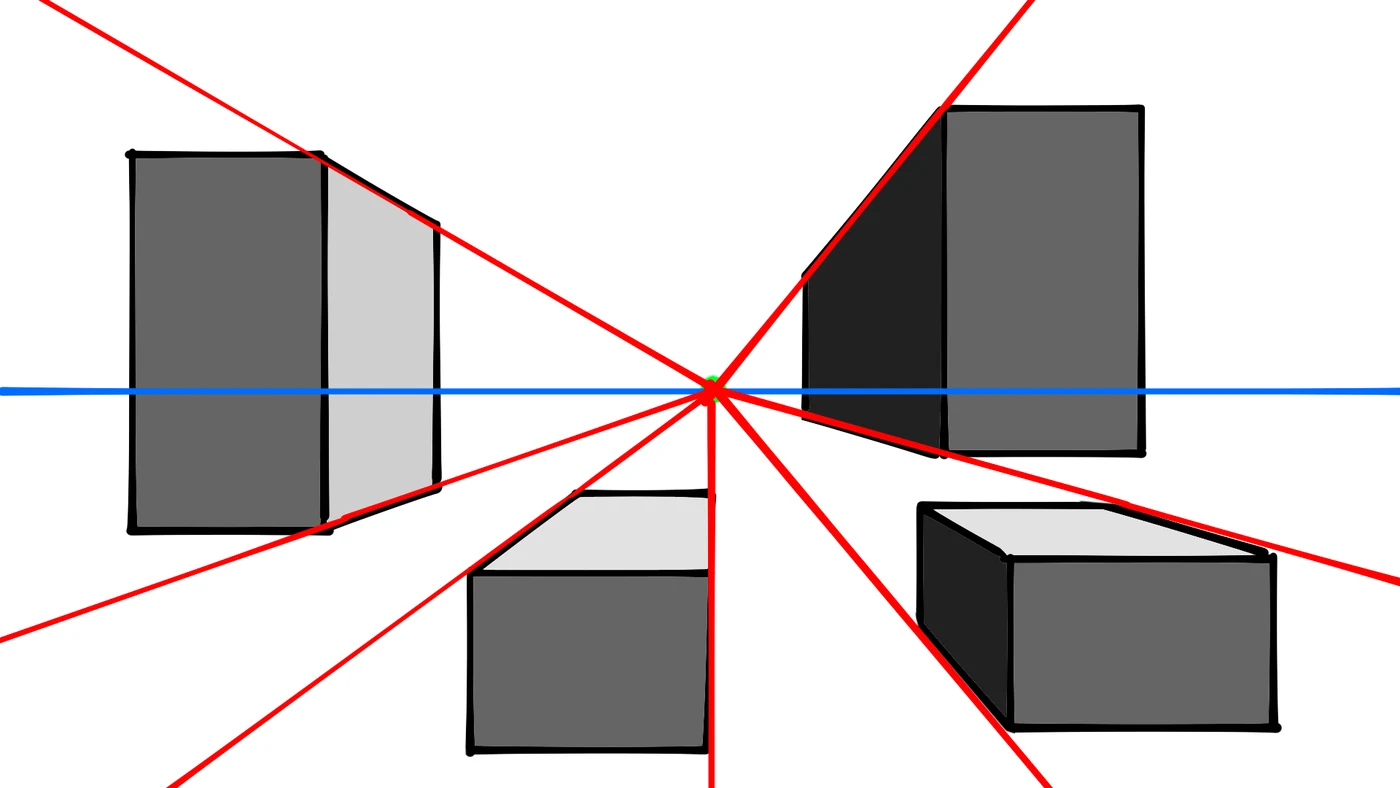
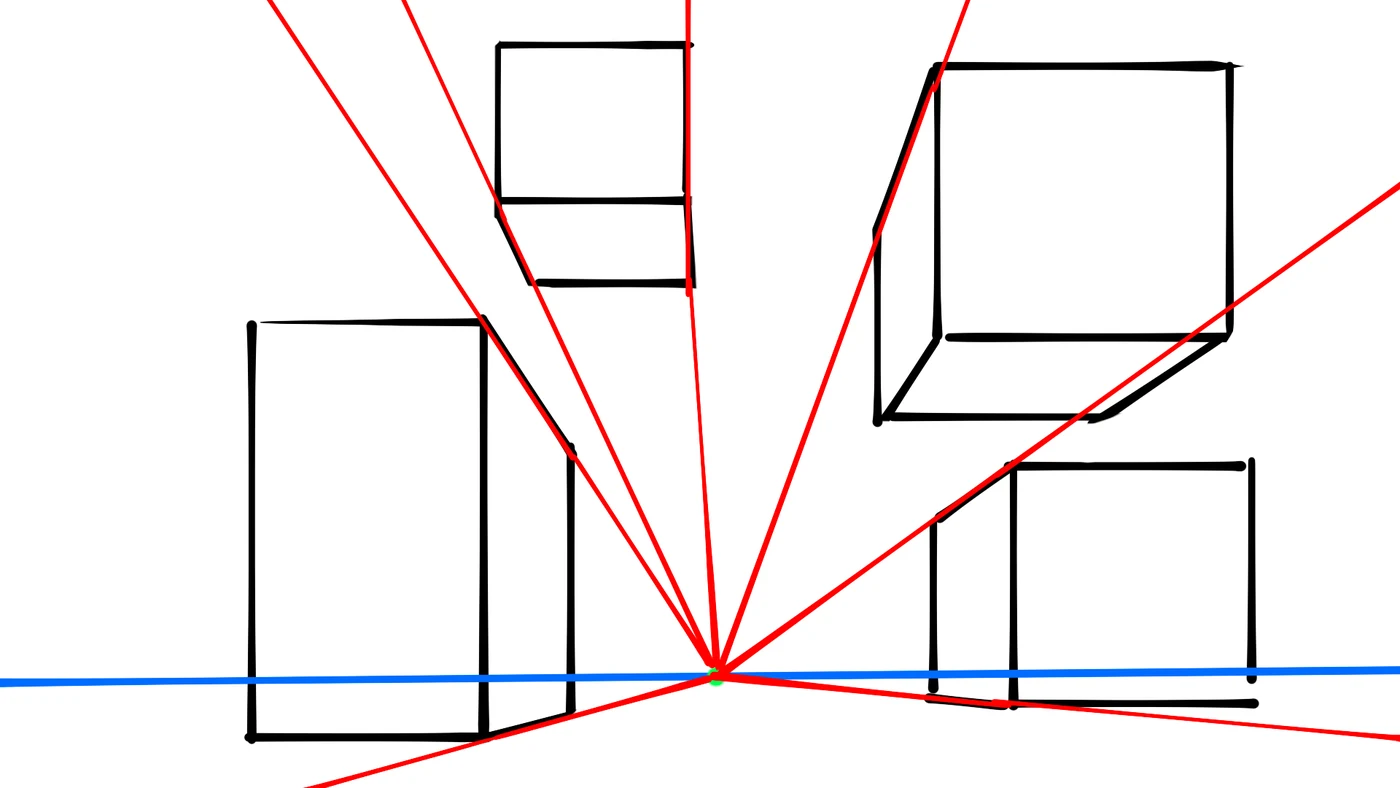
The shape of everything changes, so the same boxes give you a different composition.Understand perspective like this and your picture becomes convincing. The box from Step 4 is the basic form. Place boxes above, below and beside the vanishing point, and each one shows a different side.
Slide the horizon line up or down, or move the vanishing point left or right, and the whole composition changes. Try a few placements before you start a background.
Real lesson image
From guide lines to a solid box
Erase the converging lines and you have a clean box. Add tone to the faces and it reads as a solid object.
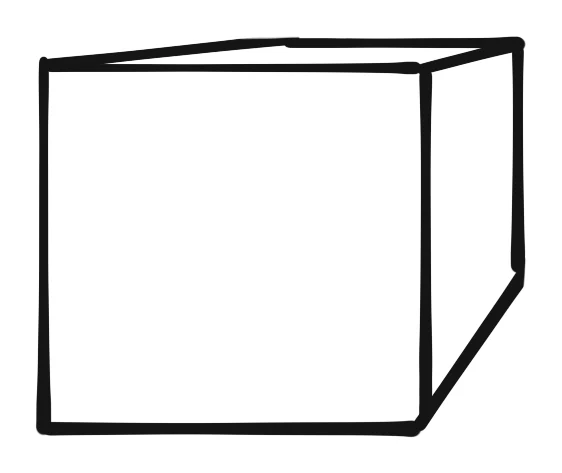
Guides erased: the line drawing of the box.
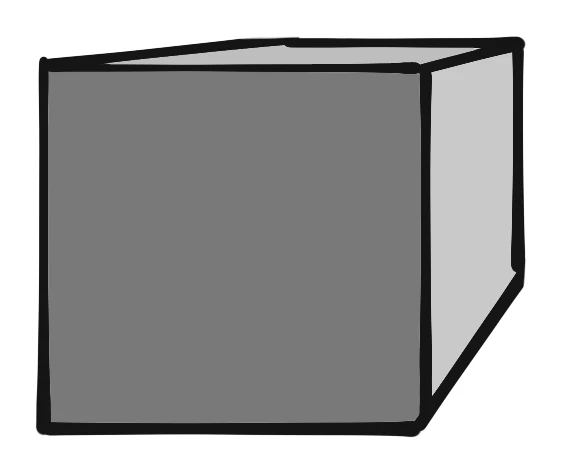
Tone added: the box now feels solid.
Where people usually get stuck
"My scene doesn't look like one-point."
Check the two conditions: only one vanishing point, and the viewer looking straight at it. Most real scenes are two-point, so a reference photo may not match.
"My box looks warped."
The edges going back don't meet at the vanishing point. Draw the converging lines first and build the faces on them.
"Where do I put the vanishing point?"
On the horizon line, at eye level. Decide where you're looking from like a photographer, then place it.
One-point perspective FAQ
What are the conditions for one-point perspective?
There is only one vanishing point, and the viewer's line of sight runs straight toward it. The vanishing point sits on the horizon line, which is at the same height as the viewer's eyes.
Why is one-point perspective rare in real life?
Because you rarely look straight at the vanishing point in everyday life. Most real scenes turn out to be two-point perspective, and manga and illustration often use two-point or three-point for more depth.
Do I need one-point perspective if I mostly draw characters?
Yes. One-point is the basic idea behind two-point and three-point perspective, and once you understand it, you can apply it to the human figure, too.
How do I get feedback on my background drawings?
When you join an Anime Art Academy course, a professional Japanese artist gives you personal advice and draws red-line corrections directly on your drawing. There is no limit on how many times you can submit. The only rule: post one drawing at a time, and wait for your teacher's reply before posting the next.