How to Draw Anime Backgrounds 4 (Three-Point Perspective): A Step-by-Step Guide by Japanese Pro Artists
It's the trickiest kind of perspective to use, but it gives you the most solid, dramatic shots: the dizzy feeling of staring up at a skyscraper, or looking down at the street from the roof.
 Real lesson image
The five stages at a glance
 01
 02
 03
 04
 05
Step 01 · What three-point perspective is
What is three-point perspective?
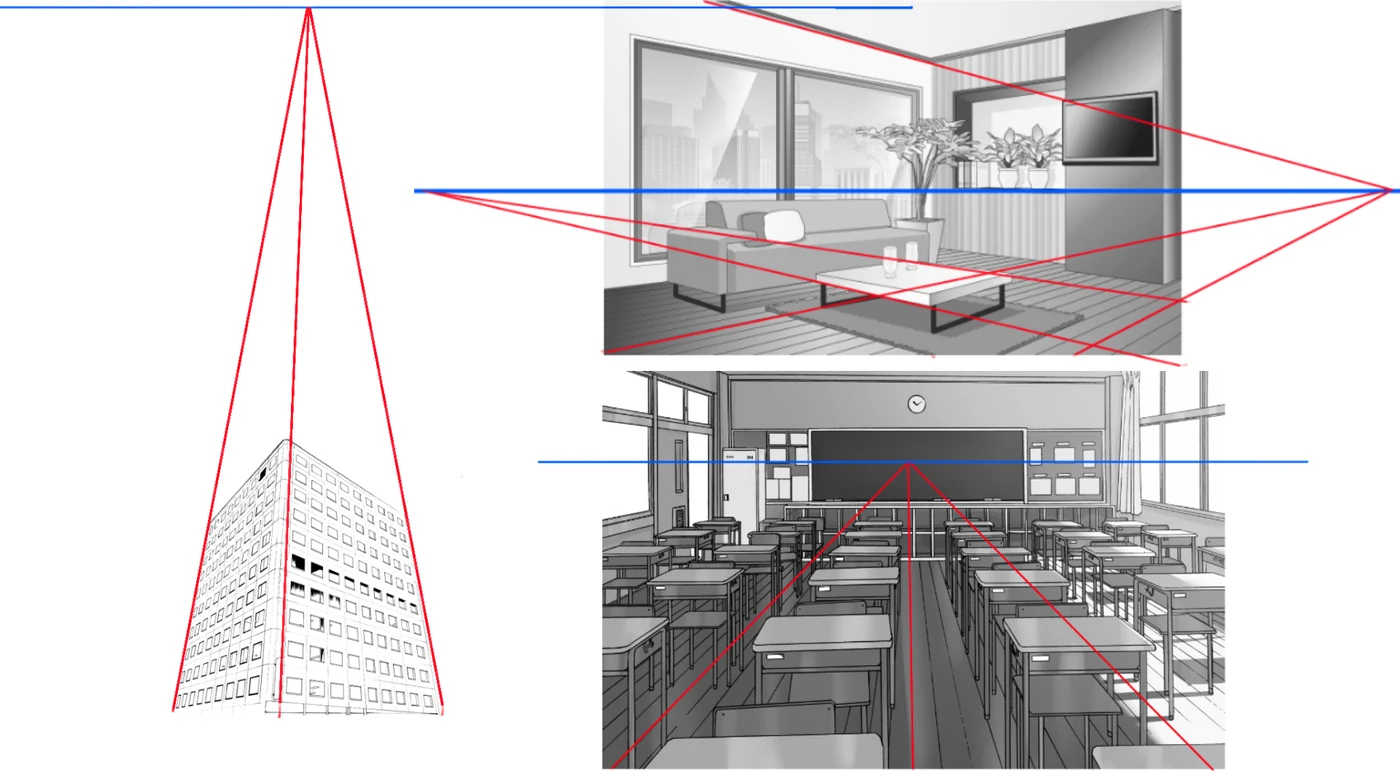
Three-point perspective is perspective with three vanishing points.Like one-point and two-point, two of the vanishing points sit on the horizon line. The third one is straight above the viewer or straight below.
Two-point already looks more solid than one-point, and three-point goes further still. It raises the tension of a scene dramatically: think of standing at the foot of a skyscraper, or looking down at the city from its roof.
Real lesson image
Step 02 · Looking up or looking down
When should you use three-point perspective?
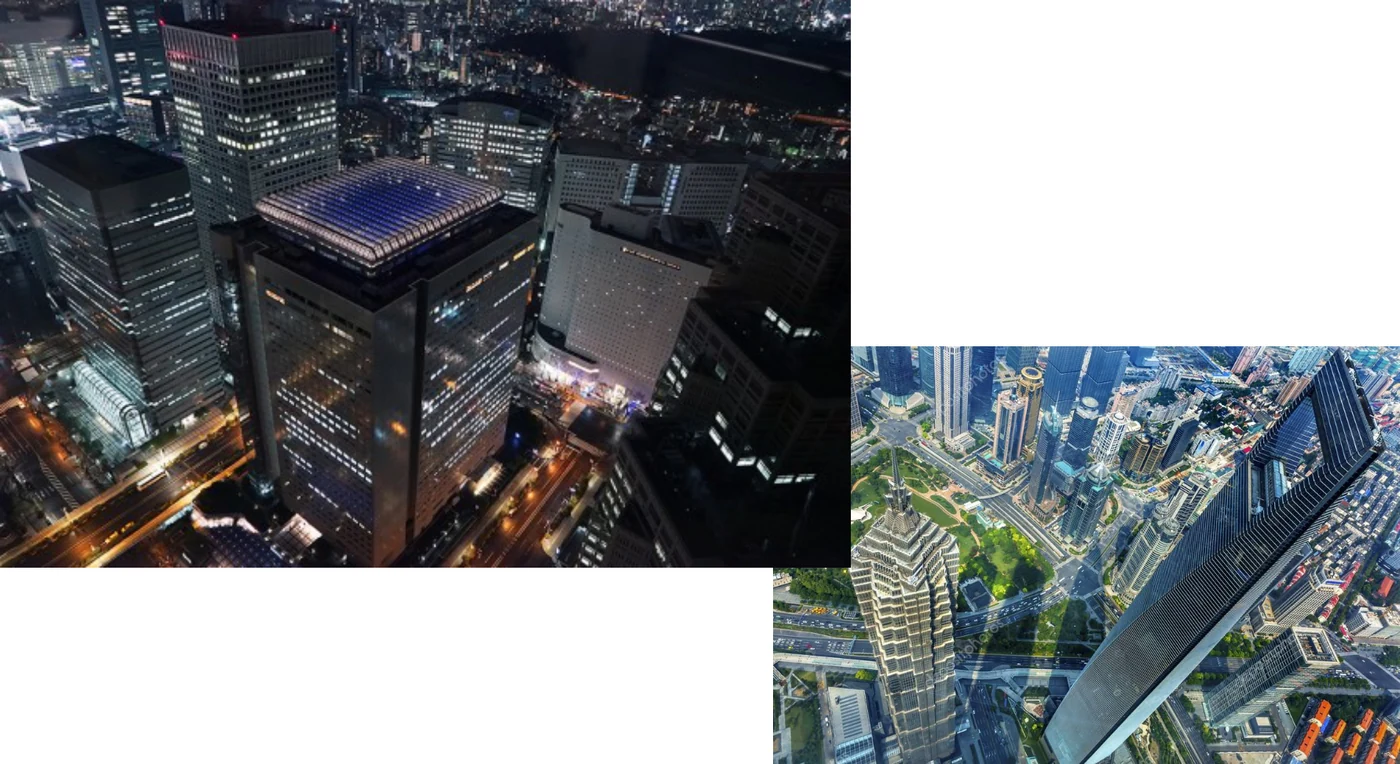
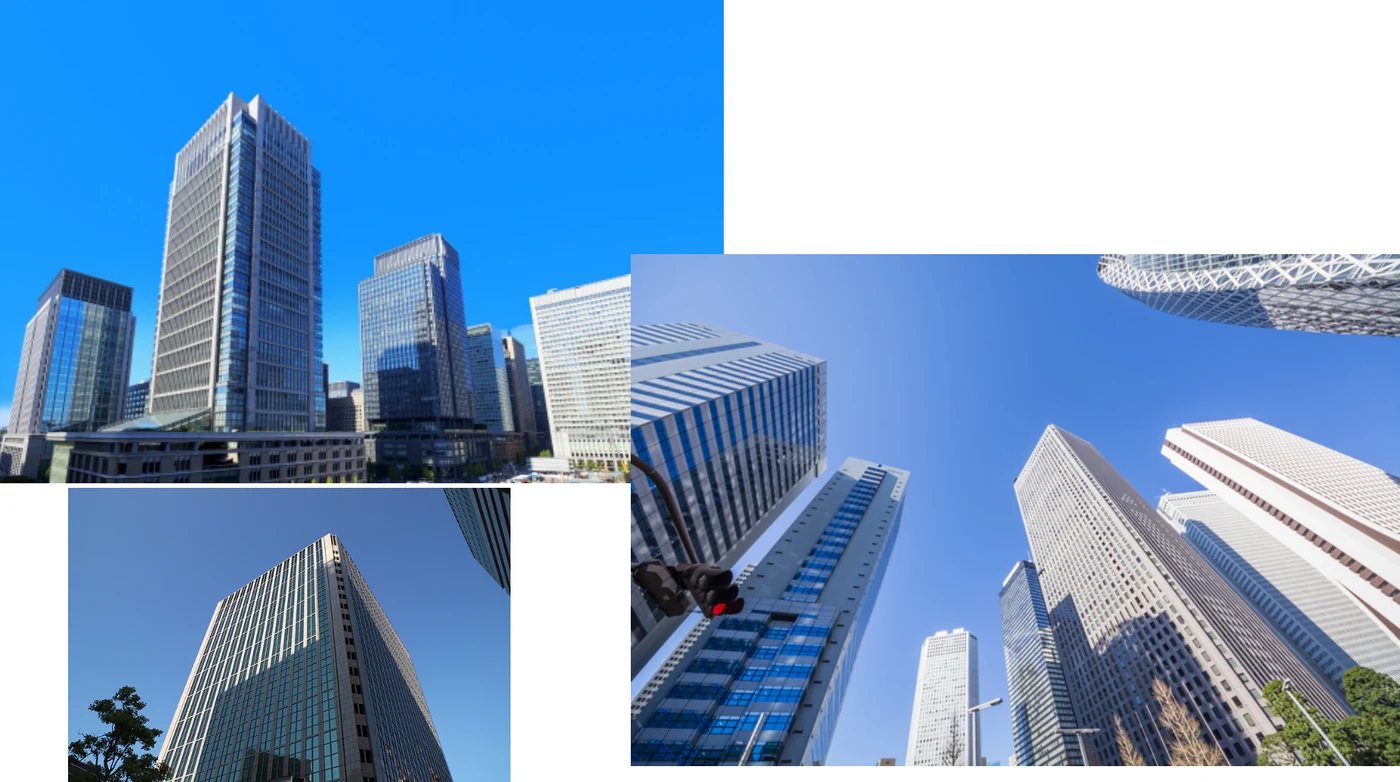
Save it for the scenes you want readers to stop on and remember.In manga and illustration, three-point perspective is used to make a scene feel more dynamic and solid. Use it for the panels that need to grab the reader's eye, like a character staring up at a towering building, or a school rooftop scene looking down at the yard.
Before you start, decide where the viewer is looking from. Almost every three-point drawing is either looking up at something or looking down at it.
 Real lesson image
Step 03 · Draw a box looking up
How do you draw a box looking up in three-point perspective?
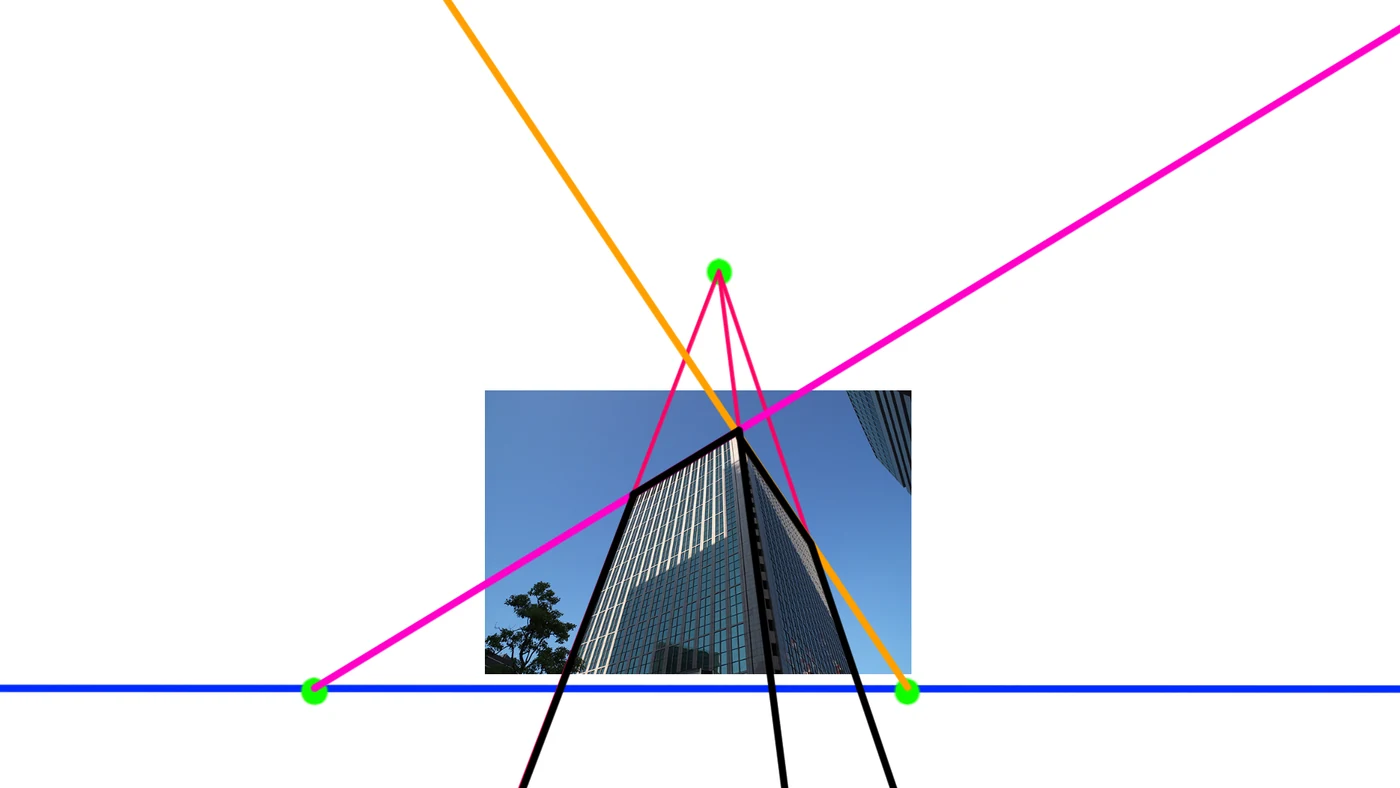
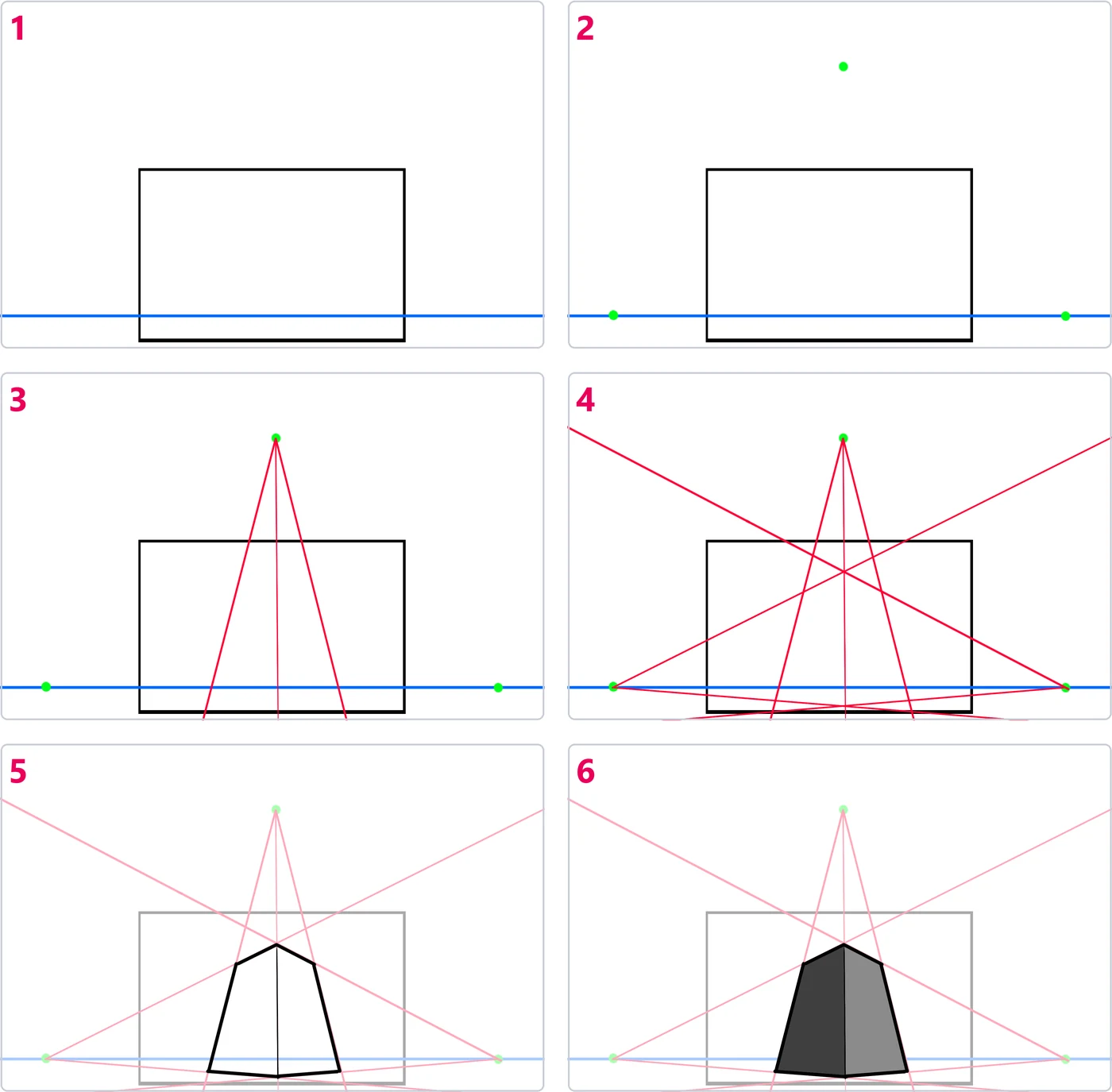
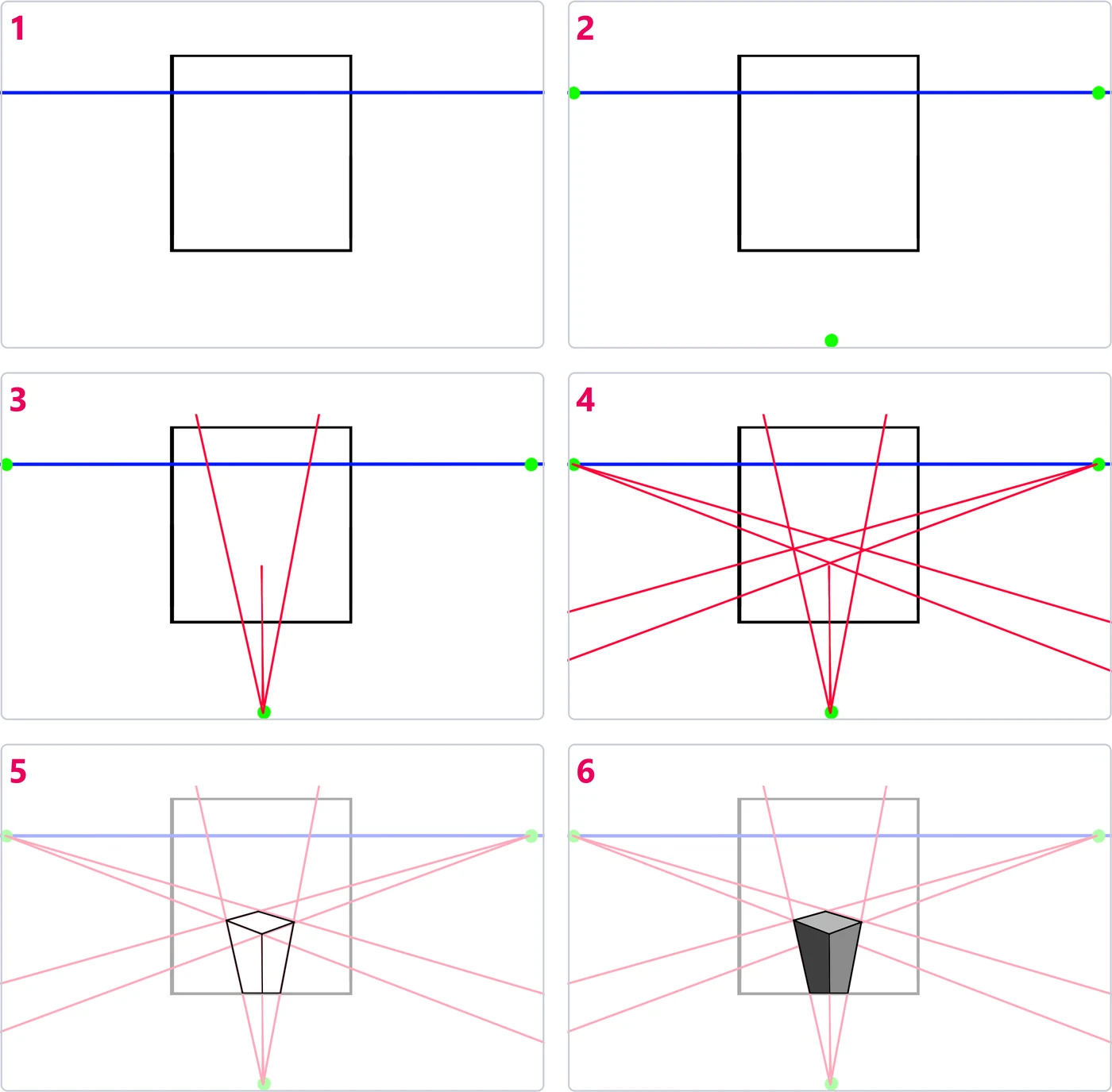
Put the horizon low, put the third vanishing point straight above the center of the picture, and build the box from all three points.1. Draw the horizon line at eye level. When you look up, it sits fairly low. 2. Put two vanishing points on the horizon line, and the third straight above the center of the picture. Be careful where you put that third point. 3. From the top point, draw converging lines downward. 4. From the two points on the horizon, draw converging lines too.
5. Fade the guides so they're easy to see over, then join the points where the lines cross. You get a box that towers up toward the top of the picture. 6. Add tone to make it solid.
Real lesson image
Step 04 · Draw a box looking down
How do you draw a box looking down in three-point perspective?
Flip it: put the horizon high and the third vanishing point straight below the center of the picture.1. Draw the horizon line at eye level. When you look down, it sits fairly high. 2. Put two vanishing points on the horizon line, and the third straight below the center of the picture. 3. From the bottom point, draw converging lines upward. 4. From the two points on the horizon, draw converging lines. 5. Join the crossings, and you get a box that looks pulled down into the picture. 6. Add tone.
Just like two-point, keep the vanishing points outside the picture. If the points sit close together, the box gets distorted and looks unnatural.
Real lesson image
Step 05 · Multi-point perspective
What is multi-point perspective?
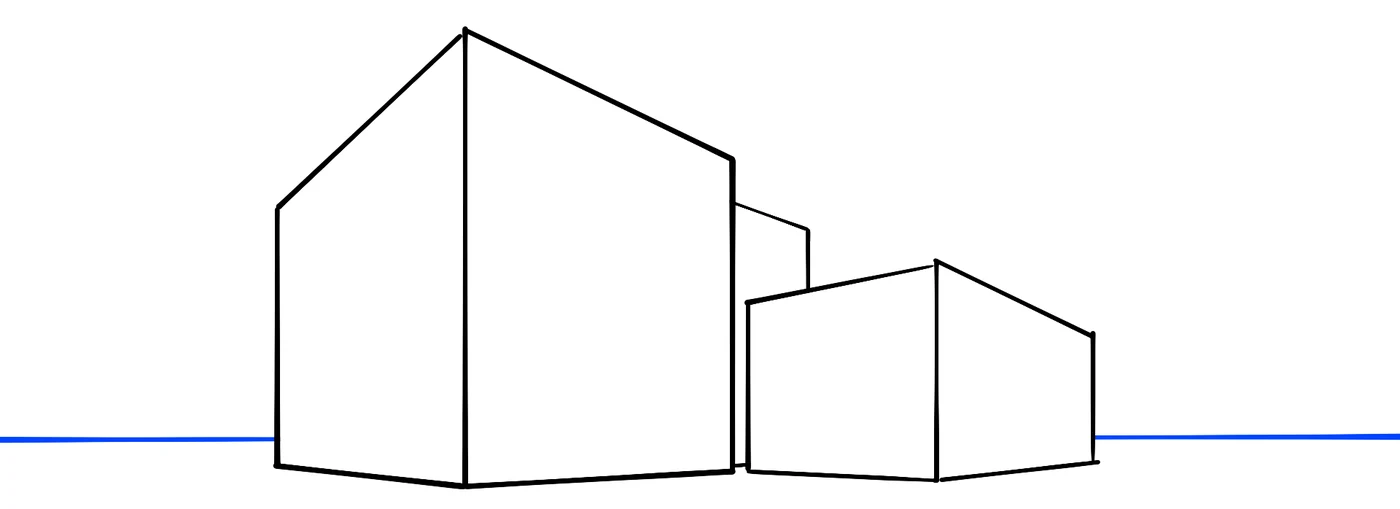
It's perspective with more vanishing points on the horizon line, for things that don't all face the same way.One-, two- and three-point perspective work when everything is lined up on a neat grid. Real places usually aren't like that. The idea behind multi-point perspective is simple: add more vanishing points on the horizon line.
For everyday convenience you'll use two-point most often. Three-point lets you show a scene from more angles, and it makes placing characters in it fairly easy. Backgrounds are hard work, so start by tracing photos to build up your own library of scenes.
Real lesson image
Looking up vs looking down
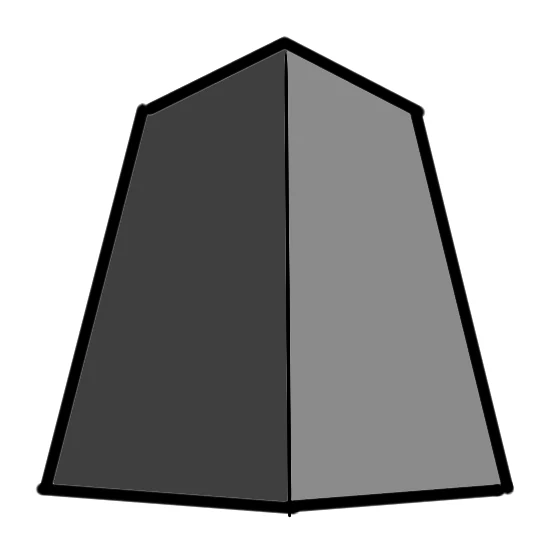
The same three-point method, two viewpoints. With the third point above, the box towers over you. With it below, the box drops away under you.
Looking up: the box narrows toward the top.
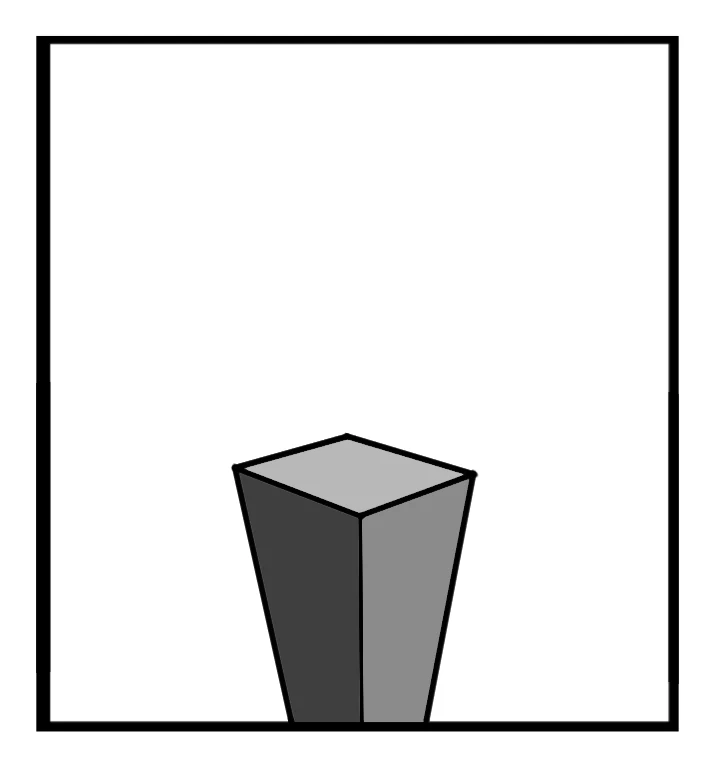
Looking down: the box narrows toward the bottom.
Where people usually get stuck
"Where does the third point go?"
Straight above the center of the picture when you're looking up, straight below it when you're looking down. Keep it outside the frame.
"My building looks bent and warped."
Your vanishing points are too close to each other. Spread them out, past the edges of the picture.
"Where do I put the horizon?"
Low on the page for a looking-up shot, high on the page for a looking-down shot. It always sits at the viewer's eye level.
Three-point perspective FAQ
What is the difference between two-point and three-point perspective?
Two-point perspective has two vanishing points, both on the horizon line. Three-point adds a third one straight above the viewer or straight below, so the vertical edges lean toward it too. That gives a stronger, more dramatic sense of depth.
Where do I put the third vanishing point?
Straight above the center of the picture for a looking-up view, and straight below it for a looking-down view. Like the other two, keep it outside the picture. If the points are close together, the shape gets distorted.
When should I use three-point perspective?
In the scenes you want readers to stop on and remember: staring up at a skyscraper, or looking down at the street from a rooftop. For everyday scenes, two-point is the one people use most, because it is more convenient.
How do I get feedback on my background drawings?
When you join an Anime Art Academy course, a professional Japanese artist gives you personal advice and draws red-line corrections directly on your drawing. There is no limit on how many times you can submit. The only rule: post one drawing at a time, and wait for your teacher's reply before posting the next.