How to Draw Anime Clothes Folds and Wrinkles: A Step-by-Step Guide by Japanese Pro Artists
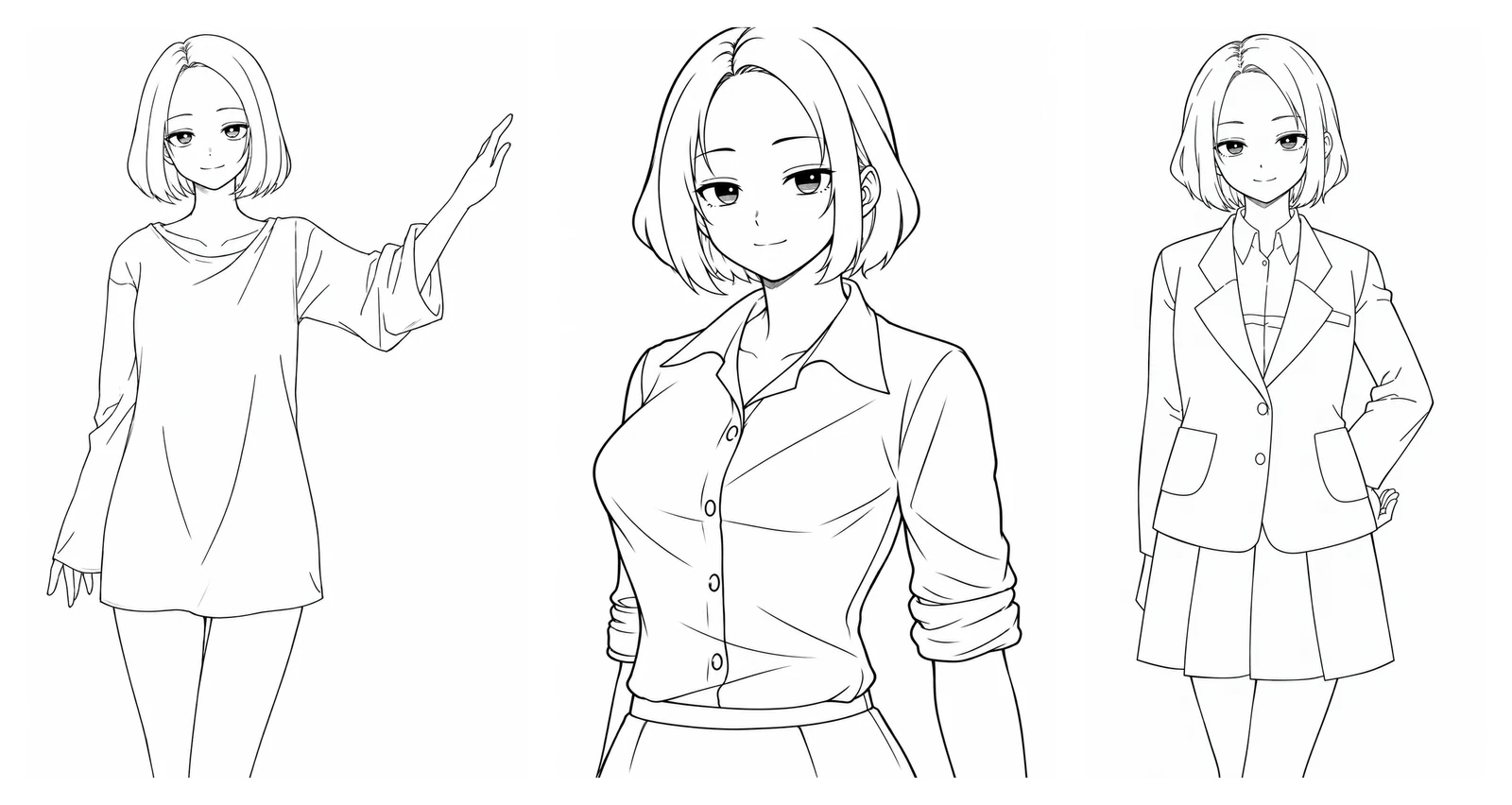
If your clothes either look like flat paper or like a crumpled bag, the problem usually isn't how many lines you add. It's where you put them. This guide follows a Japanese drawing-technique book page by page: plain cloth first, then a blouse, a loose shirt, a dress and a school jacket.
 Construction study
The five stages at a glance
 01
 02
 03
 04
 05
Step 01 · Pull folds & twist folds
What kinds of folds does fabric make?
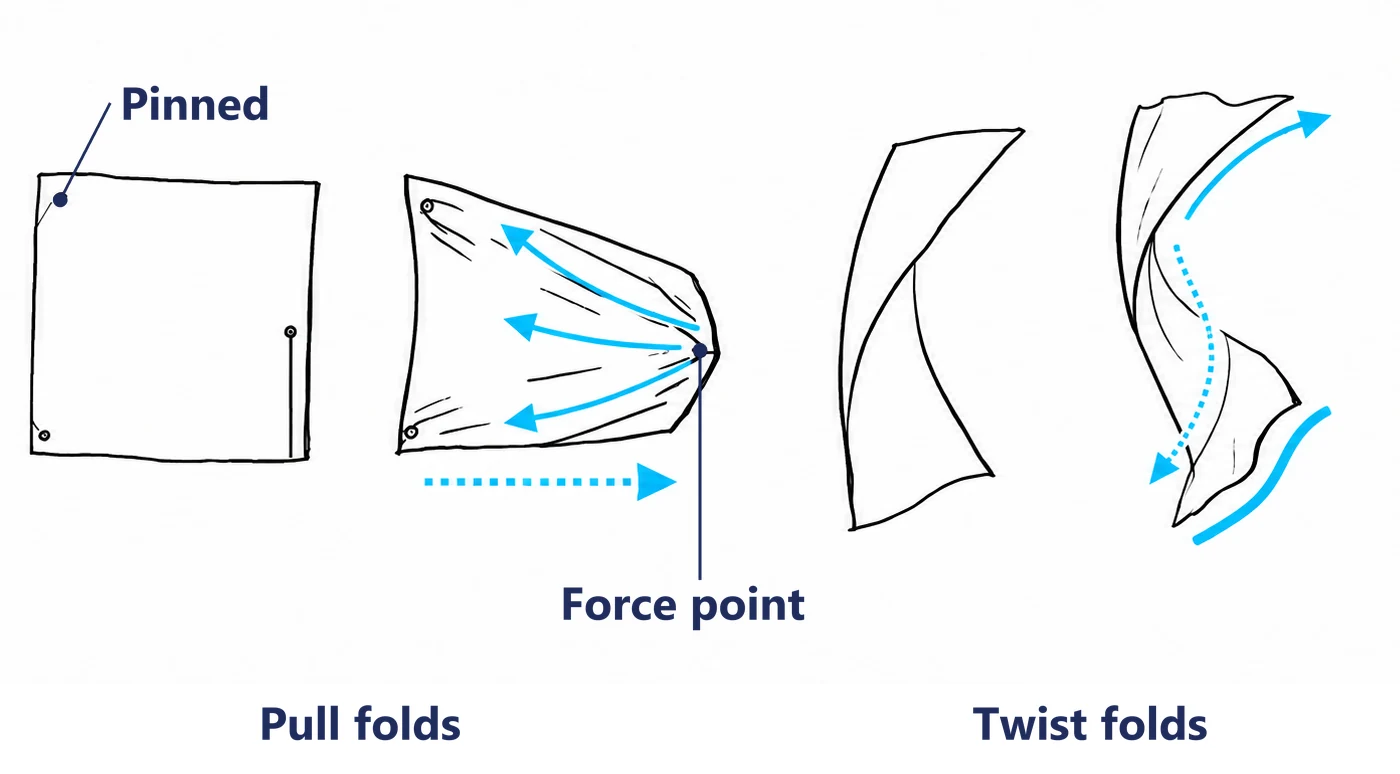
Pull a sheet of cloth and folds fan out from the point you pull. Twist it and the folds wind around.Folds on clothes gather at the joints and the hems. But you can see almost every type of fold with a single sheet of cloth, so start there.
Pin two corners and pull the other side. Strong folds start at the force point, where your hand is, and run back toward the pins. Twist the same sheet and you get pull folds running around it, with the bottom hanging loose like a drape.
Construction study
Step 02 · Folds on a blouse
Where do those folds show up on a blouse?
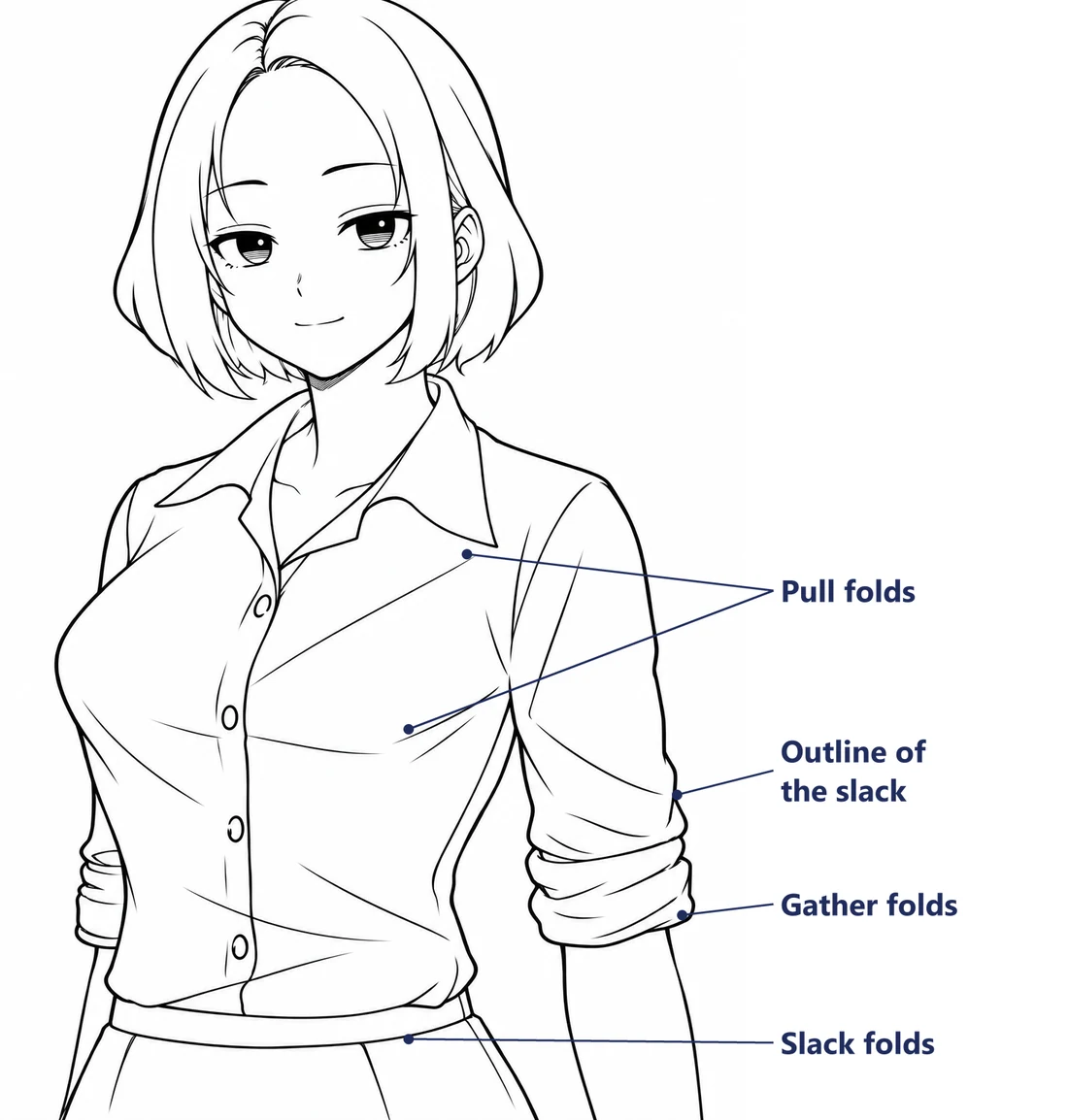
Pull folds cross the chest, gather folds sit in the rolled sleeve, and slack folds collect at the waist.The chest pushes the fabric forward, so pull folds run across it between the buttons and the shoulder. The rolled-up sleeve is fabric pushed together, so it turns into gather folds.
Look at the outer line of the sleeve, too. The loose fabric there sags a little, and that soft bulge in the outline already tells the viewer the cloth is slack. Where the blouse is tucked in at the waist, the extra fabric piles up into slack folds.
Construction study
Step 03 · Folds that come from moving
Why do folds appear when a character moves?
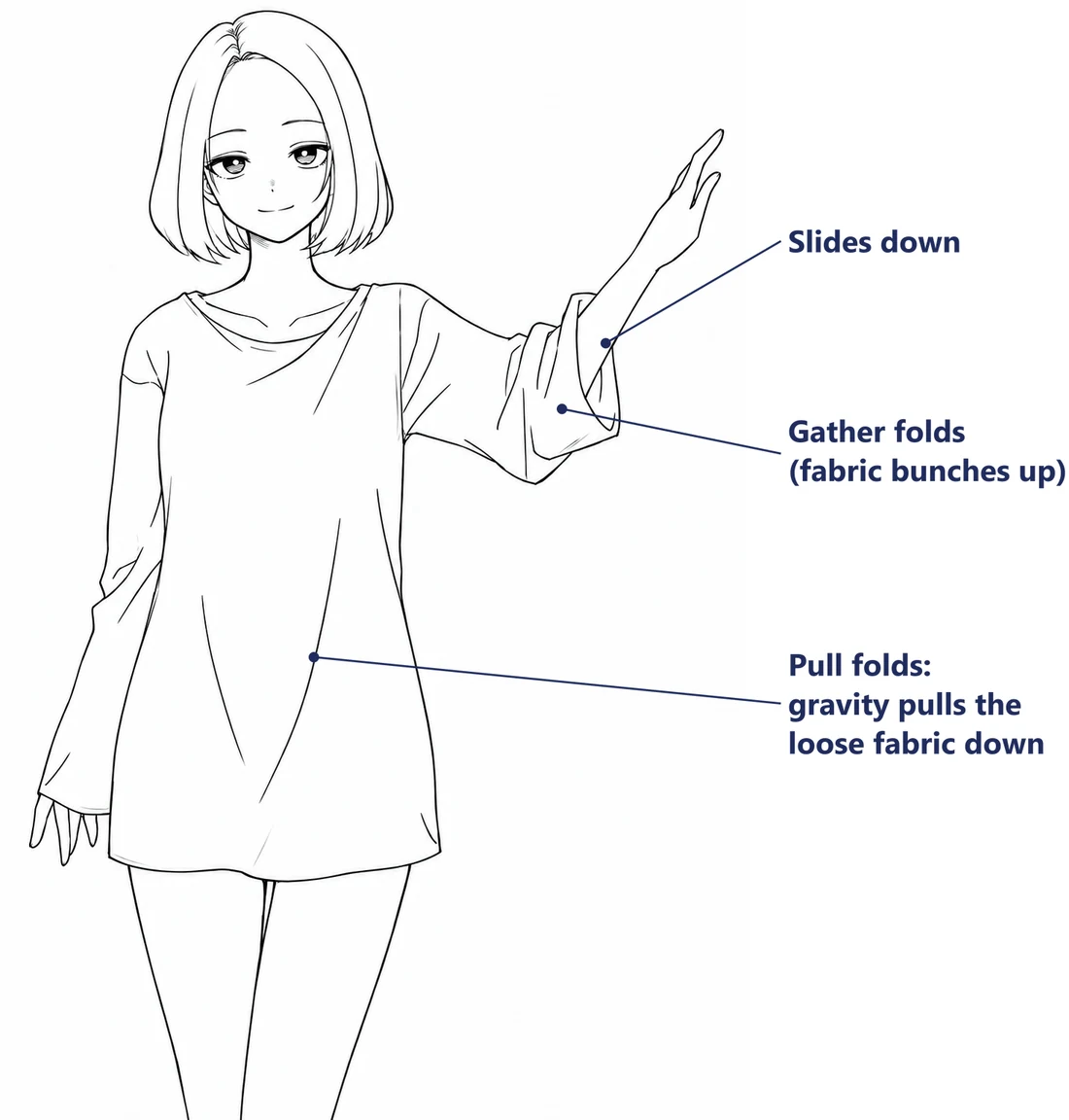
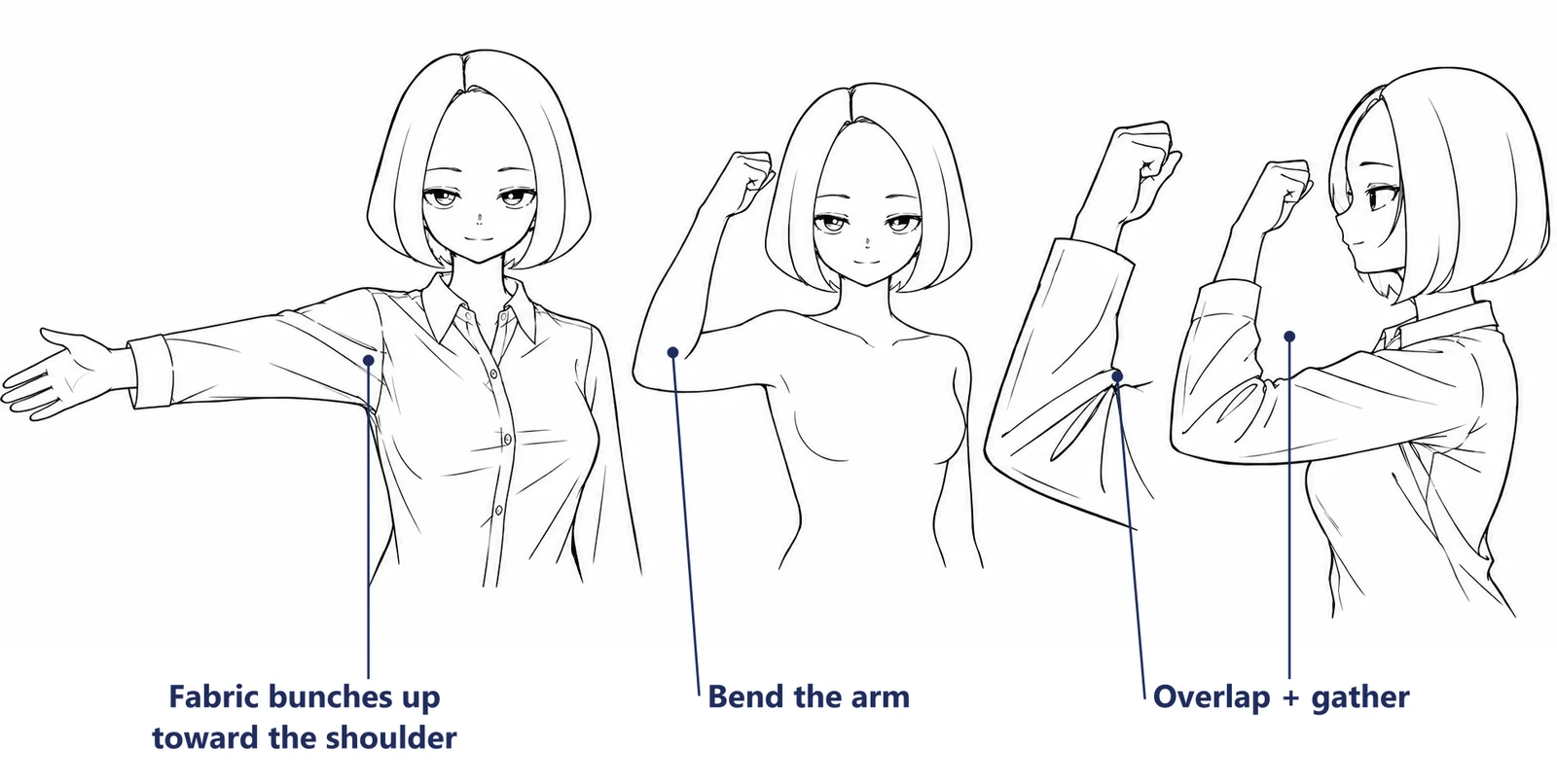
Fabric is soft, so every move makes it overlap or get pulled, and that's where folds are born.Raise an arm in a big loose shirt and the sleeve slides down toward the shoulder. The fabric piles up there and makes gather folds (some books call them overlap folds). The loose body of the shirt is pulled straight down by gravity, so it gets long pull folds.
A fitted blouse works the same way. Stretch the arm out and the fabric bunches up toward the shoulder. Bend the arm and the sleeve overlaps itself at the elbow, so you get overlap and gather folds together.
Construction study
 Construction study
Step 04 · Pinching, drape & the elbow
What happens when you pinch fabric, or let it hang?
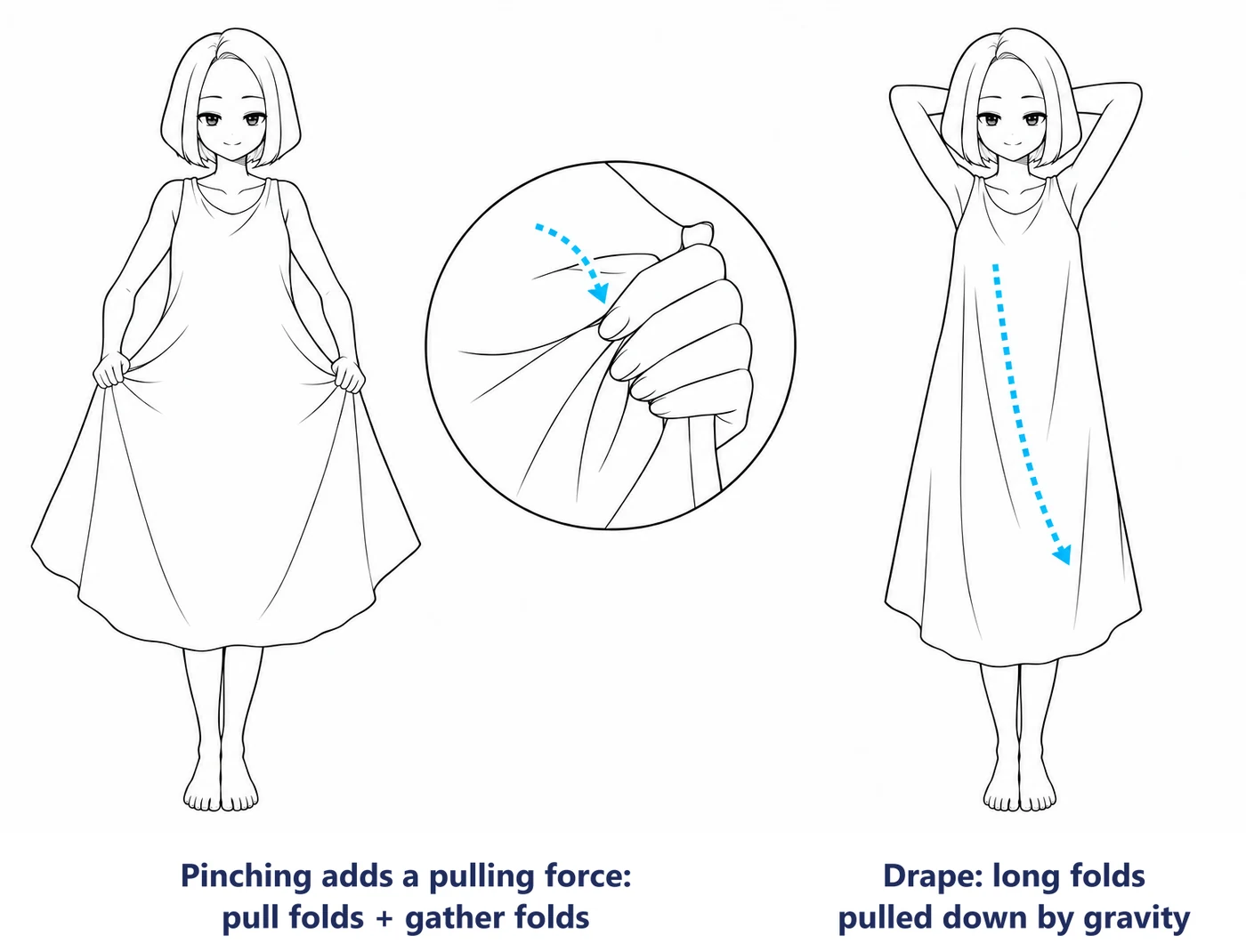
Pinching adds a pulling force, and loose fabric that just hangs falls into long drape folds.Pinch or grab the hem of a dress and you add a pulling force. The fabric right at the fingers gathers up, and the rest is pulled toward the hand, so you get pull folds and gather folds together.
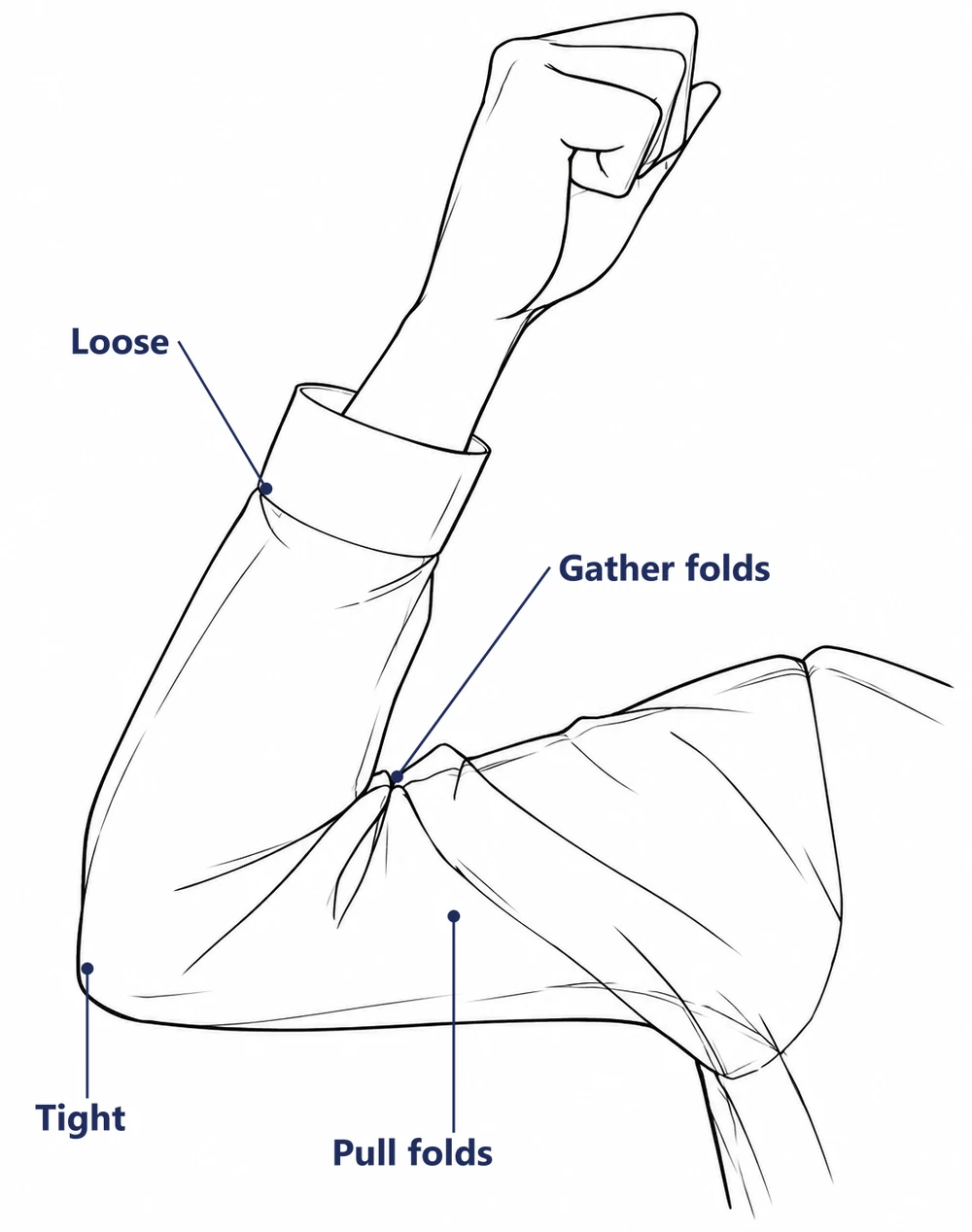
Now let a roomy dress simply hang. Gravity pulls all that fabric down into long folds. That's a drape. At a bent elbow, the inside of the sleeve stays loose and gathers into folds, while the outside is stretched tight over the elbow and gets pull folds.
Construction study
 Construction study
Step 05 · A jacket barely folds
Why does a school jacket show so few folds?
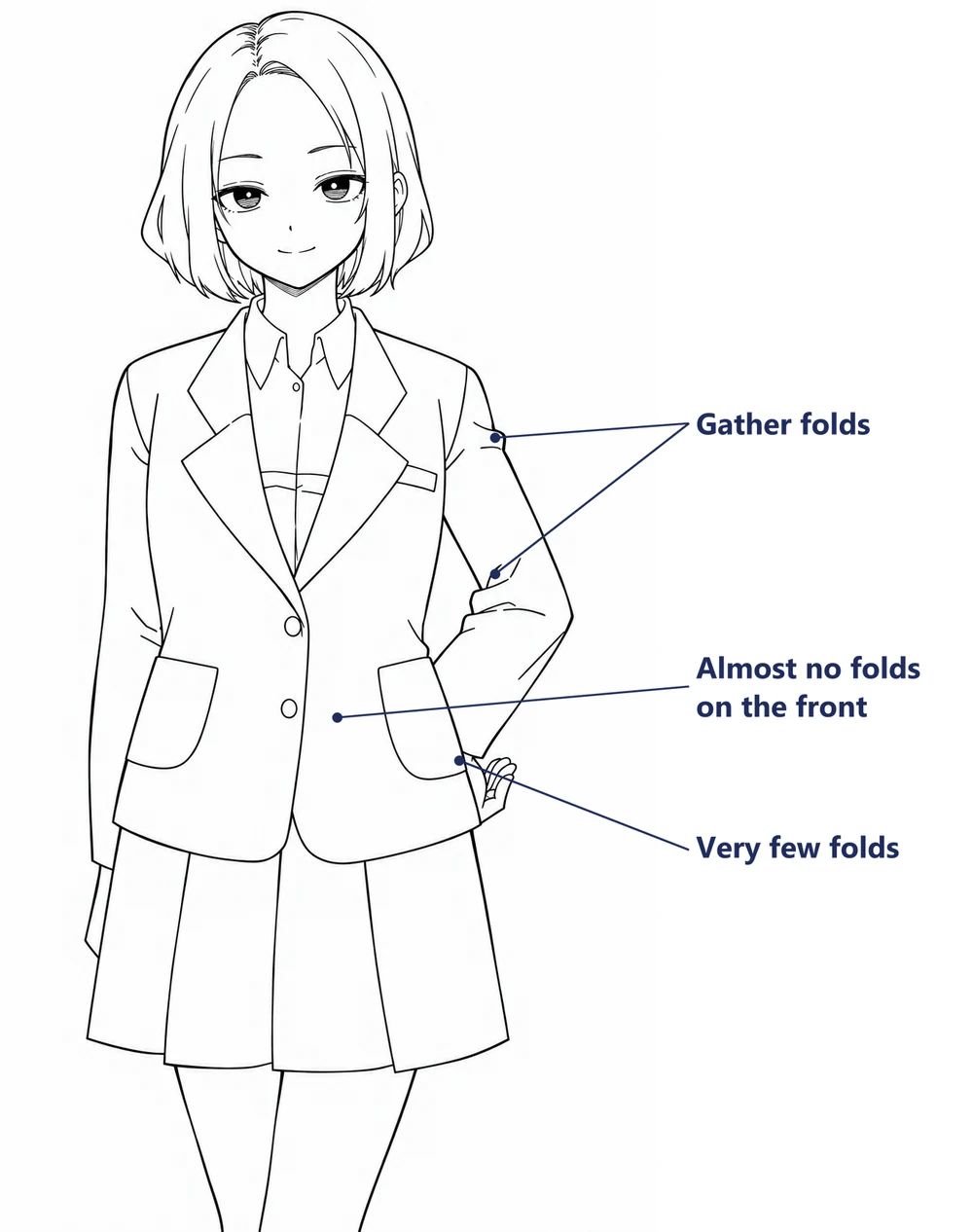
A buttoned jacket is stiff, so the front of the body stays almost smooth. Folds only appear where the arms move.On the front of the torso there are almost no folds at all, and near the waist only a very small one. The places that do fold are the shoulders and the elbows: when the arm moves, thick mountain-shaped gather folds show up there.
In anime, this jacket is drawn with almost no fold lines. If you add the same folds you'd give a soft blouse, the jacket stops looking like a jacket.
Construction study
Where people usually get stuck
My clothes end up covered in lines.
You're drawing every wrinkle you can see. Keep only the folds that come from a pull, a bend or gravity, and leave the rest of the fabric empty.
My folds point in random directions.
Find the force first: the hand that pulls, the bent joint, or the weight hanging down. Pull folds run back to that point.
My elbows look the same on both sides.
The inside of a bent elbow gathers into folds. The outside is stretched tight. Draw them differently.
Anime clothes folds FAQ
Do I need to draw every fold I see?
No. Real clothes have far more folds than an anime drawing needs. Draw the folds that explain what the body is doing, like the pull from a raised arm or the gather inside an elbow. A buttoned jacket front gets almost none.
What is the difference between pull folds and gather folds?
Pull folds form when fabric is stretched between two points, so the lines run from the point being pulled. Gather folds form when fabric is pushed together, so it bunches up into short wavy folds, like inside a bent elbow or in a rolled sleeve.
Where do folds show up most on clothes?
At the joints and the hems: shoulders, elbows, the waist and the bottom of a skirt or dress. Those are the places where fabric gets pulled, bent or left hanging.
How do I get feedback on my clothes folds drawings?
When you join an Anime Art Academy course, a professional Japanese artist gives you personal advice and draws red-line corrections directly on your drawing. There is no limit on how many times you can submit. The only rule: post one drawing at a time, and wait for your teacher's reply before posting the next.