How to Draw Anime Male Bodies: A Step-by-Step Guide by Japanese Pro Artists
Your guys keep coming out skinny and stiff, or the second you add muscle they turn into bodybuilders? This guide walks through the lean muscular build in five stages, using frames from our Premium lessons and diagrams based on a Japanese muscle-drawing book.
 Construction study
The five stages at a glance
 01
01
 02
02
 03
03
 04
04
 05
05
Step 01 · Inverted triangle & twist
What shape do you start a male body from?
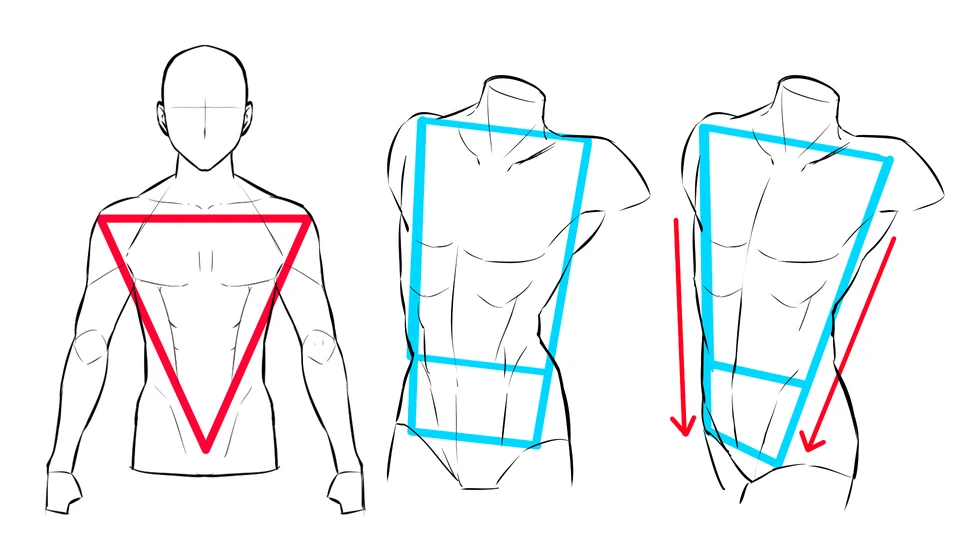
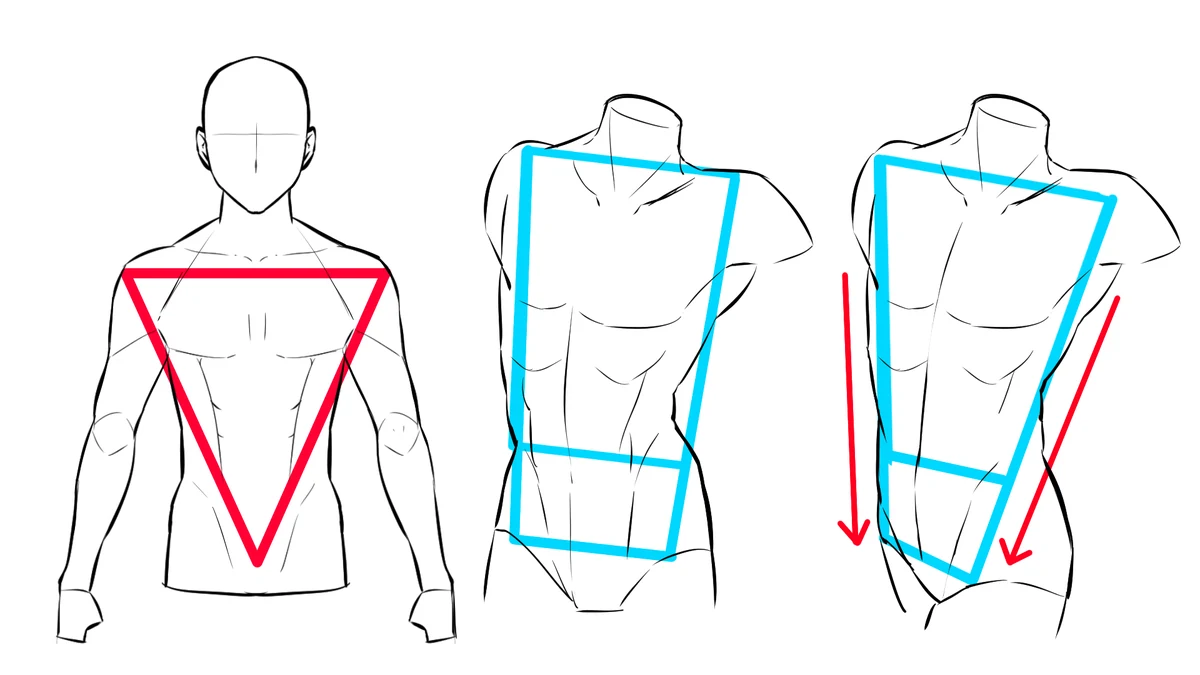
An inverted triangle with the shoulders as its base, plus a twist at the waist to push it further.Female bodies are usually drawn with curves in mind. Male bodies work best when you think in straight lines and an inverted triangle. The shoulders form the base of that triangle, and the torso narrows down toward the waist.
Draw the upper body from a slightly angled view and the triangle gets more pronounced. Then add a twist at the waist. Put the two versions side by side and the twisted one wins: the silhouette has movement, so the pose feels dynamic and the character comes alive. And because that triangle is what reads as masculine, pushing it pushes the masculinity of the whole pose.
 Real lesson material
Step 02 · Upper-body muscles
How much muscle should you draw on an anime guy?
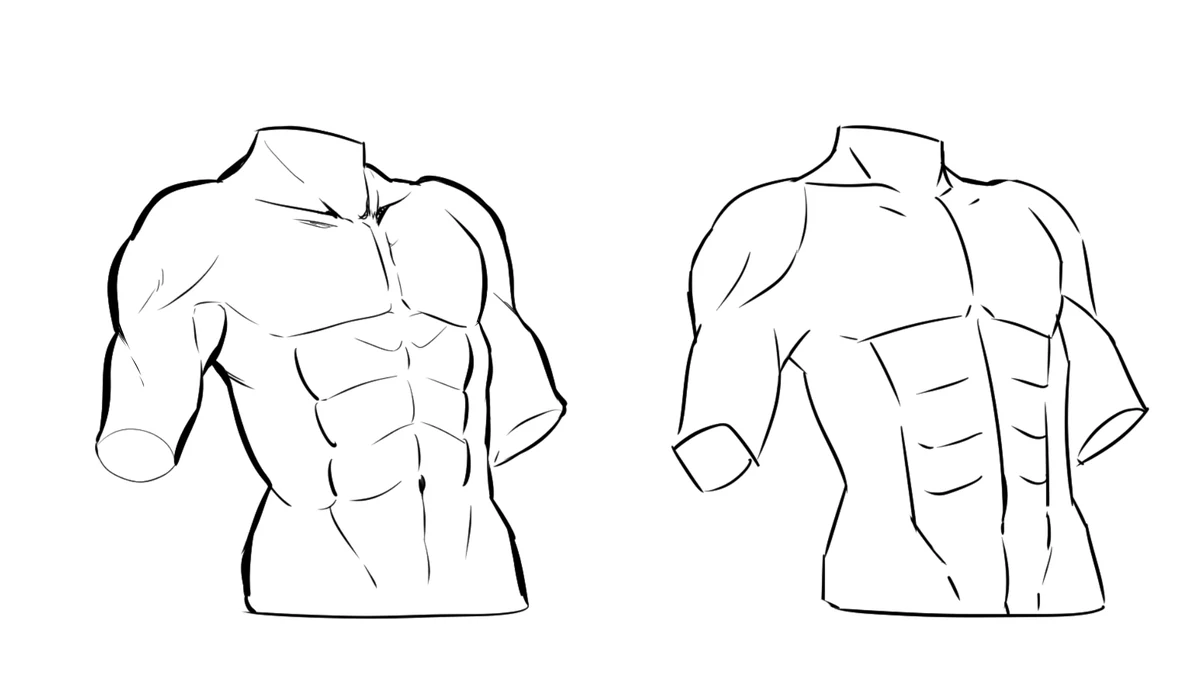
Less than you think. Use line weight, leave some areas undrawn, and match the number of lines to the build.This is where most people overdo it. Drawing every muscle line doesn't make a guy look stronger. It makes him look like a gag-manga character. The lean muscular build works because a lot of the muscle is only hinted at.
Three things do the work: line weight that suggests muscle definition, areas left undrawn, and a build you pick before you start drawing. The eight cards below go through each one.
 Real lesson material
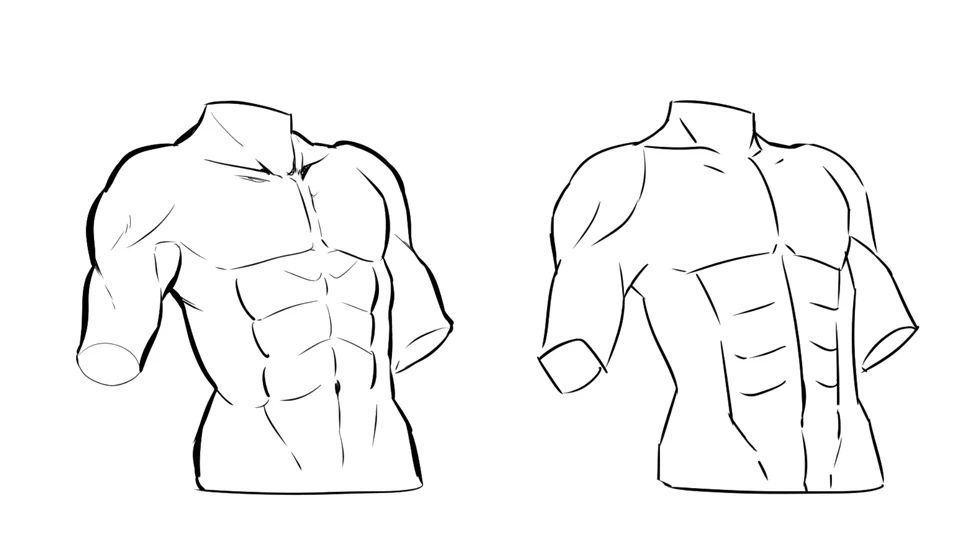
Line weight
Flat lines make a flat body
Both drawings are technically correct in terms of anatomy. The one on the right has lines with no variation, so the body looks flat and lifeless. The one on the left uses line weight and shape to suggest muscle definition and three-dimensional shape. Plan a strong silhouette in the rough, then save the nuanced linework for the last pass.
 Construction study
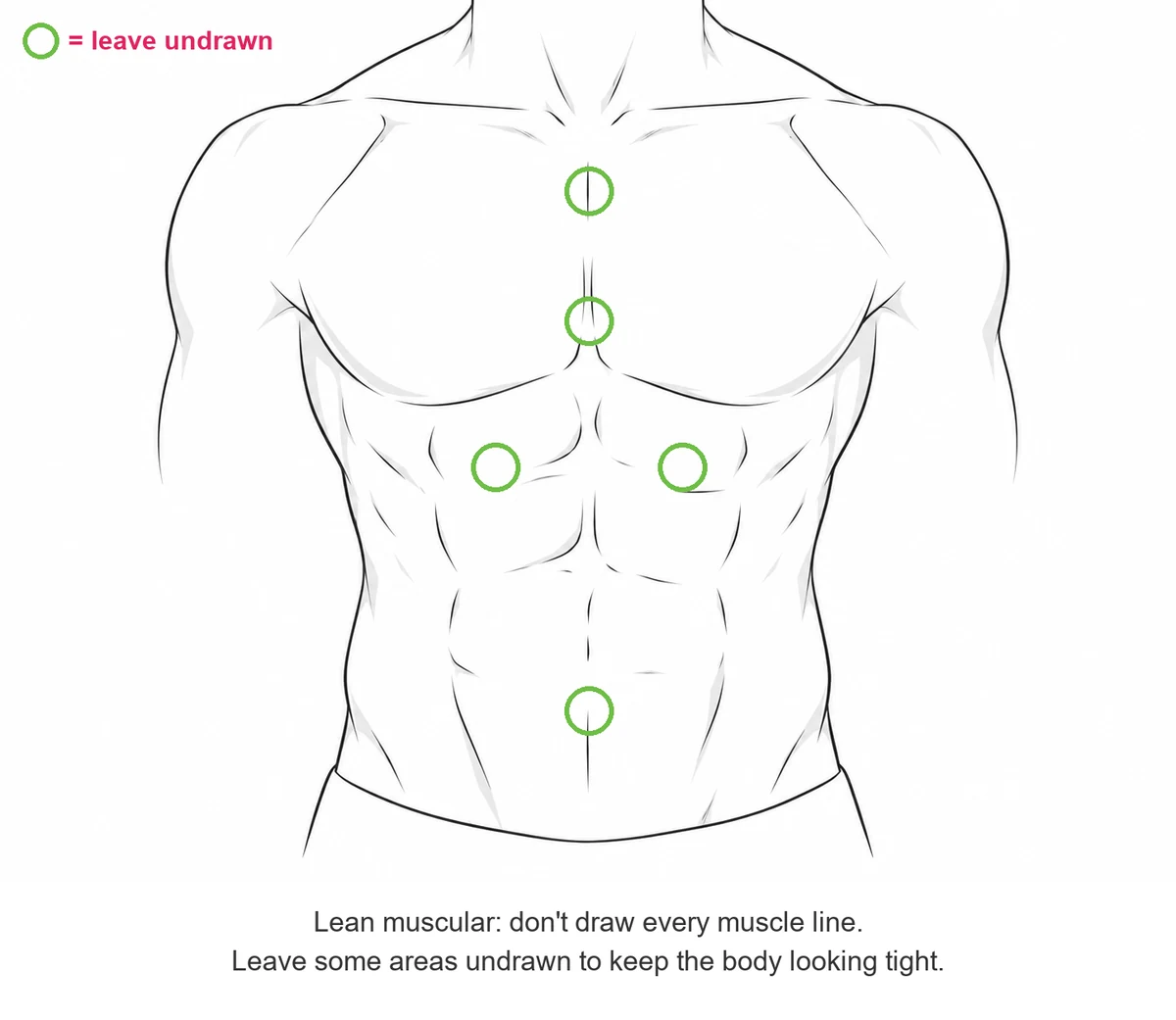
Lean muscular: areas left undrawn
Don't draw every muscle line
A lean muscular body has clear muscle definition, but you still don't draw every line. The green circles mark the areas left undrawn: the middle of the chest, the top of the abs, the lower belly. Skipping them makes the body read tighter, not weaker.
 Construction study
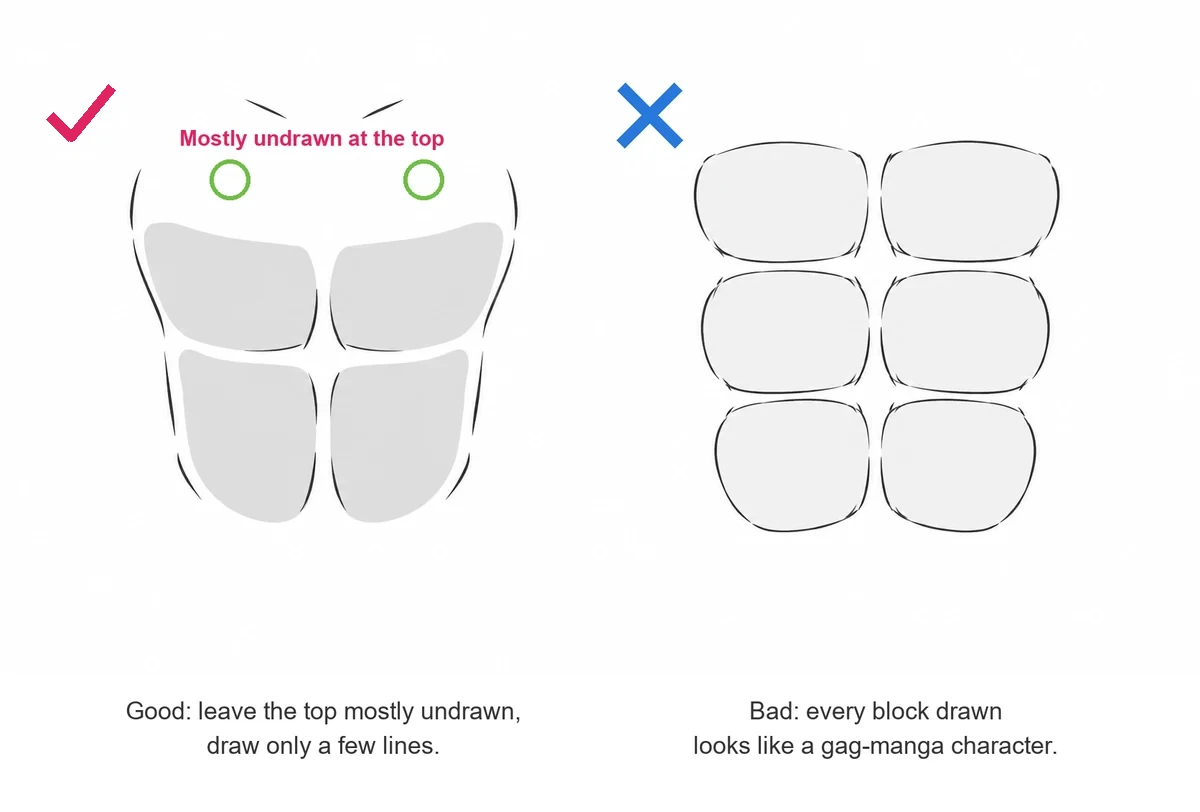
Abs: a few lines, not six blocks
Leave the top mostly undrawn
Leave the top of the abs mostly undrawn and keep only a few lines. Two vertical lines on each side is plenty, and it makes the muscle look tighter. Outline every block and you get the gag-manga look on the right.
 Construction study
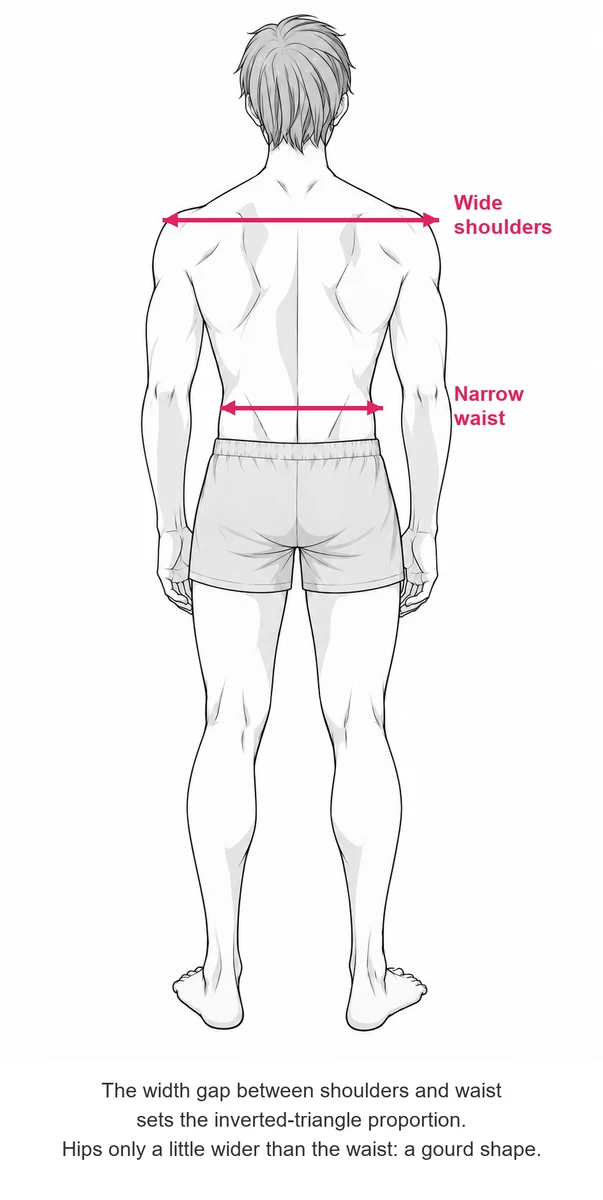
Back: wide shoulders, narrow waist
Think of a gourd
A guy with a great build isn't the same width from his shoulders down to his hips. Draw the shoulders wide and the waist narrow, with the hips only a little wider than the waist. That gap between shoulder width and waist width sets the inverted-triangle proportion: narrow in the middle, wider above and below, like a gourd.
 Construction study
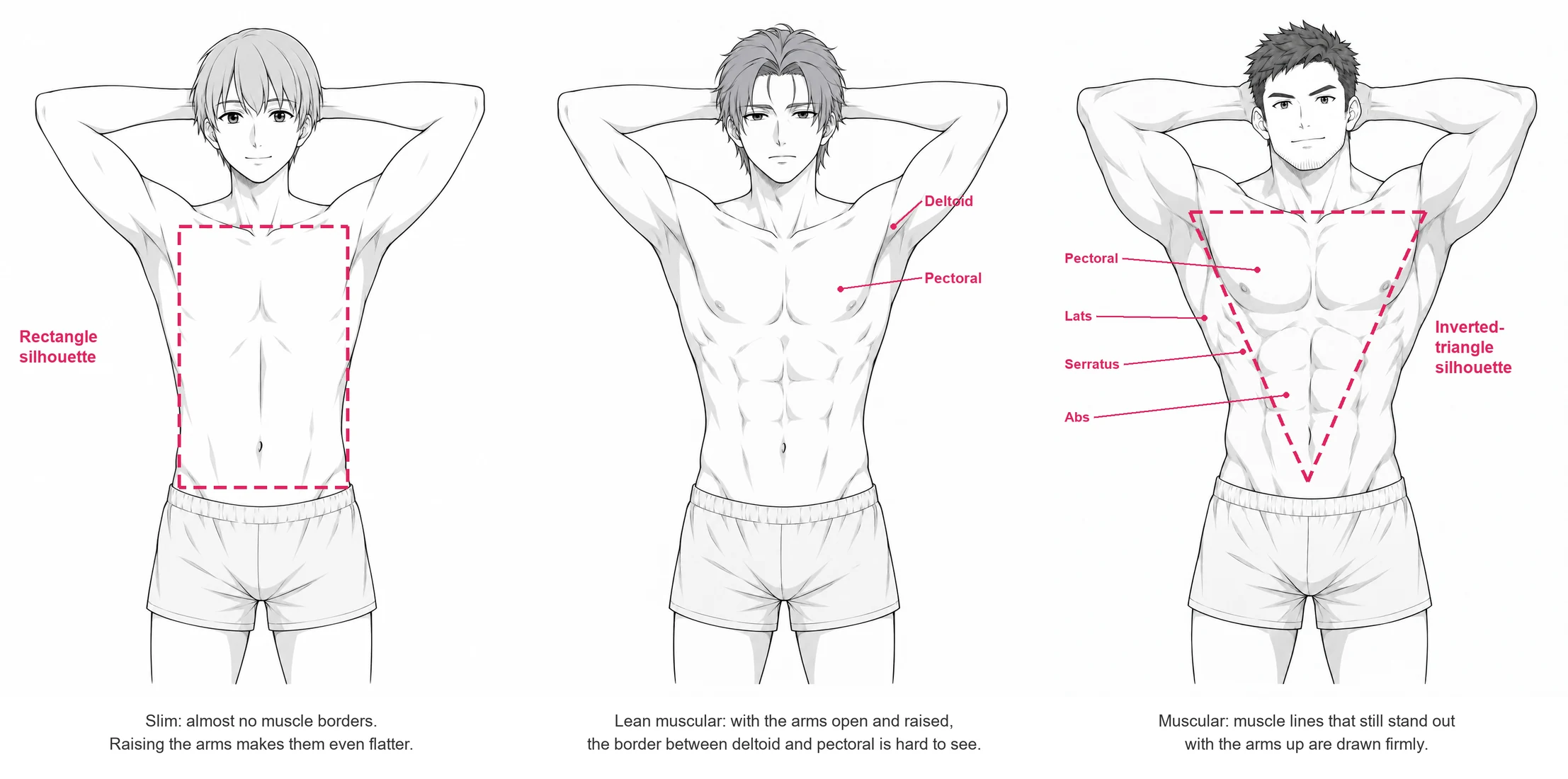
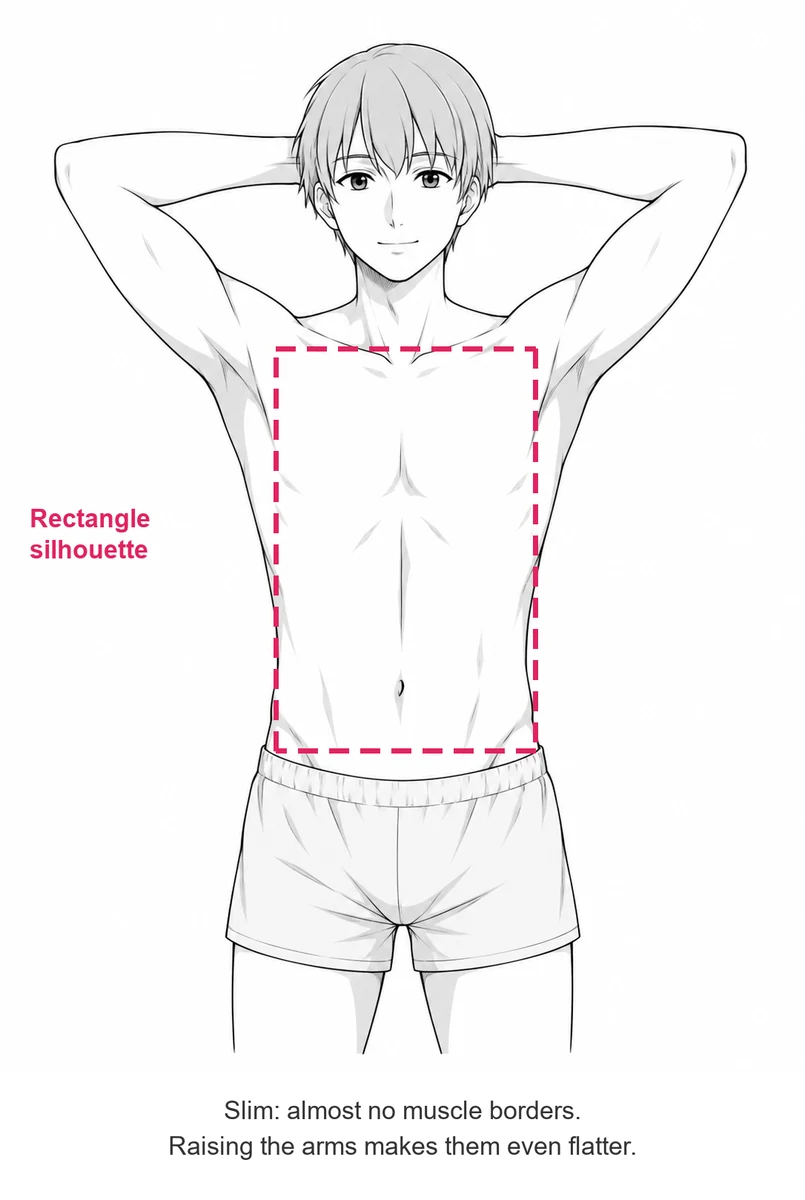
Slim
Rectangle silhouette
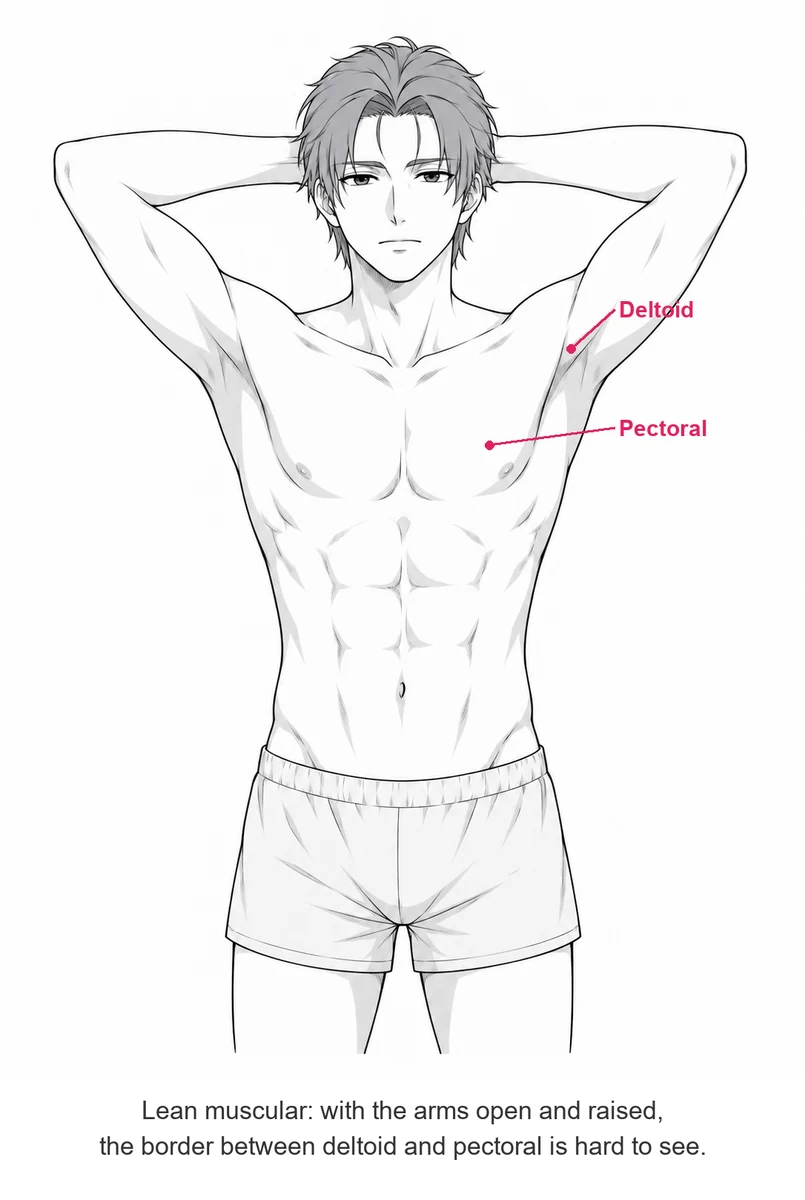
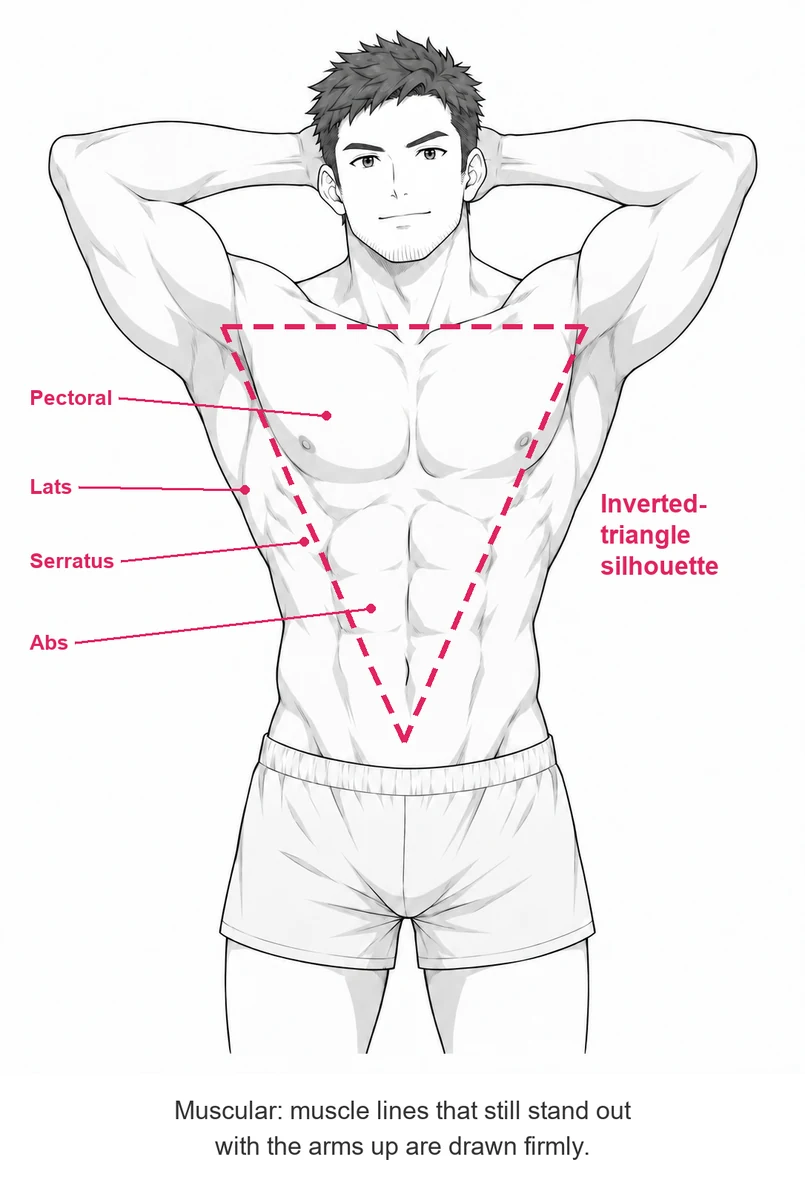
The next three cards use the same pose, arms folded behind the head, so you can compare builds. A slim guy has a rectangle silhouette. Draw almost no muscle borders. Raising the arms makes them even flatter.
 Construction study
Lean muscular
Watch the shoulder-to-chest border
With the arms opened out and raised, the border between the deltoid (shoulder) and the pectoral (chest) gets hard to see. Don't force a hard line there. Let it fade.
 Construction study
Muscular
Inverted-triangle silhouette
Here the silhouette becomes an inverted triangle. The muscle lines that still stand out with the arms up (pectorals, lats, serratus, abs) get drawn firmly.
 Real lesson material
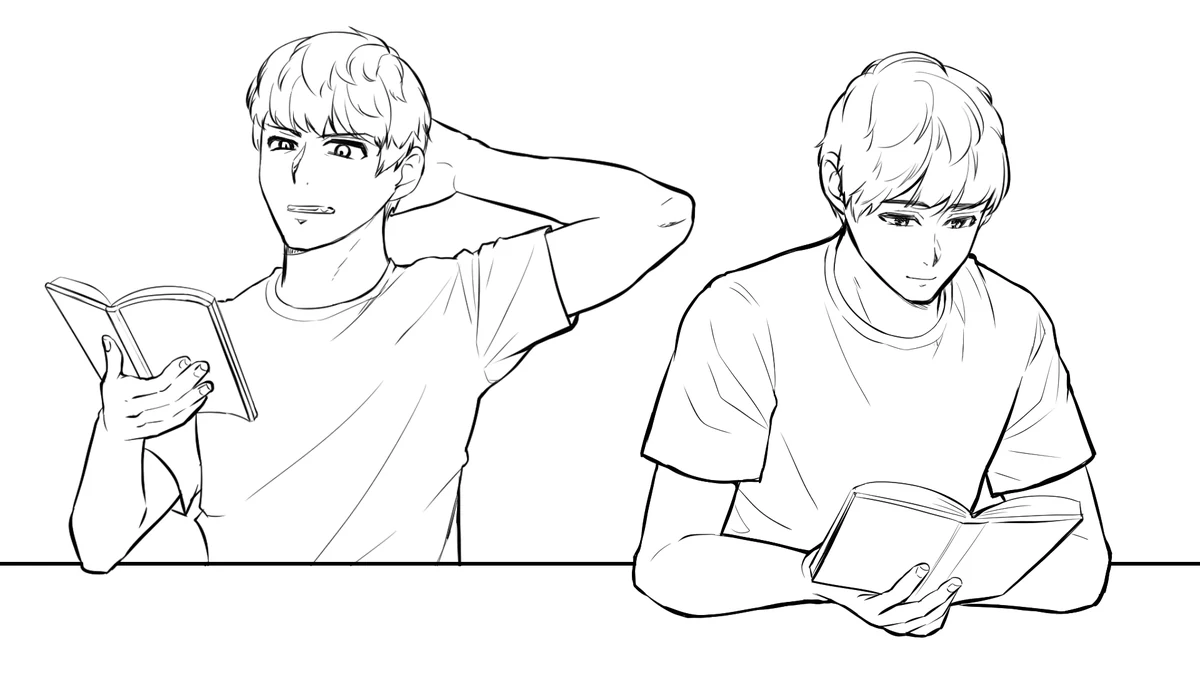
Personality and pose
Same design, different person
Muscle isn't the whole story. Decide the character's personality and mood, then show it in the pose. Both guys here are reading. The focused one on the right holds the book properly and faces it directly, his eyes down toward the pages, body movement kept minimal. The one on the left tilts his head and body slightly away from the book, one hand behind his head. Same design, two completely different people.
Step 03 · Leg direction
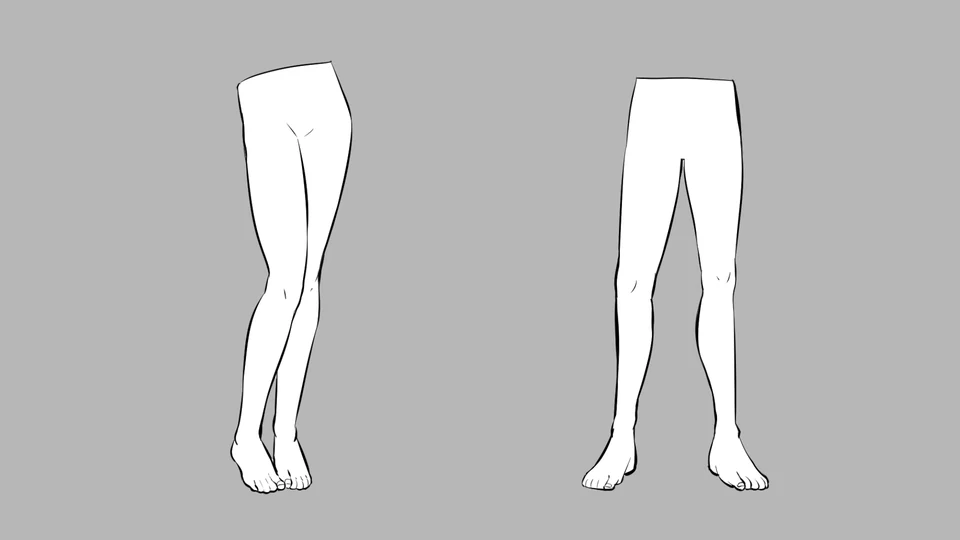
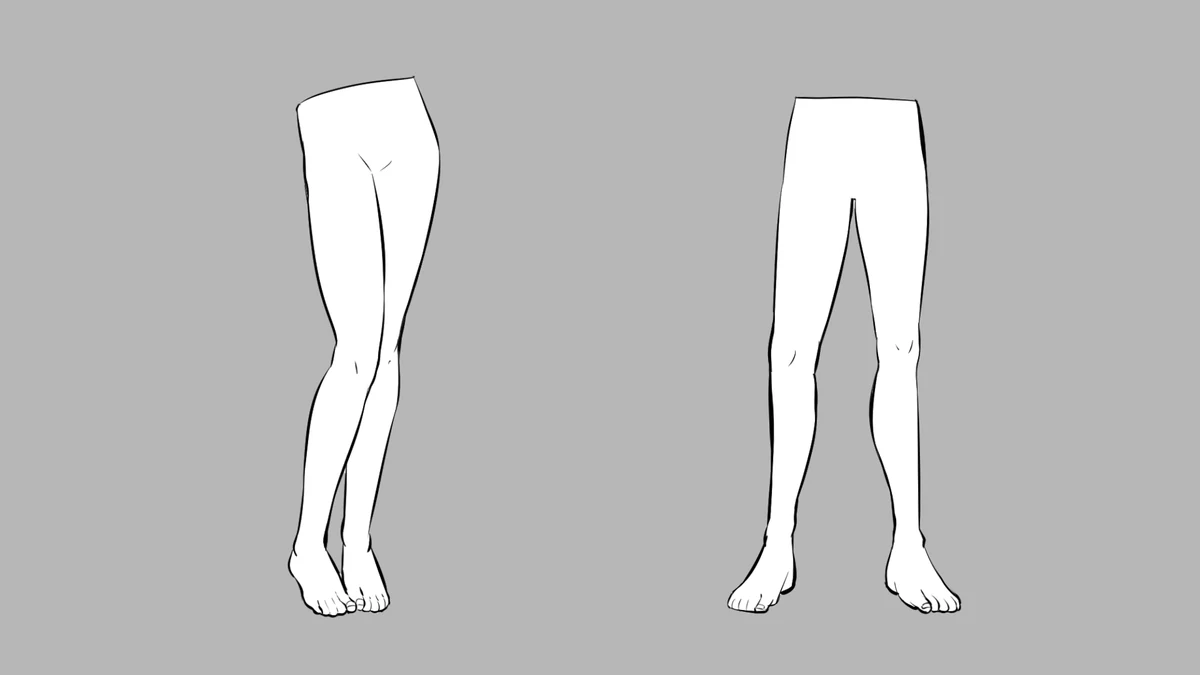
What makes a pair of legs look masculine?
Feet pointed outwards, legs apart, feet planted firmly.Anatomically, the same legs could be used for male or female characters in anime. Yet at first glance, most people read the pair on the right as masculine and the pair on the left as feminine. Same shape, same anatomy. What changed is the direction: feet pointed outwards bring a masculine energy, toes pointed inwards a feminine one.
Legs apart with the feet planted firmly give the character a sharp, angular base. There's a large gap between the man's legs, while the woman's legs are pressed together with only a little gap at the ankles. The same trick helps you show shyness or confidence, whatever the gender.
 Real lesson material
Step 04 · Sitting
How do you make a seated guy look masculine?
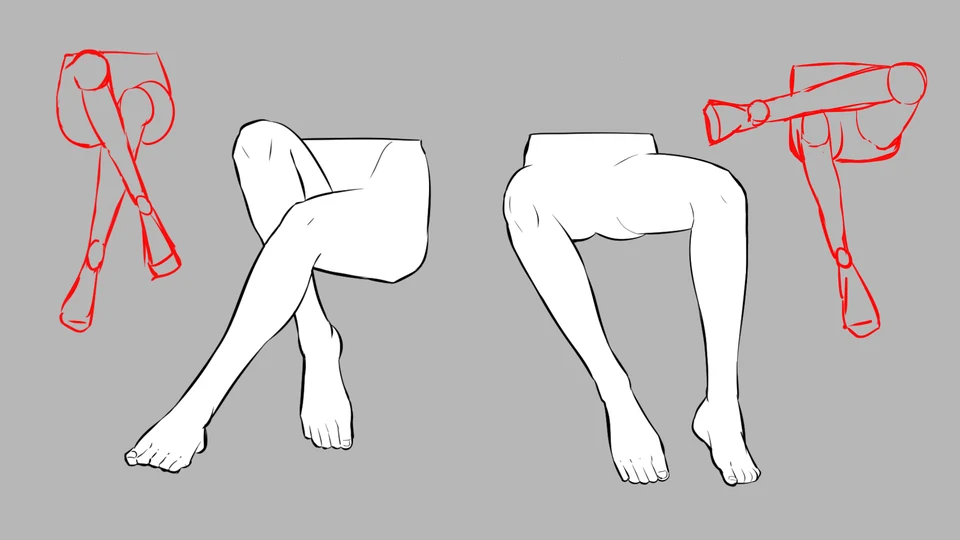
Open the legs outward, point the knees out, and let him take up more space.Seated poses follow the same rule. A feminine seated pose follows the flow of curves, with the knees pointing inwards as the legs cross. For a male character, opening the legs outward creates an angular, masculine silhouette. The knees point outwards, and the outer silhouette picks up more angles.
Crossed legs work the same way. Women often cross inwards. A man might cross his legs outwards, maybe with a foot up on the opposite thigh. Both look confident. The difference is how much space each pose takes up.
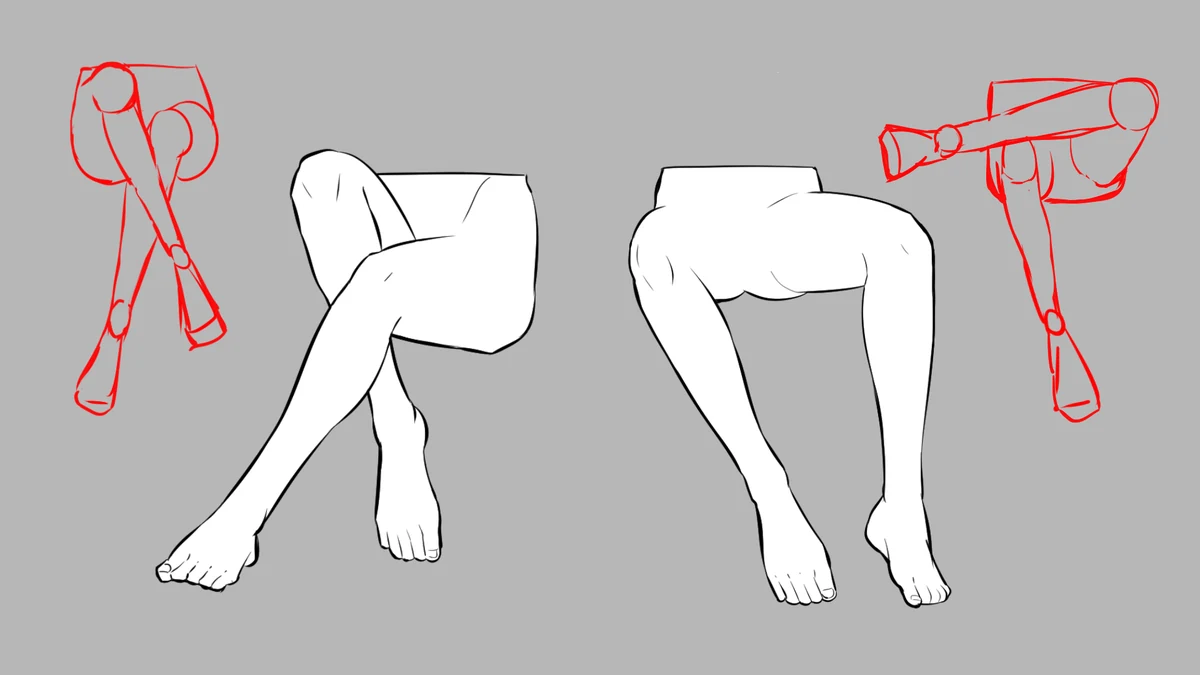 Real lesson material
Step 05 · Walking
Why does one walk look masculine and another feminine?
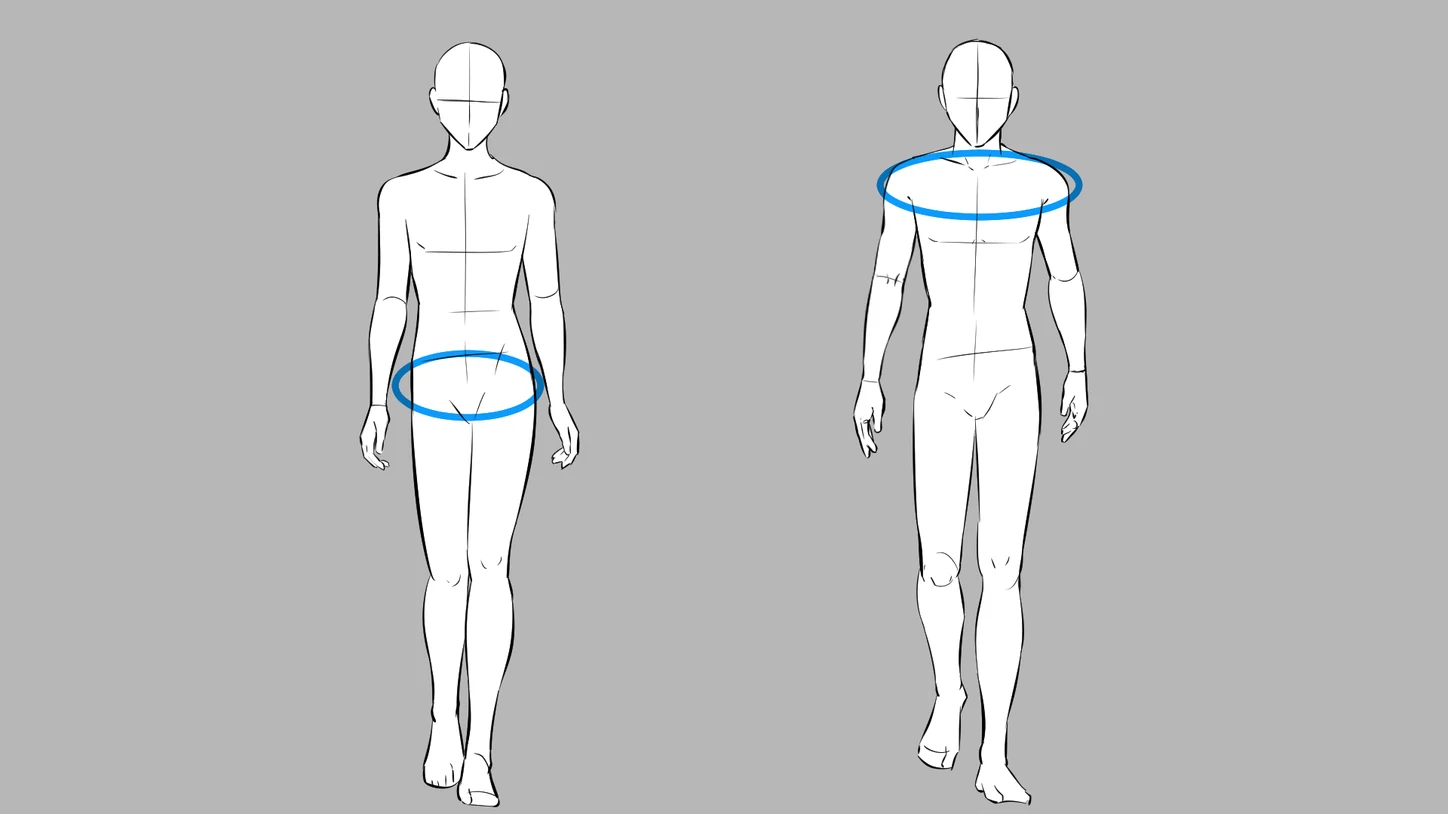
The starting point: the shoulders for a masculine walk, the hips for a feminine one.In a feminine walk, the hips are the base that balances the movement, and that builds the curve. The arms hang down naturally by the sides and don't come out far from the body.
A masculine walk uses the shoulders as the base. The shoulder muscles are activated and move the arms with intent, so the arms fall a little further from the body and the silhouette gets wider and bulkier. The hips tilt less, the feet point outwards, and the gait is wider. When you get stuck, go back to the rule from our lesson: curves for feminine, straight lines for masculine.
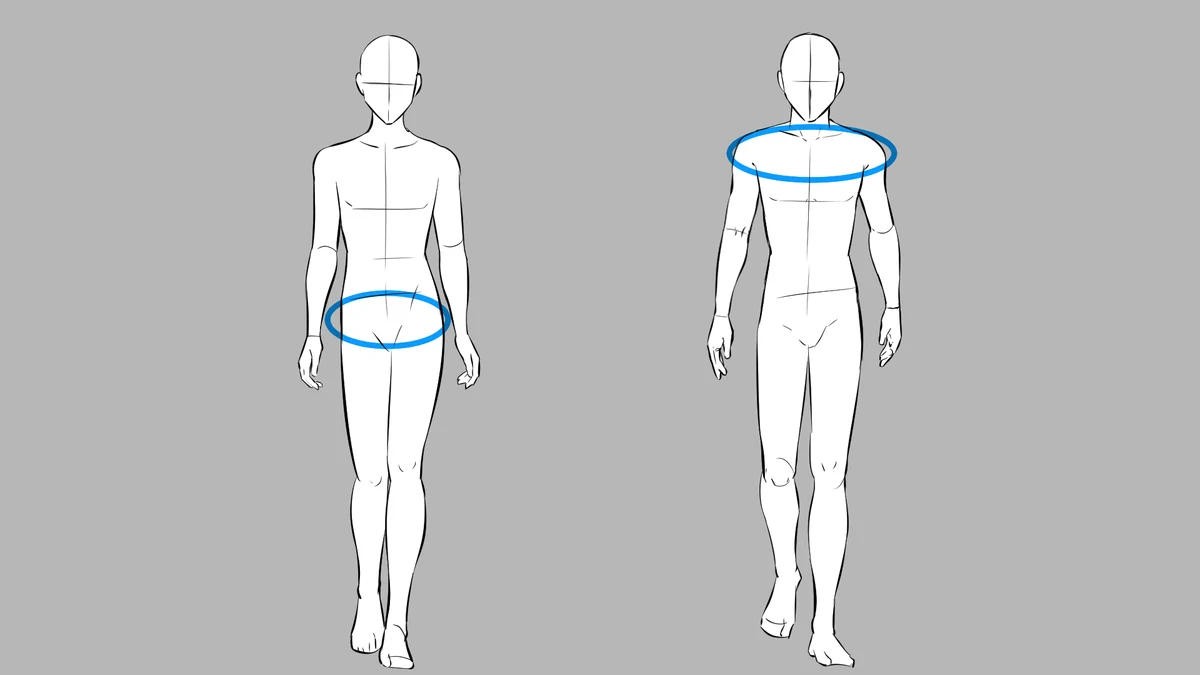 Real lesson material
The most common mistake: outlining every ab
Leave the top of the abs mostly undrawn and the body looks lean. Outline all six blocks and he turns into a gag-manga character.
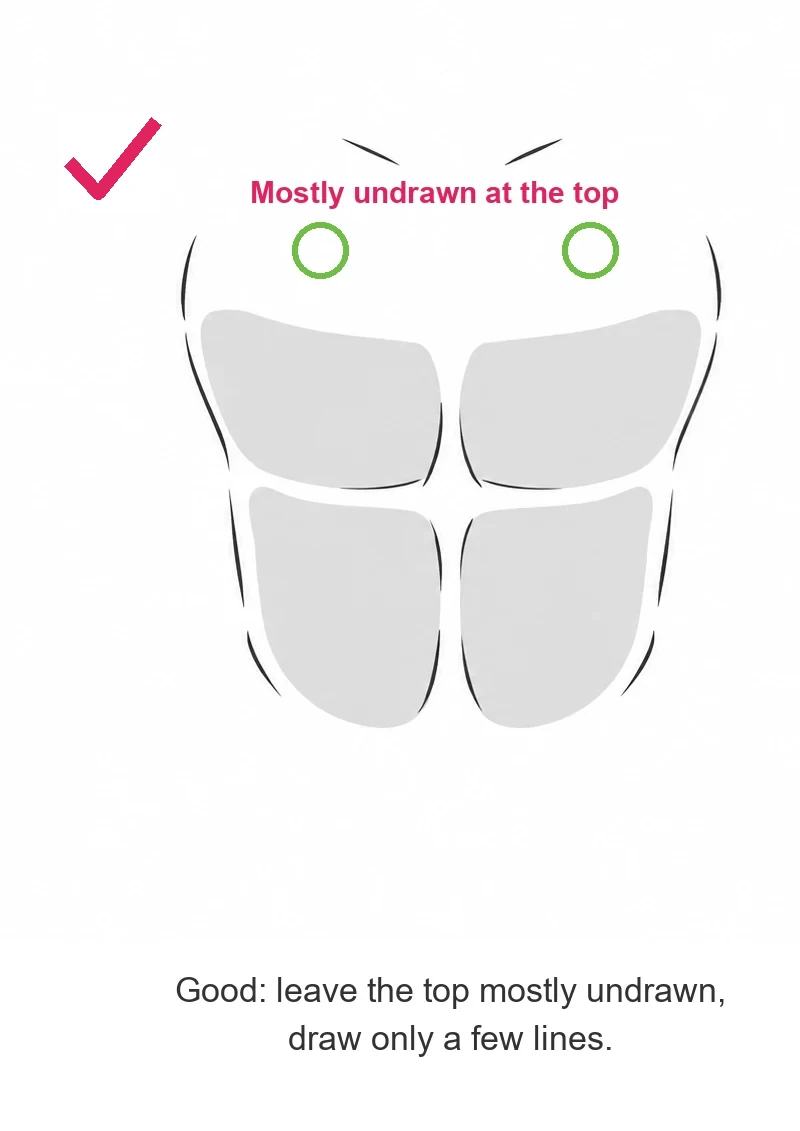
Good: the top is mostly undrawn, only a few lines.
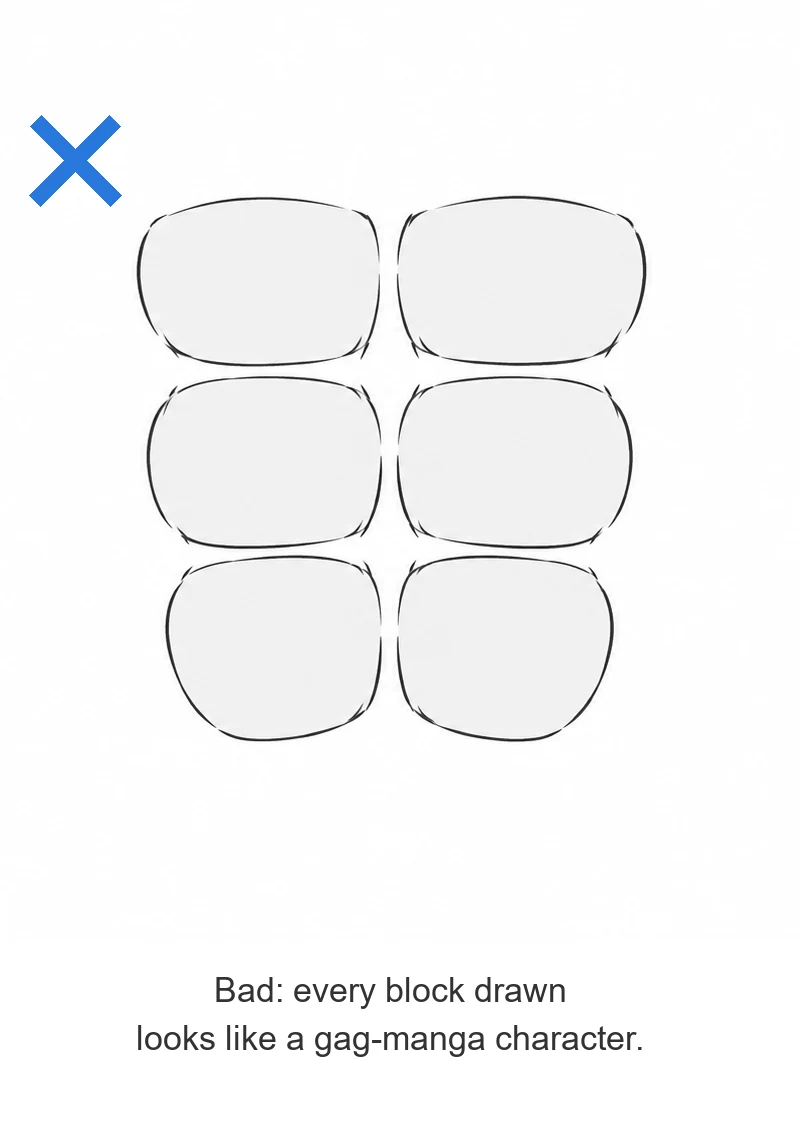
Mistake: every block outlined.
Where people usually get stuck
My guy turned into a gag character when I added muscle
You probably outlined every ab. Leave the top of the abs undrawn and keep a couple of vertical lines (Step 2).
His body looks flat
The lines have no variation. Make them heavier where the muscle swells out (Step 2).
He's supposed to be masculine, but he reads feminine
Check whether the toes and knees point inwards, and whether the hips are leading the walk (Steps 3 to 5).
Anime male body drawing FAQ
What kind of body looks attractive on an anime guy?
A lean muscular build works for a lot of anime guys: an inverted-triangle silhouette with wide shoulders and a narrow waist, and abs that are hinted at instead of fully outlined. He looks fit without tipping over into bodybuilder territory.
How is drawing a male body different from a female body?
Male bodies are built from straight lines and an inverted triangle, female bodies from curves. In poses, a masculine character tends to point the feet and knees outwards, take up more space and move from the shoulders, while a feminine one moves from the hips.
How do I draw slim, lean muscular and muscular guys differently?
Change how many muscle lines you draw. A slim guy has a rectangle silhouette and almost no muscle borders. A lean muscular guy has clear definition with some areas left undrawn. A muscular guy has an inverted-triangle silhouette, and the lines that still stand out with the arms up are drawn firmly.
How do I get feedback on my male body drawings?
When you join an Anime Art Academy course, a professional Japanese artist gives you personal advice and draws red-line corrections directly on your drawing. There is no limit on how many times you can submit. The only rule: post one drawing at a time, and wait for your teacher's reply before posting the next.