How to Draw Manpu (Anime & Manga Emotion Symbols): A Step-by-Step Guide by Japanese Pro Artists
Ever added sweat drops and your character still looked confused instead of nervous? Here are 18 manpu, sorted by feeling. For each one: what it means, where it goes, and which expression it needs.
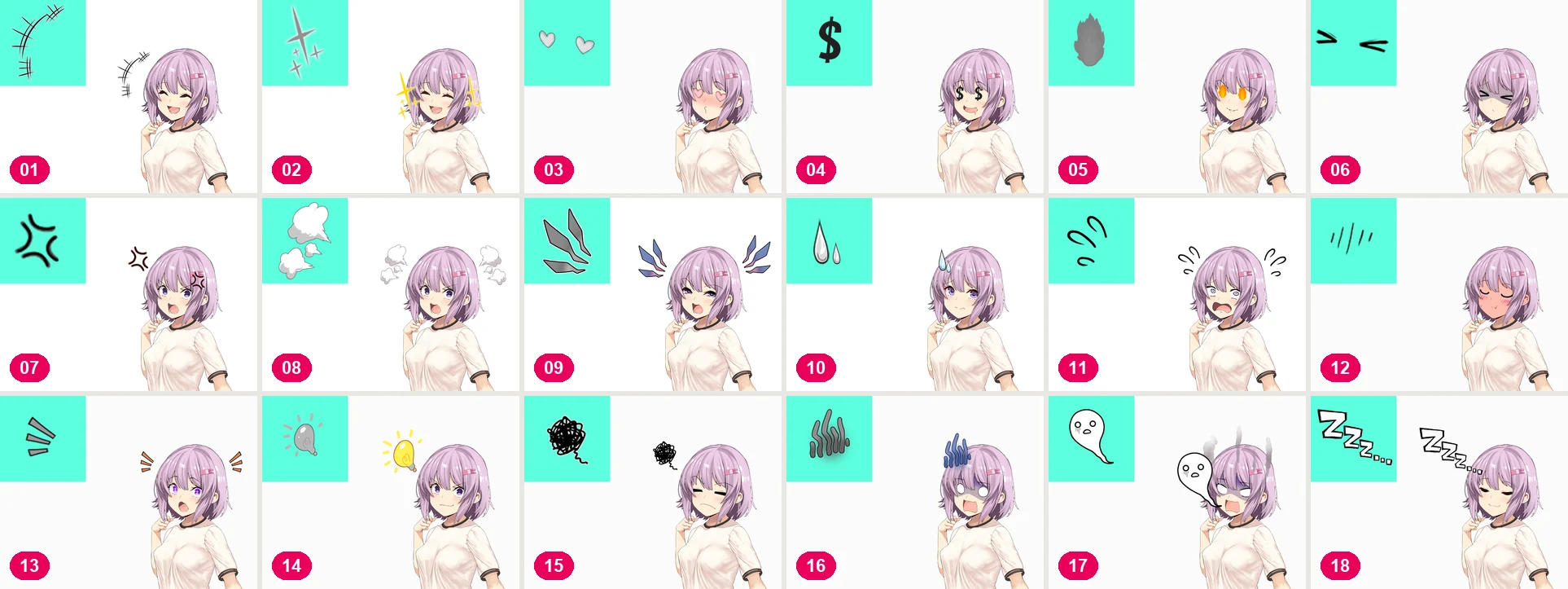 Illustrated examples
The five groups at a glance
 01
01
 02
02
 03
03
 04
04
 05
05
Step 01 · Joy & excitement
How do you show an anime character is happy or excited?
Put the joy around the face, or straight into the eyes.Manga does this in two ways. Some marks float around the character: rounded lines, sparkle marks. Others replace the eyes completely, so the feeling takes over the whole face: hearts, dollar signs, flames.
Eye symbols are loud. Use them for one big comic beat, then switch back to normal eyes in the next panel. A whole page of heart eyes stops meaning anything.
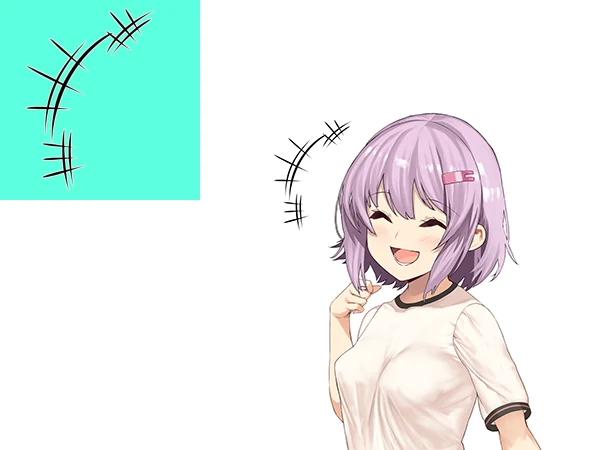
Rounded lines with crossed lines
Laughter, friendly chatter
Rounded lines with crossed lines, drawn beside the head. They show a character laughing, and they work in the background too: put them next to a group and the reader knows people are chatting, without you writing a single line of dialogue.
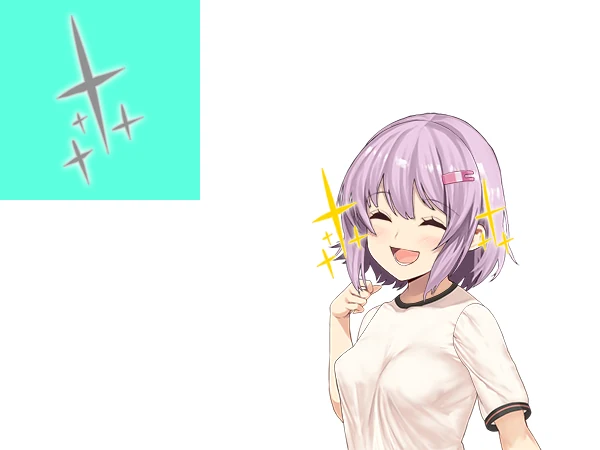
Sparkle marks
"Ta-da!", showing off, a big entrance
Sparkle marks say "this is special." Use them for a character making an entrance, a character bragging, or something brand new and shiny, like a cake fresh out of the oven. Leave a little space between the sparkles and the hair so they don't blend in.
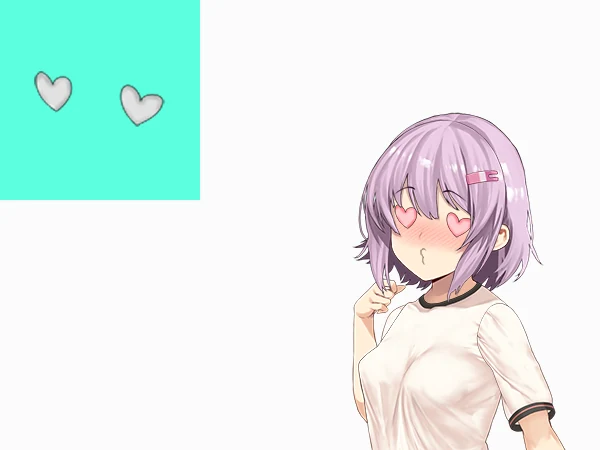
Heart eyes
Love, can't hold it in
The eyes become hearts. It works for a crush, a favorite idol or a dessert the character really wants. Add a blush on the cheeks so it reads as love and not as decoration.
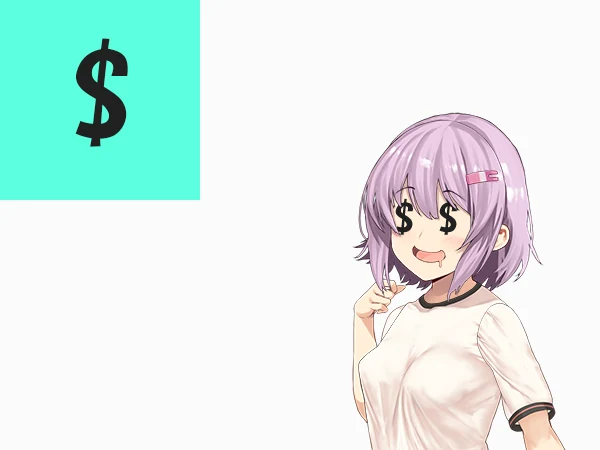
Dollar eyes
Money on the mind
Japan uses yen, but manga still draws dollar signs. Use them when a character smells a profit or is working out how to get one. A wide grin sells it.
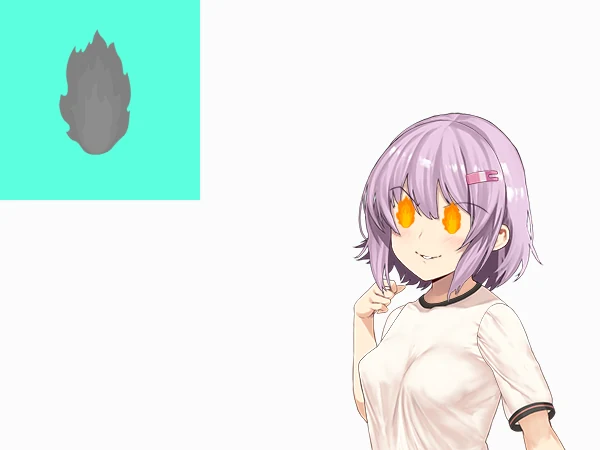
Fiery eyes
Fired up, ready to win
Flames fill the eyes when a character is pumped before a match, an exam or a showdown with a rival. Pair them with a confident smile or gritted teeth.
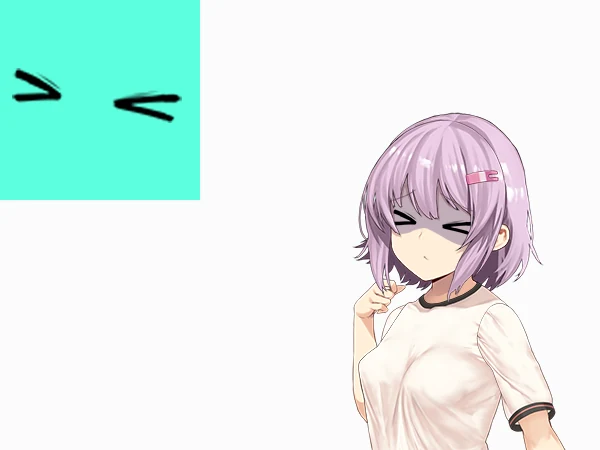
Eyes squeezed shut
Laughing hard, or in pain
Super simplified eyes, squeezed shut like > <. The symbol alone doesn't tell us the feeling. A wide smile and relaxed brows read as laughter you can't stop. A frown and a wobbly mouth read as pain or frustration. It's the clearest proof that the face matters more than the mark.
Step 02 · Anger
Which anime anger symbol should you use?
Pick by how angry the character is, and who the anger is aimed at.Manga has three main anger marks, and they aren't interchangeable. The vein mark is the most basic one. The "pun pun" mark is anger with a comic or cute edge. Lightning marks mean the character is angry with someone.
Size does the rest. One small vein mark is irritation. A big, bold vein mark that fights the face for attention is full-on rage, which is exactly what a rage beat needs.
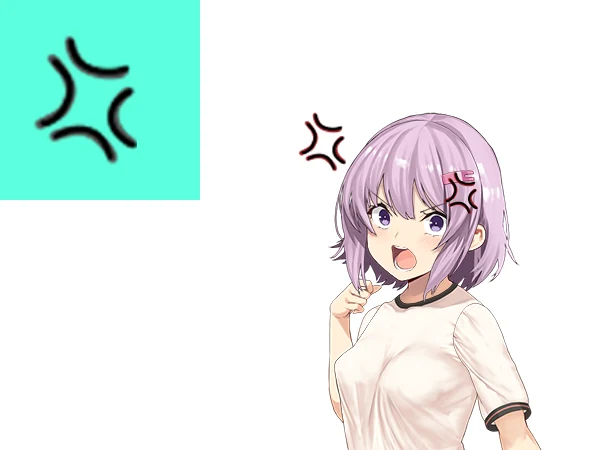
Vein mark
Anger, irritation
This mark is the vein we see on someone's temple as the blood rushes to their head when they get angry, drawn as a cross-shaped icon. Put it on the forehead or temple. If the character faces away, draw it on the hair so the reader still gets it. It's so standard it even became an emoji: 💢.
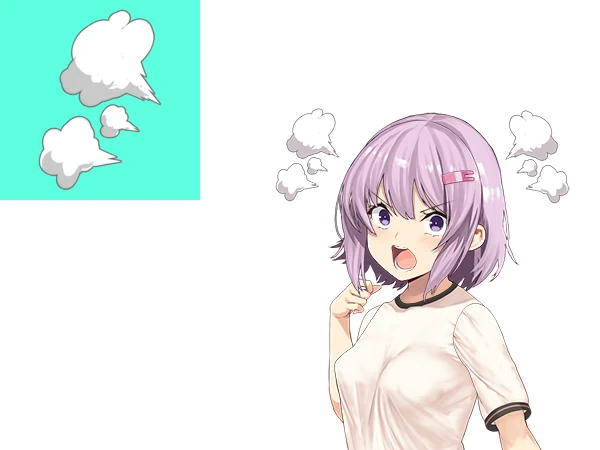
"Pun pun" mark
Comic anger, sulking
Steam coming out from the character because of their rage. "Pun pun" is the Japanese sound for this huffy kind of anger. One or two small puffs with puffed-up cheeks and a pout make a cute sulk, peak tsundere energy. Lots of steam and a wide, shouting mouth make a full meltdown.
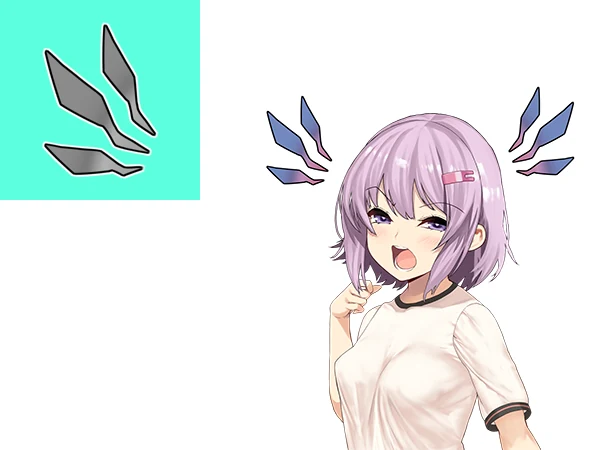
Lightning marks
Angry at someone, scolding
In Japanese, getting told off is literally "having lightning dropped on you," and that's where this mark comes from. Unlike the vein mark and the "pun pun" mark, lightning marks say the anger is aimed at another person. For a huge scolding, turn the whole background into a storm.
Step 03 · Nerves & embarrassment
How do you draw a nervous or embarrassed anime character?
Sweat for nerves, lines on the cheeks for a blush, and the kind of sweat matters.The giant sweat drop might be the most famous manpu outside Japan. It doesn't mean the character is hot. It means awkward, worried, or caught off guard.
Western cartoonists draw flying sweat too. Mort Walker's The Lexicon of Comicana even gave flying sweat drops a name: "plewds." What manga made its own is the oversized sweat drop sliding down the face, like punctuation.
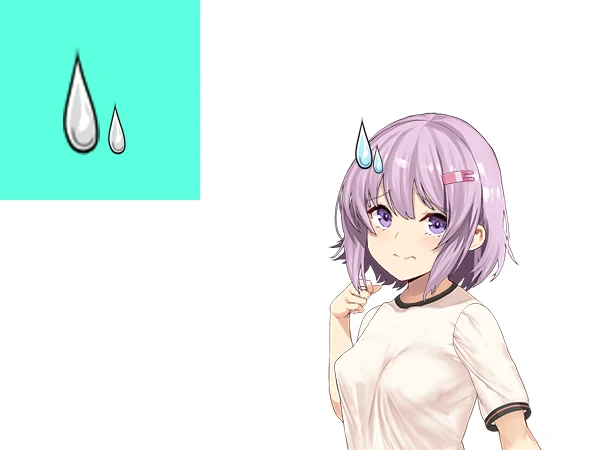
Sweat drops
Worry, awkwardness, fear
One big sweat drop sliding down from the temple. Cold sweat from fear, sweat from blushing in embarrassment, the "uh… okay" moment: these sweat drops cover all of them. Add more sweat drops to turn up the panic.
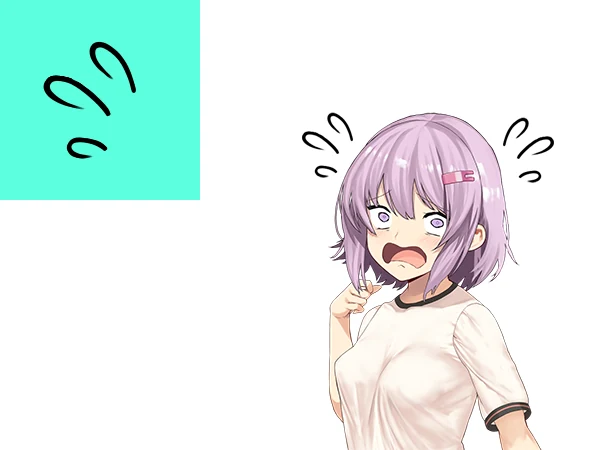
Sweat drops (flying)
Panic, rushing
A different type of sweat drop: the sweat is flicking up off the face and body, as if the character can't calm down. Use them when someone is late, flustered, hiding something, or telling a very bad lie. They need a big expression to match: wide eyes, open mouth.
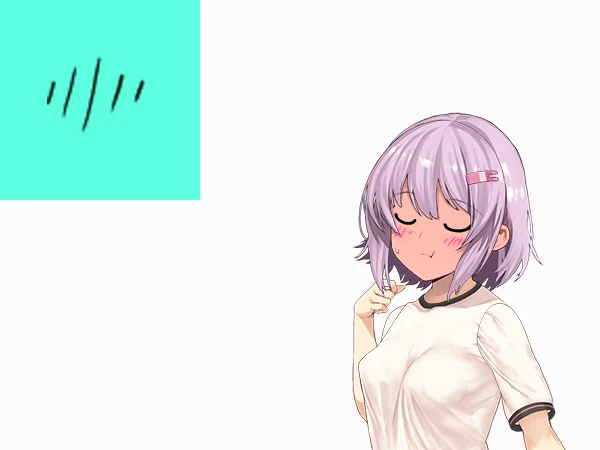
Lines on the cheeks
Embarrassed, shy, flushed
Lines on the cheeks show that a character's cheeks are red, even in black and white. A crush, a compliment, a fever: the lines carry all of it. Follow the curve of the cheek instead of drawing them flat across the face.
Step 04 · Realization & confusion
How do you show a character noticing something, or not getting it?
Lines pop out when they notice, a lightbulb appears when they get it, and a "moya moya" mark hovers when they don't.These three cover the whole thinking process. Something catches the character's attention, they work it out, or their thoughts get stuck in a knot.
All three sit near the head, because that's where the thinking happens. Keep them outside the outline of the head so they never cover the eyes.
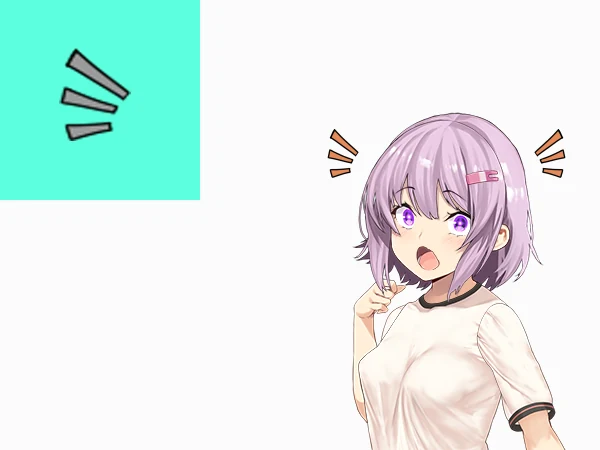
Three lines
Noticing, a sudden realization
Short lines bursting out beside or above the head. They can mean a small "oh, hi, didn't see you there" or a real "wait… what?" They always sit next to the face, never on it.
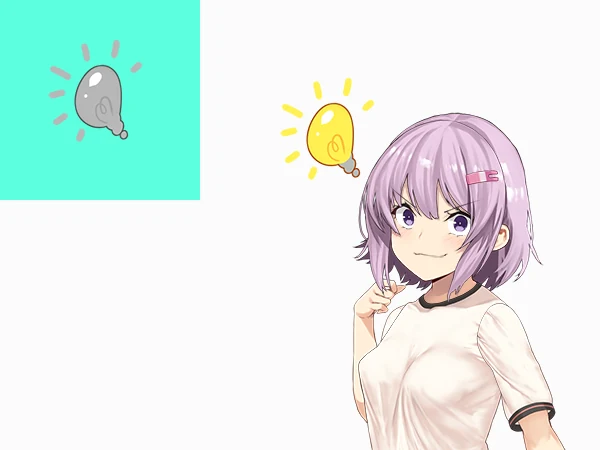
Lightbulb
A bright idea
Western comics use this one too, and it means the same thing: a light switches on in the character's head. Put it above or beside the head, with a confident little smile.
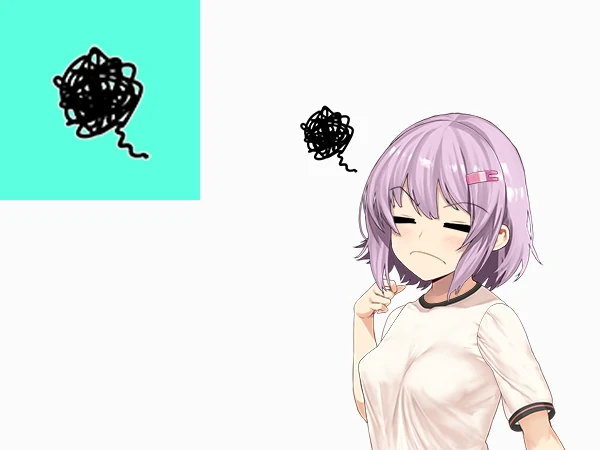
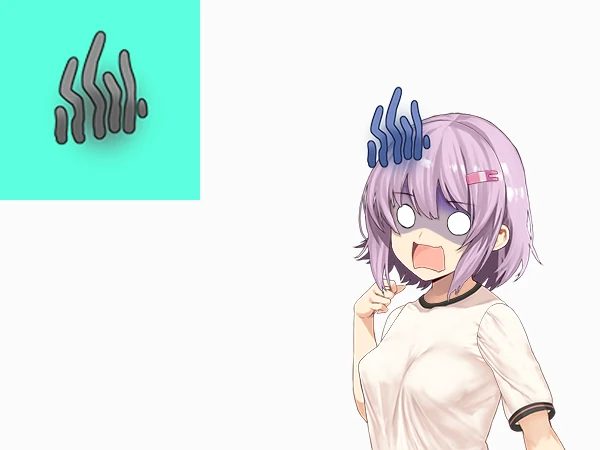
"Moya moya"
Confused, can't accept it
A squiggled mark, like the character's tangled thoughts. "Moya moya" is the Japanese word for that foggy, can't-quite-get-it feeling. With puzzled eyes it reads as confusion. With a frown it turns into "what is this guy even saying?"
Step 05 · Shock & feeling drained
How do you draw shock or total exhaustion in anime?
Vertical lines drop over the head for shock. When there's nothing left, the soul is sucked out.These manpu cover the moment after the blow. The character got bad news, lost everything, or simply ran out of energy.
They often stack. Vertical lines, a blue or grey face and white eyes together make a character look completely crushed. The soul being sucked out of the mouth is the stage after that.
Vertical "gaaaan!" lines
Shock, crushing disappointment
Vertical lines over the head, usually with a "gaan" sound, the Japanese onomatopoeia for shock and disappointment. The top half of the face usually turns blue or grey. For a huge shock, the lines can fill the whole background.
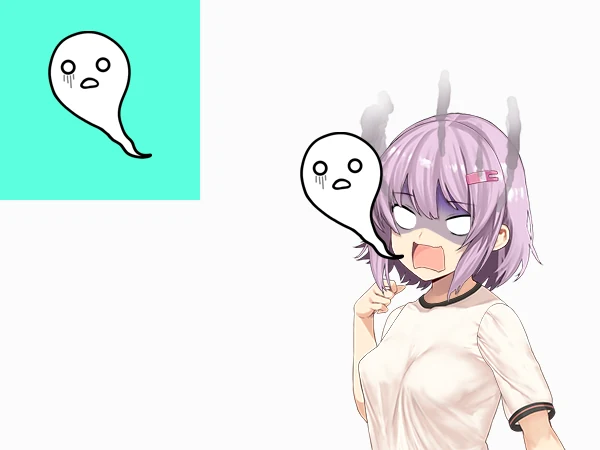
Soul sucked out
Drained, stunned, totally out of it
A little ghostie cloud is sucked out of the mouth: the character's soul leaving their body. There's no single fixed meaning. Exhaustion after a long day, losing all their money, getting rejected. The eyes are usually white. The "soul" cloud sometimes has its own little face, and sometimes is just a plain cloud of smoke.
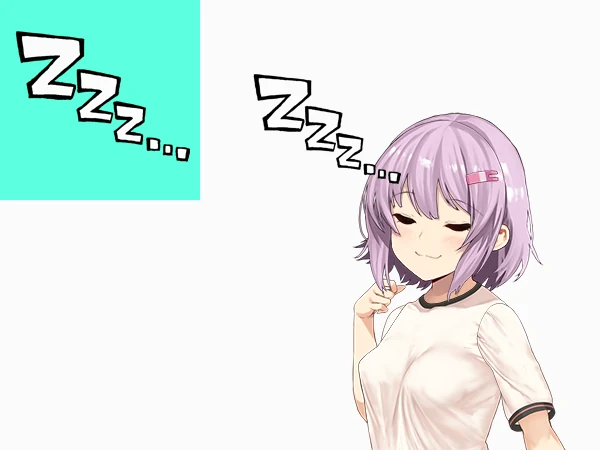
Zzz
Sleeping
Same as in Western comics. Let the letters drift up and away from the head. In manga you'll sometimes see a bubble blowing out of the nose as well.
Where people usually get stuck
I added a manpu, but the feeling still doesn't come across. Why?
Check the face before the symbol. The brows, eyes and mouth carry the emotion; the manpu only turns up the volume. If the expression is unclear, no symbol will fix it.
Which anger mark do I pick?
The vein mark for basic anger, the "pun pun" mark for sulky or comic anger, and lightning marks when the character is angry with someone else.
Why does my panel look cluttered?
Too many symbols. Give each character one main manpu per panel. Add a second only if it does a different job, like a vein mark plus sweat drops. Save the pile-ups for gags.
Anime manpu FAQ
What does "manpu" mean?
Manpu (漫符) joins 漫 (man), as in manga, with 符 (fu), meaning a mark or sign. So it literally means "manga symbols." The word was popularized by the comedy how-to-draw manga Saru demo Kakeru Manga Kyōshitsu by Kōji Aihara and Kentarō Takekuma. In English you'll also see "manga iconography" or "emotion symbols."
Do Western comics use the same symbols?
Some of them. The lightbulb, Zzz and dollar-sign eyes are shared, and Western cartoonists have drawn flying sweat drops for decades. Others, like the vein mark, the vertical "gaaaan!" lines and the oversized sweat drop, are far more typical of manga and anime.
Can I use more than one manpu on the same character?
Yes, if each one does a different job. A vein mark plus a couple of sweat drops reads as "angry and flustered." Three or more in one panel usually looks cluttered, unless the clutter is the joke.
How do I get feedback on my manpu drawings?
When you join an Anime Art Academy course, a professional Japanese artist gives you personal advice and draws red-line corrections directly on your drawing. There is no limit on how many times you can submit. The only rule: post one drawing at a time, and wait for your teacher's reply before posting the next.