How to Draw Anime Shading: A Step-by-Step Guide by Japanese Pro Artists
If your colored drawings still look flat, the colors are rarely the problem. The problem is usually where the shadows go. Anime coloring uses flat shadows with clean edges, the look you know from TV anime. Every shadow is easy to see, so each one has to be in the right spot. This guide walks through it with the same simple shapes, figures and clothes our Japanese pros use in their first coloring lesson.
 Real lesson material
The four stages at a glance
 01
 02
 03
 04
Step 01 · Light direction
Where is the light coming from, and which sides get darker?
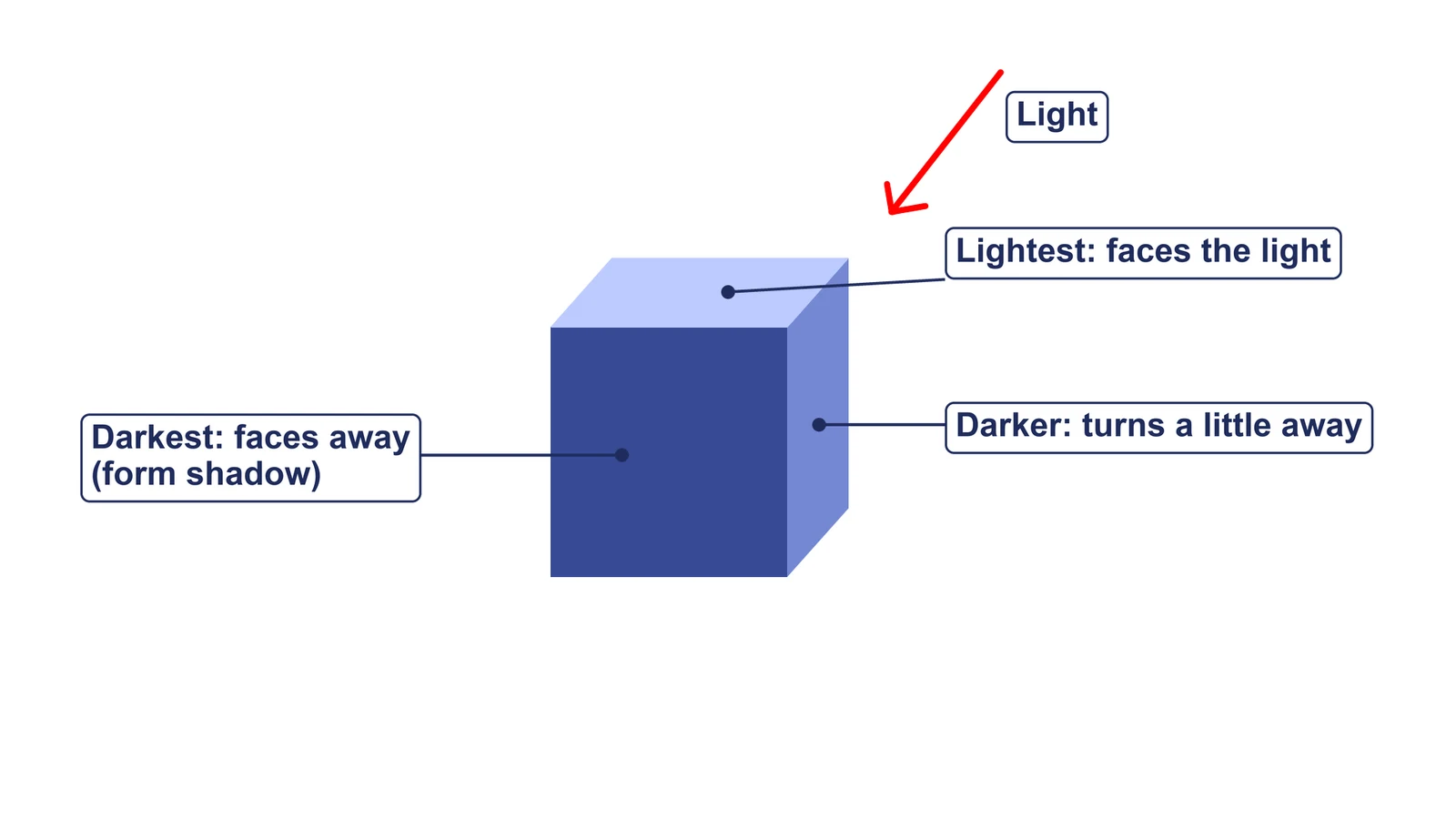
Choose one light direction before you shade anything, then make each side darker the more it faces away from the light.Start with a plain cube. Filled with one flat color, it is just a hexagon. Imagine the light coming from the upper right and a little behind the cube, as the red arrow shows. The top face catches the most light and stays lightest. The right side gets a little less light and turns a little darker. The front face points away from the light, so it gets the darkest color. With three tones, the flat shape reads as a box.
This kind of shadow sits on the object itself, on the parts that turn away from the light. Artists call it a form shadow. It works the same way on a pyramid, a sphere and a cylinder, and later on a face, an arm or a sleeve.
Real lesson material
Step 02 · Cast shadows
What is a cast shadow, and where does it fall?
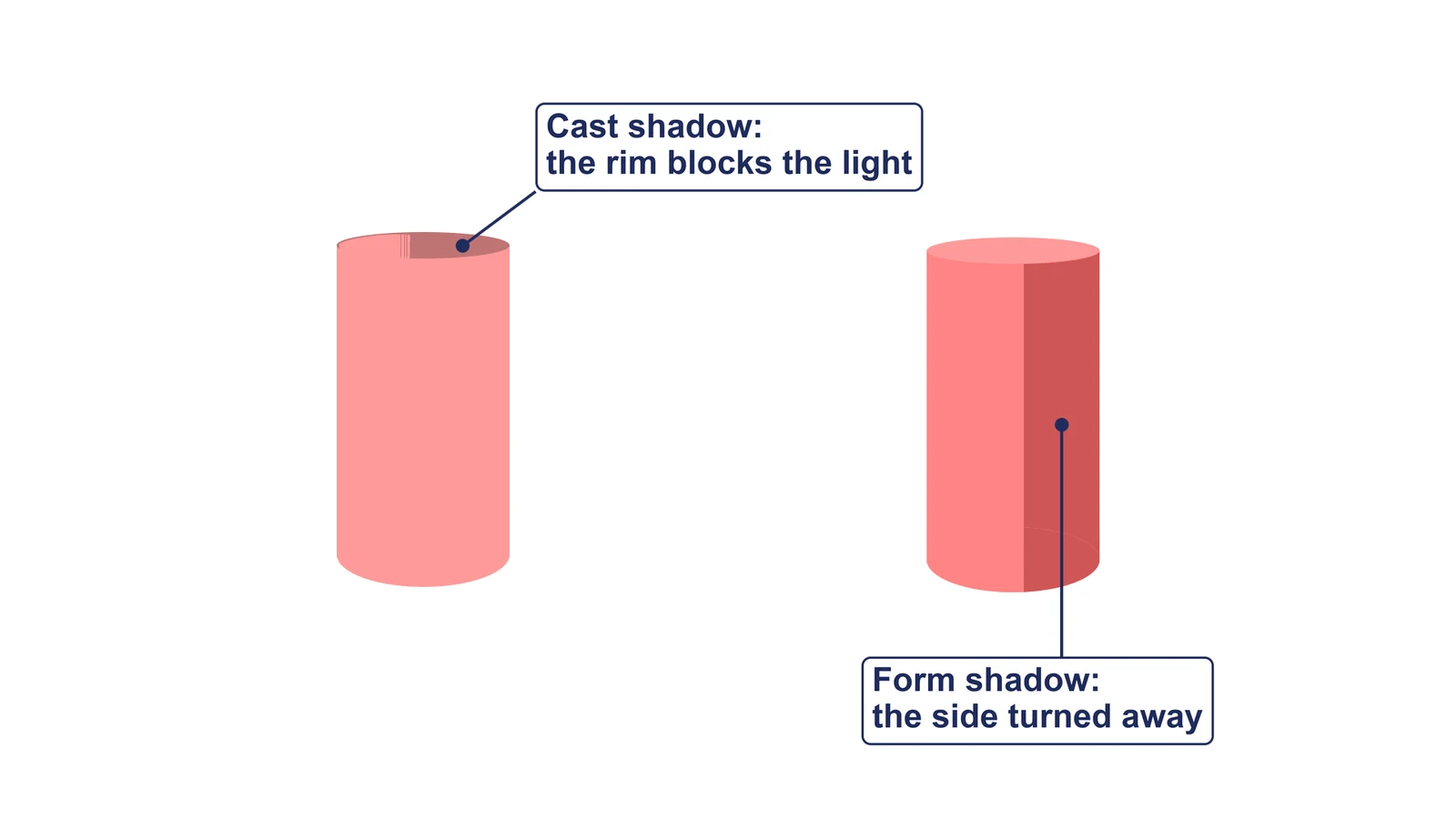
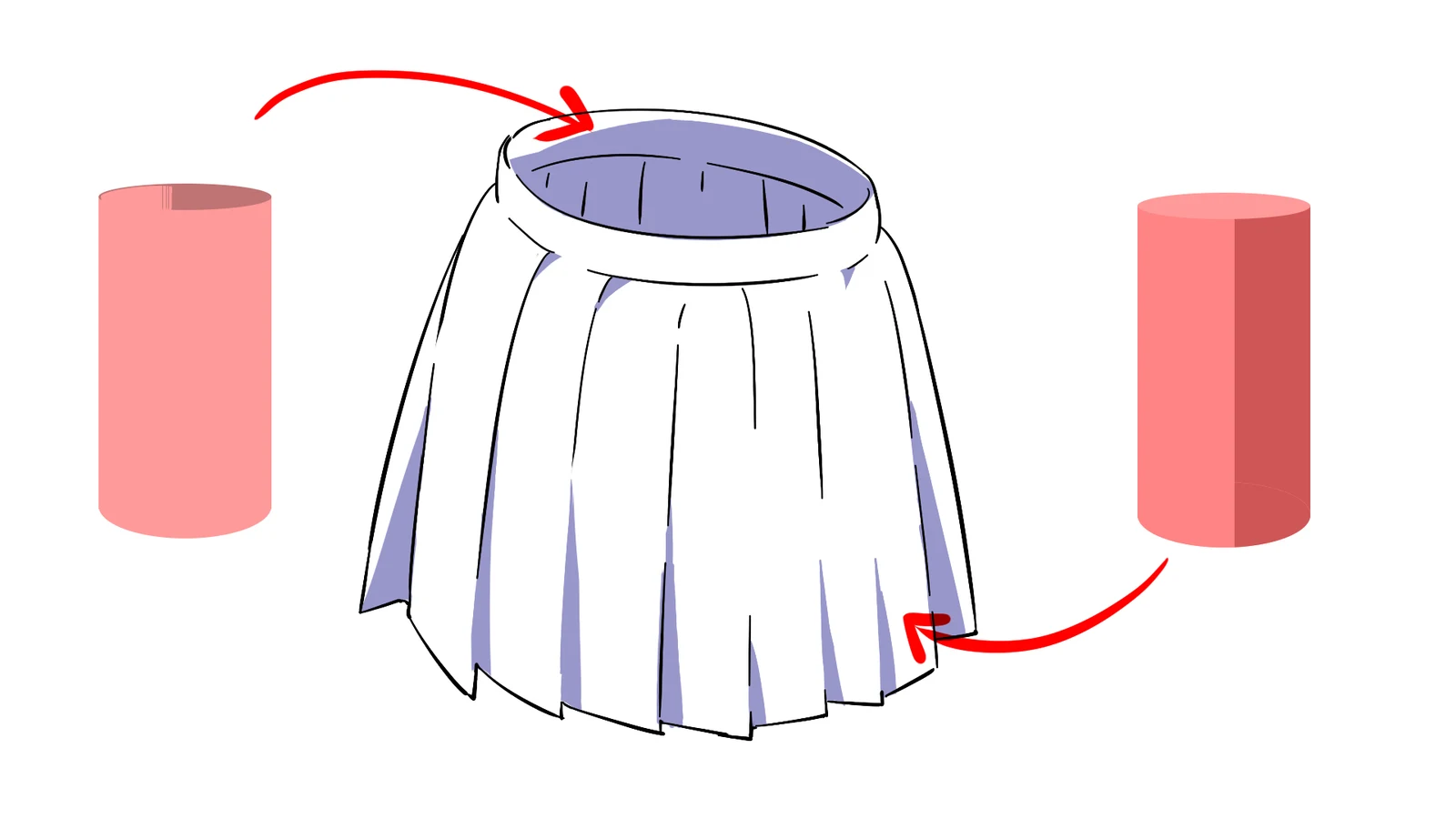
A cast shadow is the dark shape that one part drops onto another part when it blocks the light.Look at the two cylinders. They have the same outline. On the left, the rim of the tube blocks the light from reaching the inside, so the inside back wall is dark, and the shape reads as an open tube. On the right, only the side turned away from the light is dark, and the same shape reads as a solid post. Where you place a shadow decides what the object is.
A pleated skirt uses both. The inside you can see through the waistband is shaded like the open tube, and the side turned away from the light is shaded like the solid post. On top of that, every pleat folds in, so each fold line gets its own thin shadow. Form shadows and cast shadows belong together: when a part throws a cast shadow, its own underside should be in form shadow too. The jaw is a good example: the underside of the jaw is dark, and the shadow on the neck continues from it. Without that dark underside, the cast shadow seems to appear out of nowhere.
Real lesson material
 Real lesson material
Step 03 · Darkest spots on the body
Where are the darkest shadows on an anime character's body?
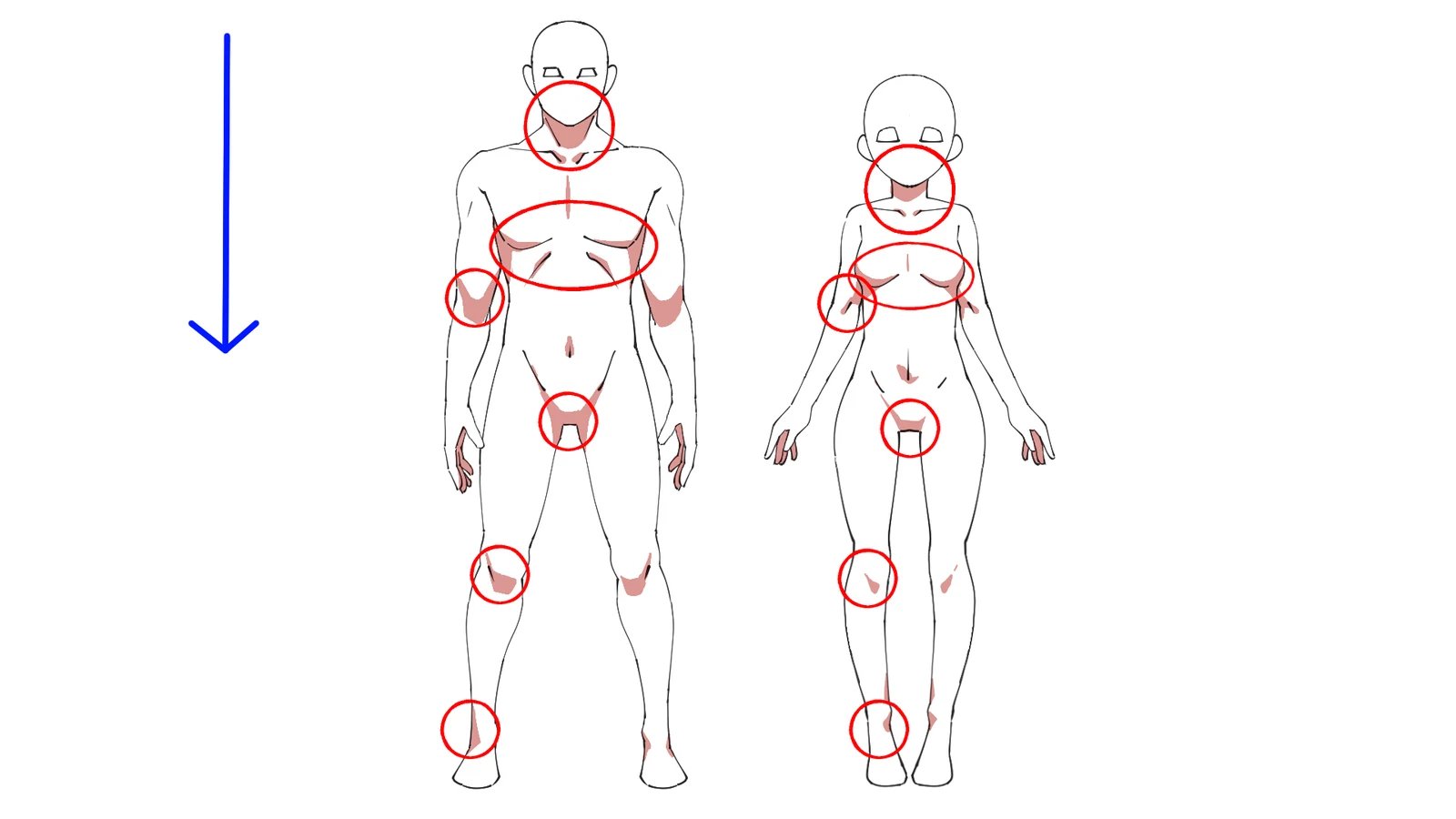
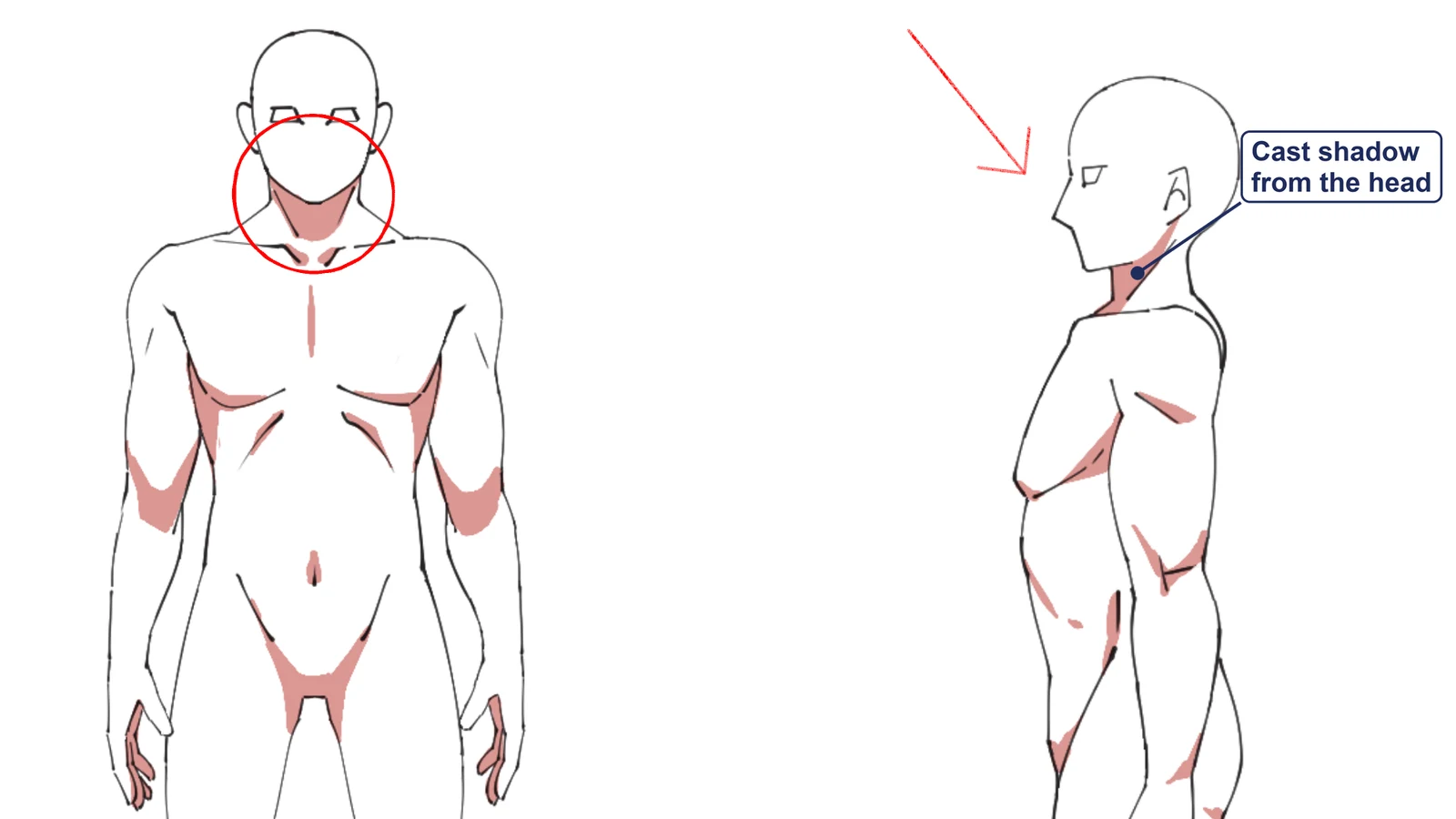
With light from above, the darkest shadows land in the same places: under the chin, under the arms, below the chest, at the elbows, between the legs and at the knees and ankles.The circles mark the spots where the shadow gets darkest when the light comes straight down. Get these right before anything else. They are what make a body look solid. Male and female figures get shadows in the same general places. On a female figure, follow the curves of the body with rounder shadow shapes. On a male figure, the muscles create more straight-edged shadows.
The neck shadow deserves extra attention. The head blocks the light, so the shadow on the neck is both darker and larger than most beginners expect. In the side view, it runs from under the jaw down to the collarbone.
Real lesson material
 Real lesson material
Step 04 · Shadows on clothes
How do you shade clothes on an anime character?
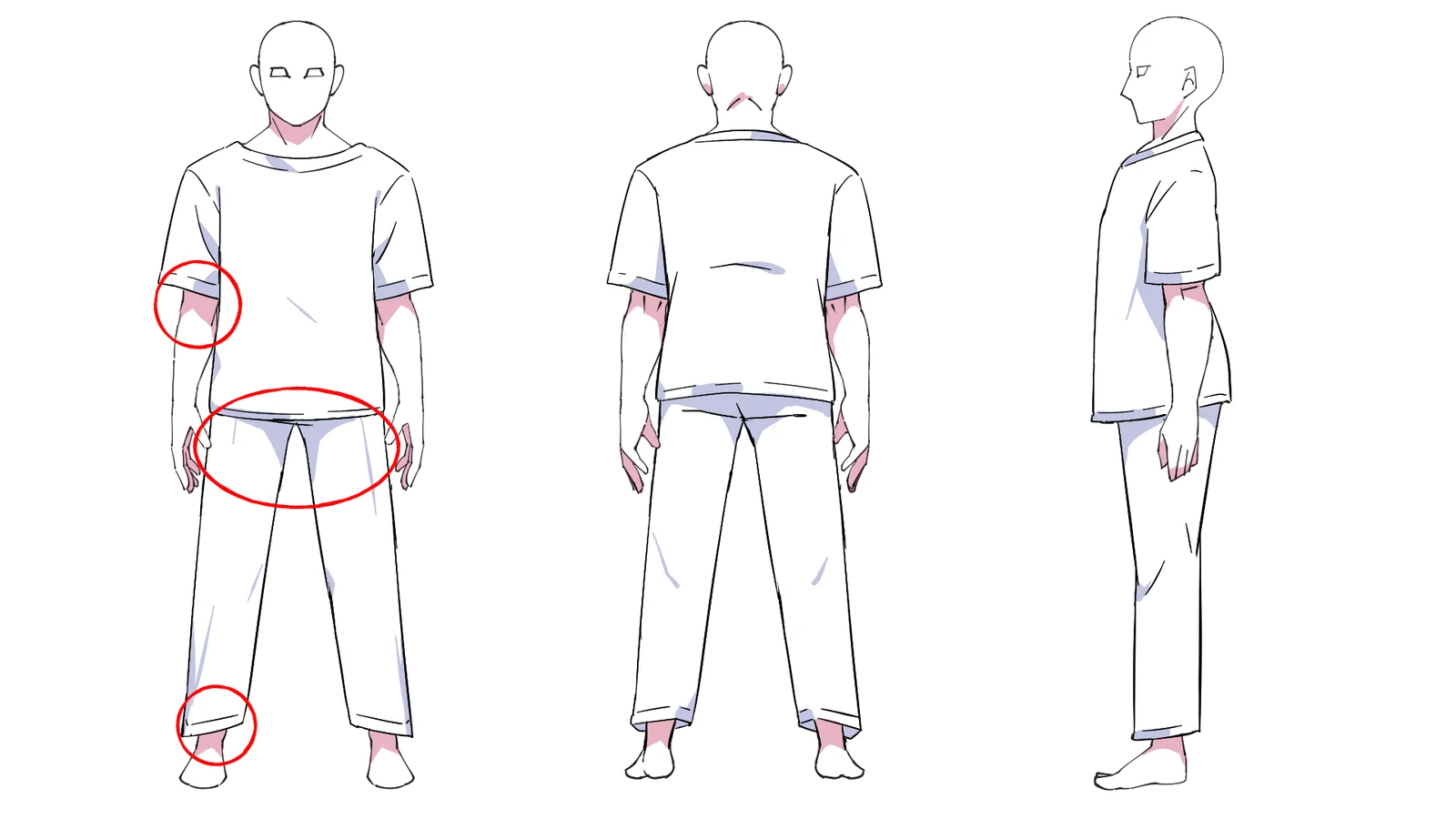
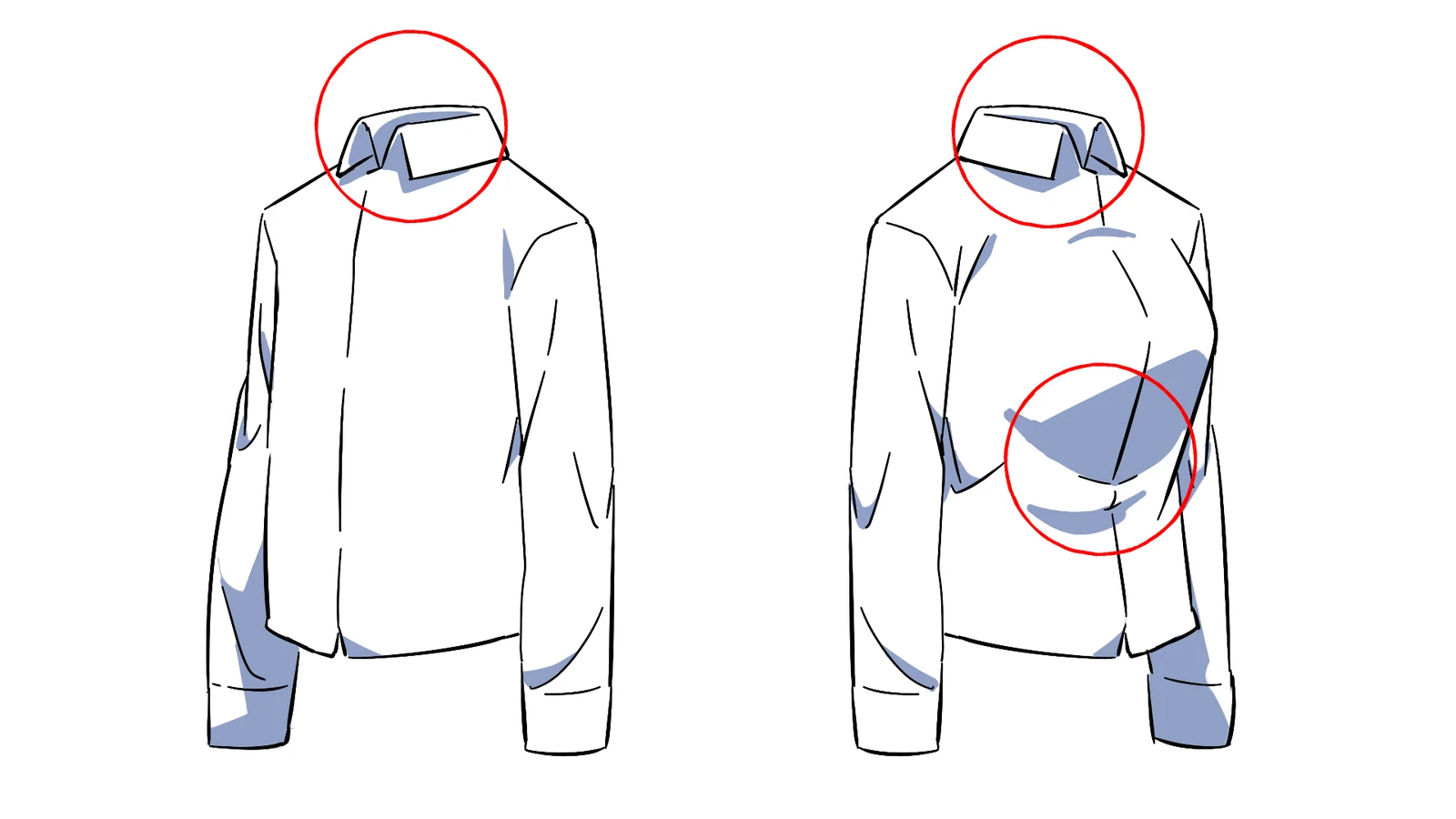
Keep the body's darkest spots, then add shadows wherever the fabric folds over or pulls into a crease.A shirt adds its own shadows on top of the body's. The collar folds over, so a dark shadow sits under it. Wherever the fabric bends, the inside of each fold falls into shadow. A fitted shirt follows the body more closely than a loose T-shirt, so on a female character the shadow under the chest gets bigger, and the small creases add more little shadows.
Even fully dressed, the darkest spots stay roughly where they were on the bare figure: under the chin, under the sleeves, below the shirt hem and at the ankles. After that, look at real fabric. A soft blouse, stiff denim and a thick coat each fold in their own way, and the shadows change with them.
 Real lesson material
Before and after: the same lines, with shadows added
The line art is the same in both. Only the shadows on the neck, sleeves, hem and legs were added, and the figure now has depth.
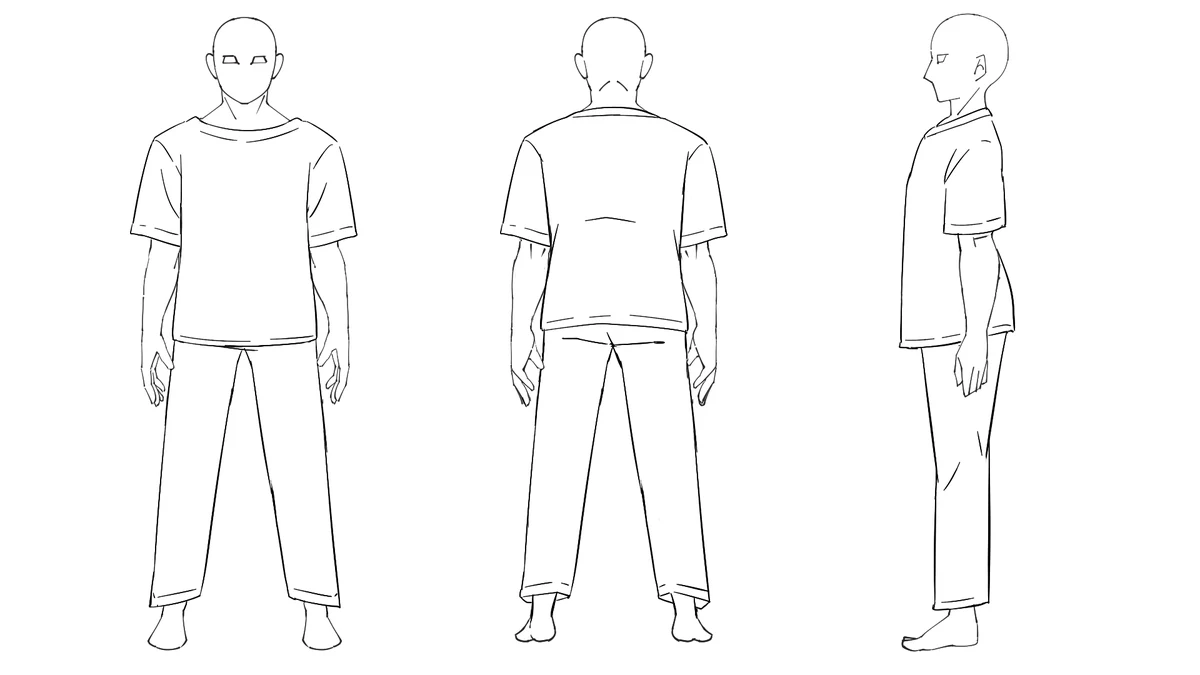
Before: line art only. The figure looks flat.
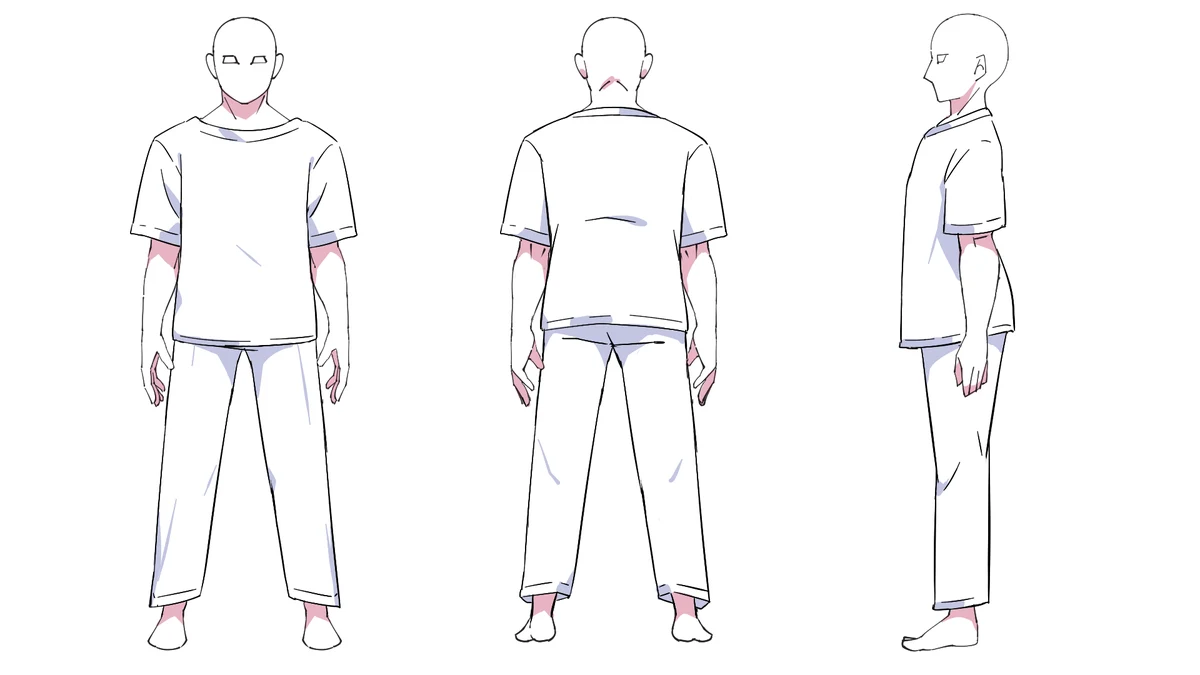
After: shadows in the darkest spots give the figure depth.
Where people usually get stuck
"I shaded everything, but it still looks flat."
All the shadows are probably the same darkness. Check your light arrow again. The sides that face directly away from the light should be clearly darker than the ones that only turn a little away.
"My character looks fine until I add clothes."
The body shadows got lost under the fabric. Put the darkest spots back first, under the chin, under the sleeves and below the shirt hem, and then add the fold shadows.
"The head looks pasted onto the body."
The neck shadow is too small. The head blocks the light, so give the neck a large, dark shadow from the jaw down.
Anime shading FAQ
What is the difference between a form shadow and a cast shadow?
A form shadow sits on the object itself, on the sides that turn away from the light. A cast shadow is the shape an object drops onto another surface when it blocks the light, like the shadow of the head on the neck or the shadow inside a skirt. You need both. When a part throws a cast shadow, its own underside should be in form shadow too, or the cast shadow seems to appear out of nowhere.
Where should I put shadows on an anime character?
Decide the light direction first. With light from above, put the darkest shadows under the chin and on the neck, under the arms, below the chest, at the elbows, between the legs and at the knees and ankles. Clothes keep these same dark spots and add shadows inside each fold.
Do male and female characters get shadows in the same places?
Yes, the main dark spots are the same. The difference is the shape. Female characters usually get rounder shadows that follow the curves of the body, and male characters get more straight-edged shadows from the muscles.
How do I get feedback on my shading drawings?
When you join an Anime Art Academy course, a professional Japanese artist gives you personal advice and draws red-line corrections directly on your drawing. There is no limit on how many times you can submit. The only rule: post one drawing at a time, and wait for your teacher's reply before posting the next.