How to Draw Anime Sword Fight Poses: A Step-by-Step Guide by Japanese Pro Artists
Sword scenes looking stiff? Most of the time it isn't the sword. It's the grip and the shoulders.
 Construction study
The five stages at a glance
 01
 02
 03
 04
 05
Step 01 · The katana grip
How do you hold a katana in a drawing?
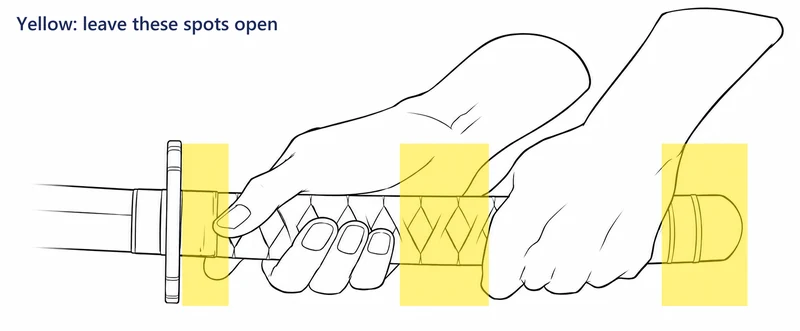
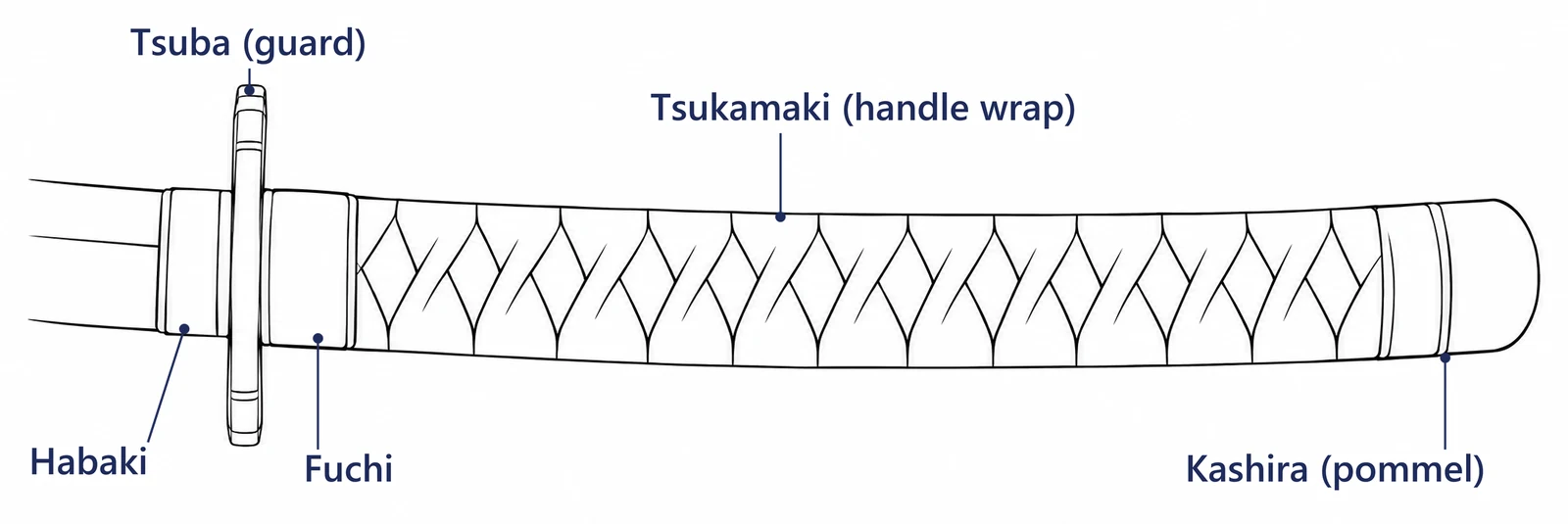
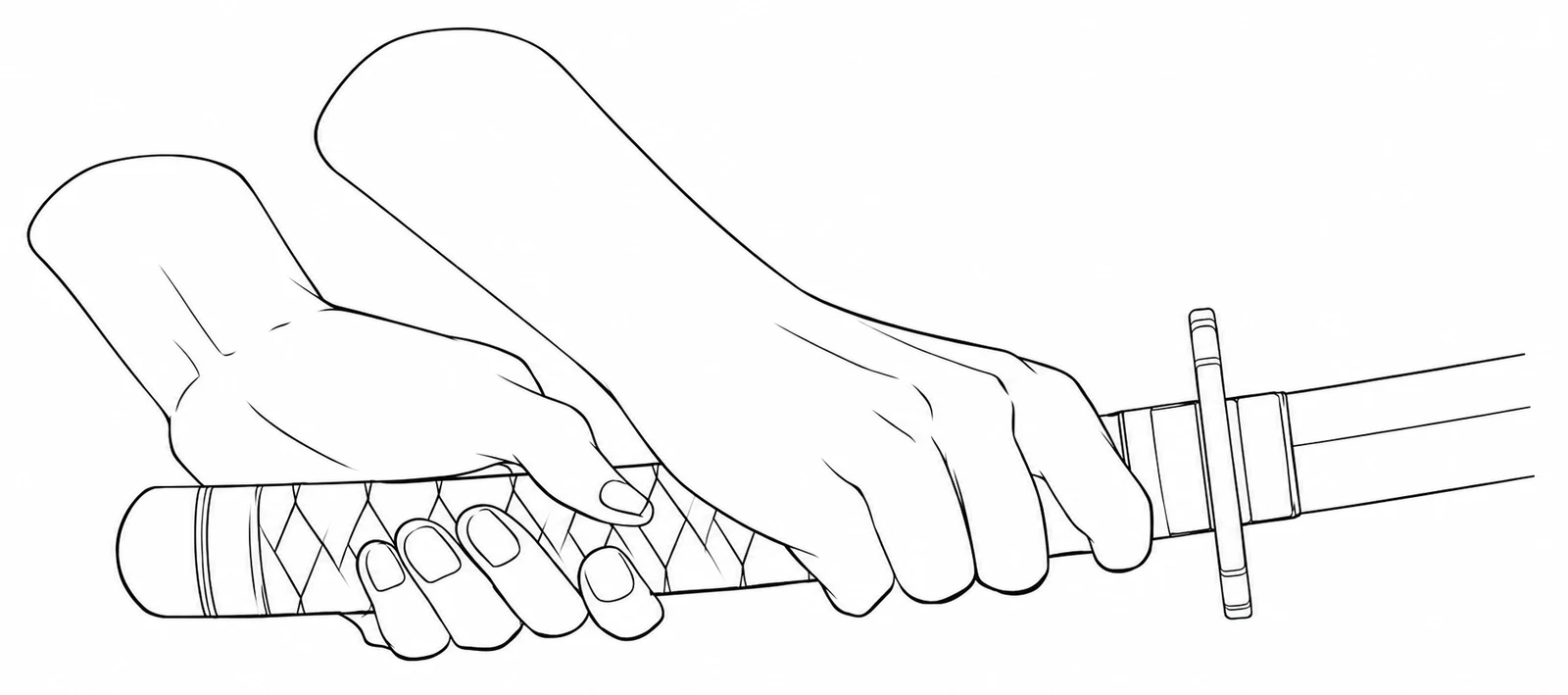
Right hand a little away from the guard, left hand short of the pommel, and both hands gripping at a slant.First, the parts. The tsuka is the whole handle you hold. The tsuba is the guard that protects the hand on the handle, the fuchi is the metal collar next to it, the tsukamaki is the wrap over the handle, and the kashira is the metal cap at the end. The habaki on the blade side keeps the blade from sliding out of the scabbard.
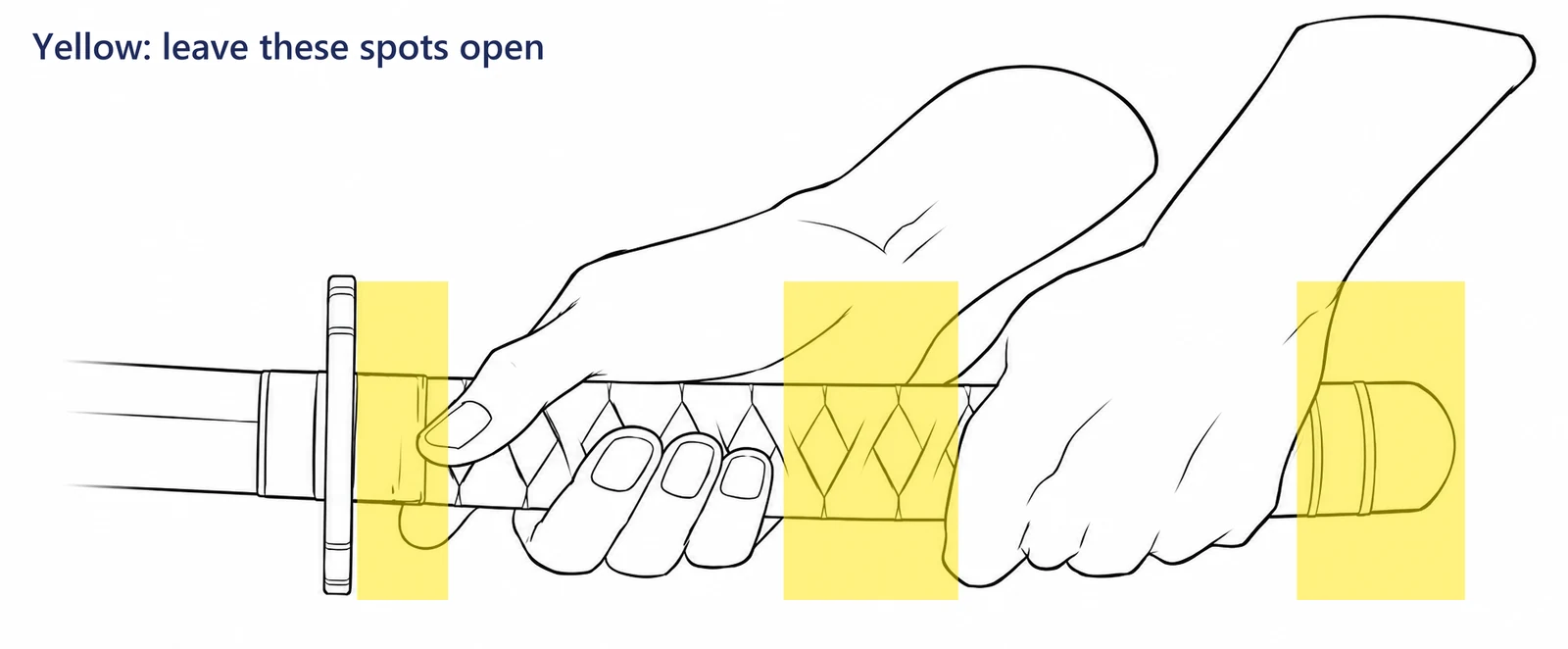
Now the grip. Leave the yellow spots in the picture empty. Put the right hand a little behind the guard, with the index finger just touching the fuchi, and the left hand near the end without covering the kashira. Both hands hold the handle at a slant. If the right hand sits right against the guard, the shock of a hit runs straight into it and the sword can slip out of the hand. If the hands touch, the blade wobbles on impact and the cut loses half its power.
 Construction study
 Construction study
 Construction study
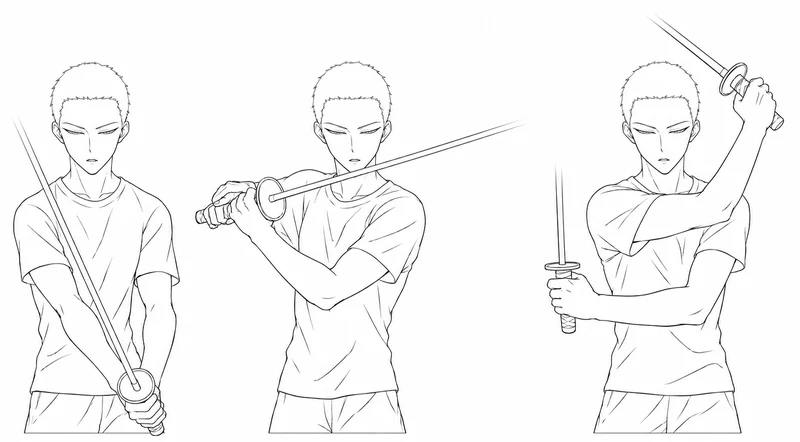
Step 02 · Ready, raise, swing
How do the shoulders move when a character raises and swings a katana?
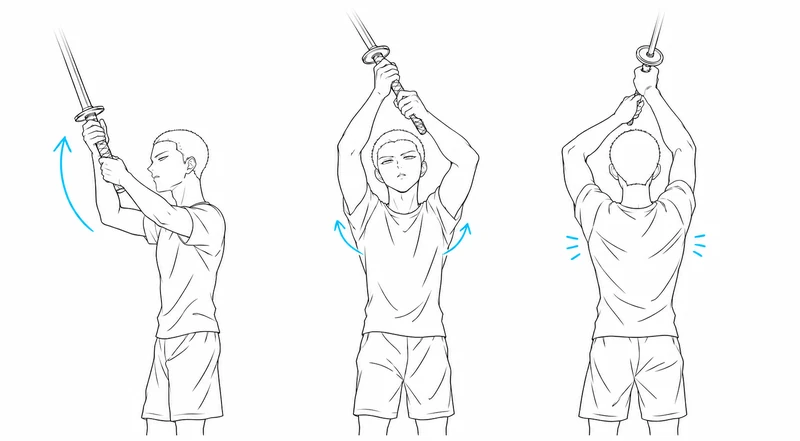
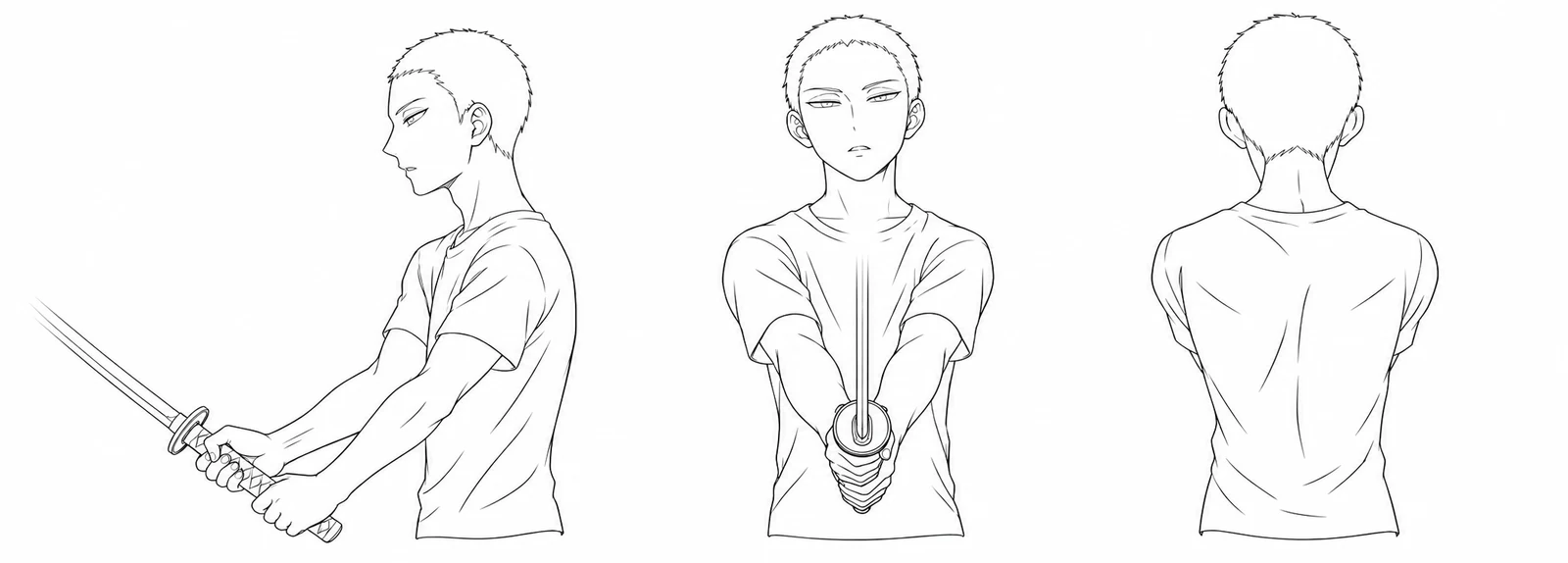
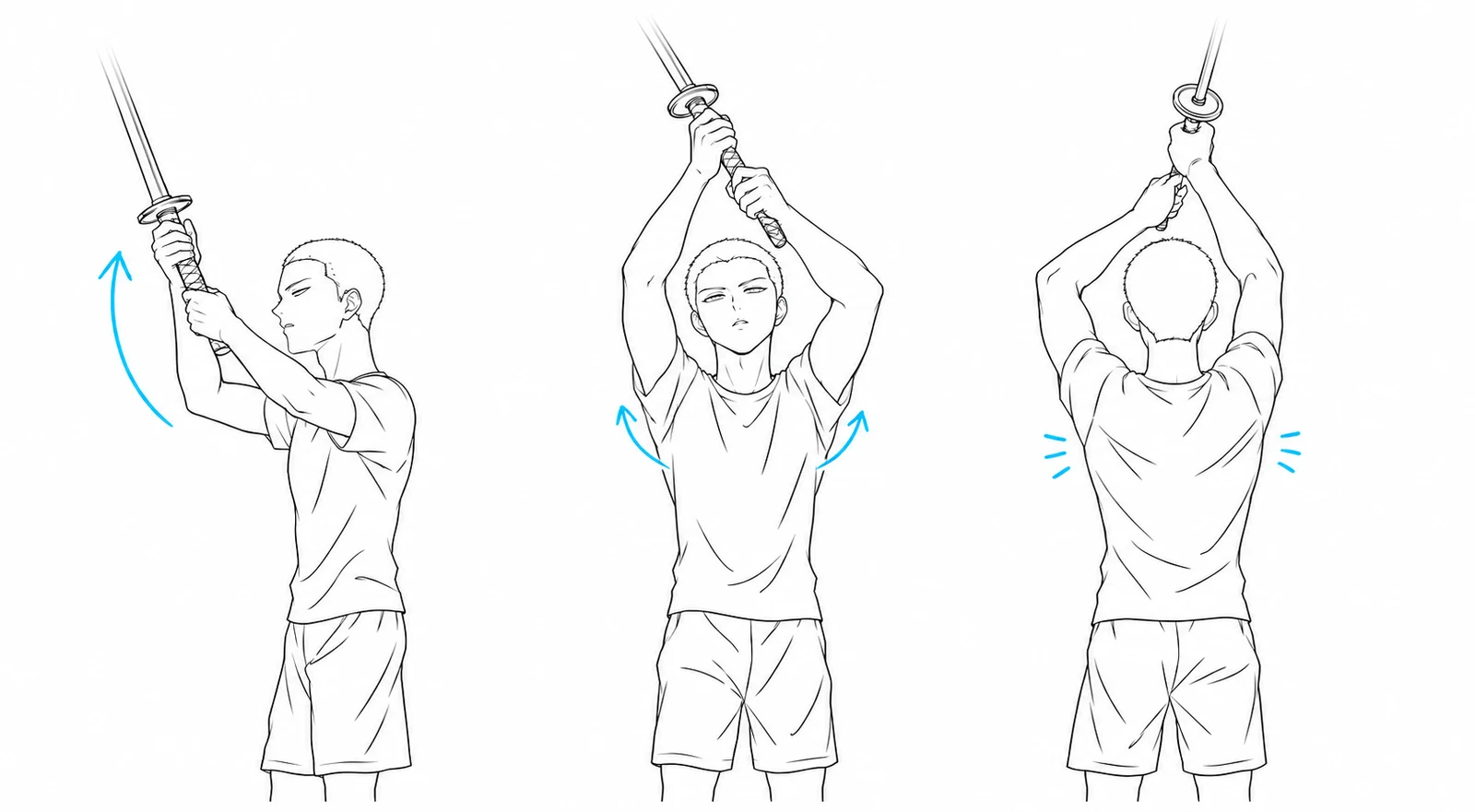
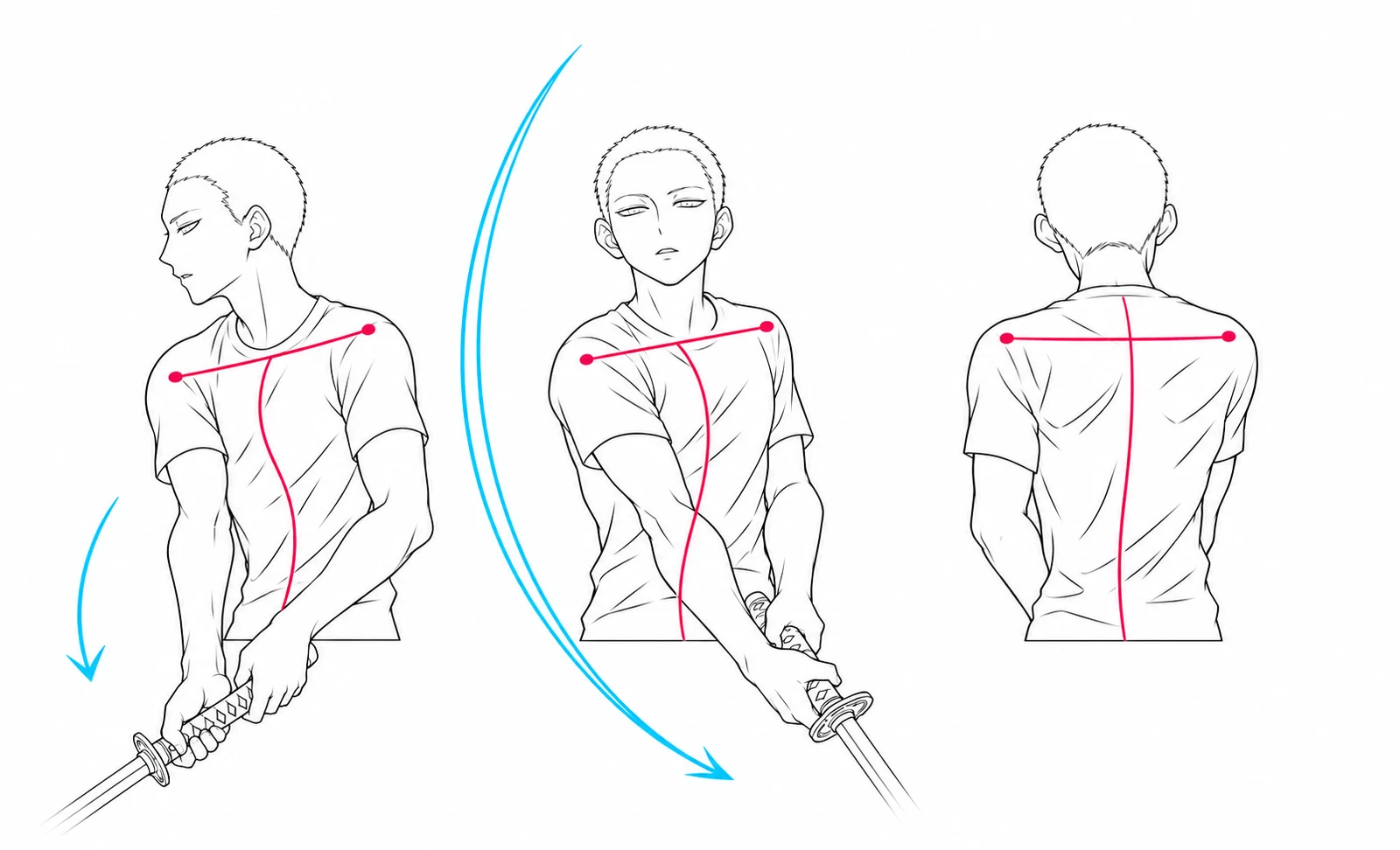
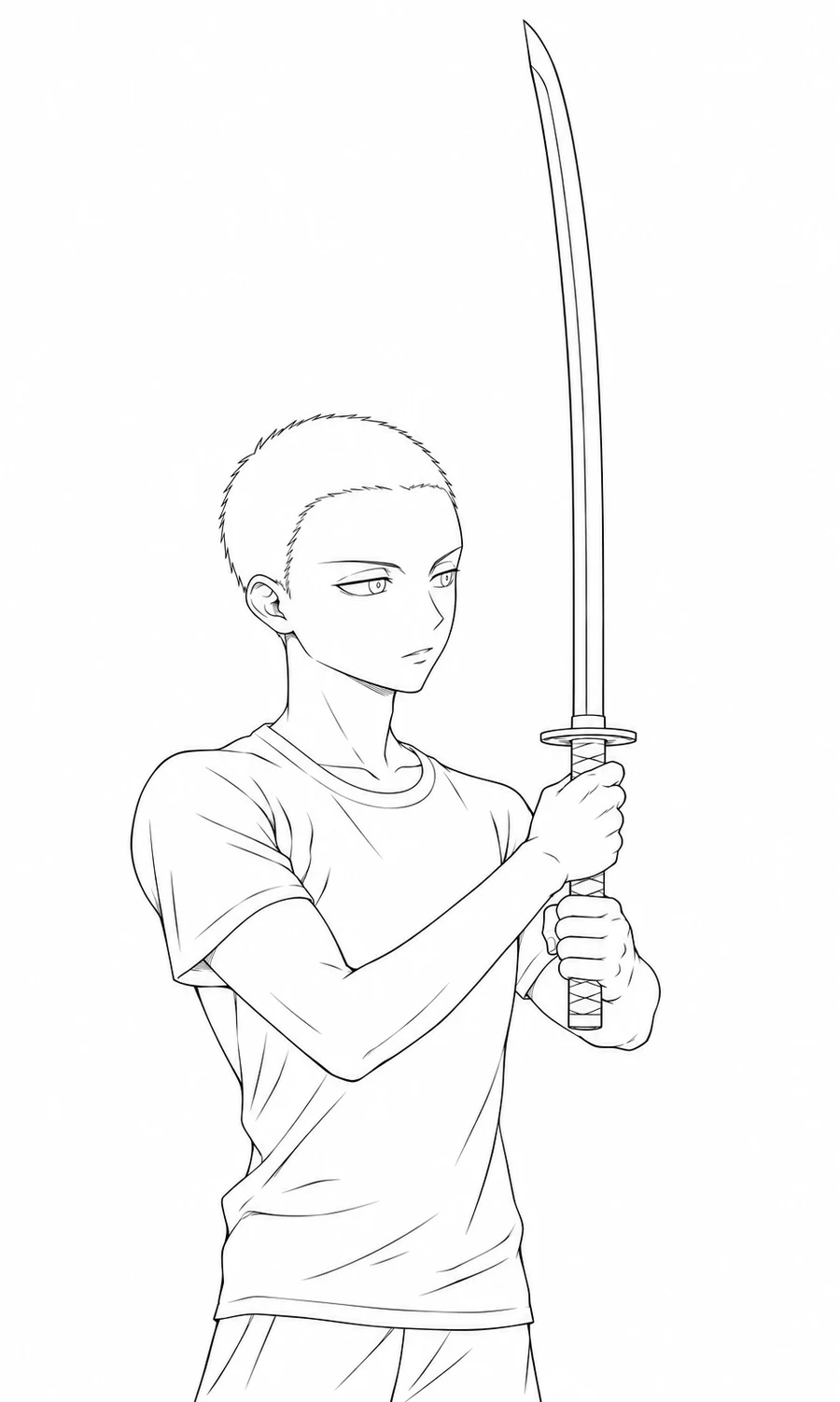
Raising lifts the arms from the armpits, and swinging down pulls the right shoulder forward and twists the body.In the ready stance, the left hand does most of the work of holding the sword up. From the front, the sword is pointed straight at you, so the whole shape looks thin and sharp.
To raise the sword for a diagonal cut, don't lift it straight up: let it tilt a little. The arms rise hard, so the muscles from the armpit to the chest get pulled up, and from behind the shoulder blades stand out. To swing down, bring the right shoulder forward and pull the left hand back hard, so the blade draws a crescent. The cut comes from the upper right down to the lower left, so the sword drags the right side of the body forward and the torso twists a little. The pink lines in the picture show the shoulders and the spine.
 Construction study
 Construction study
 Construction study
 Construction study
Step 03 · Two swordsmen
How do you draw two characters in a sword fight?
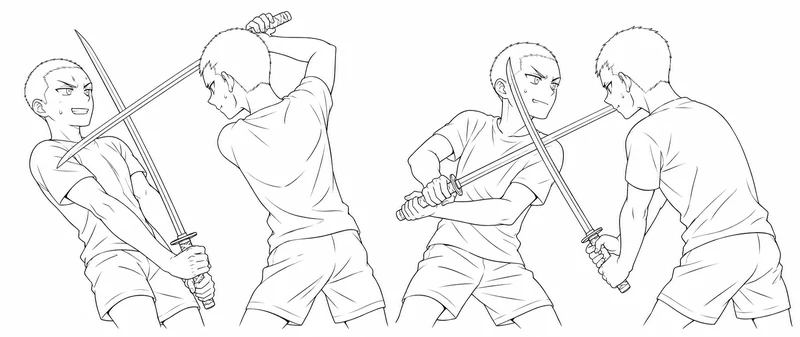
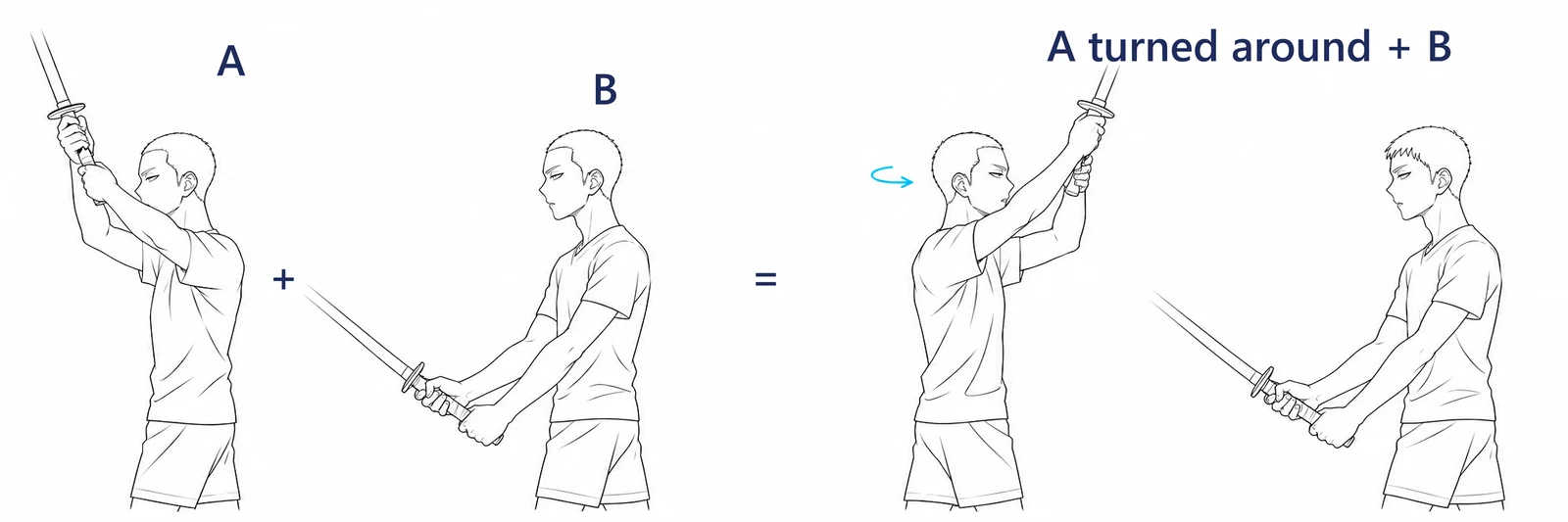
Draw each person's pose on its own, then turn one around so they face each other.With two or more people, one usually attacks and the other takes the hit. It sounds hard, but you don't have to plan the whole scene at once. Take two single poses from the last step, like the raised sword (A) and the ready stance (B), turn A around so it faces B, and you have a standoff.
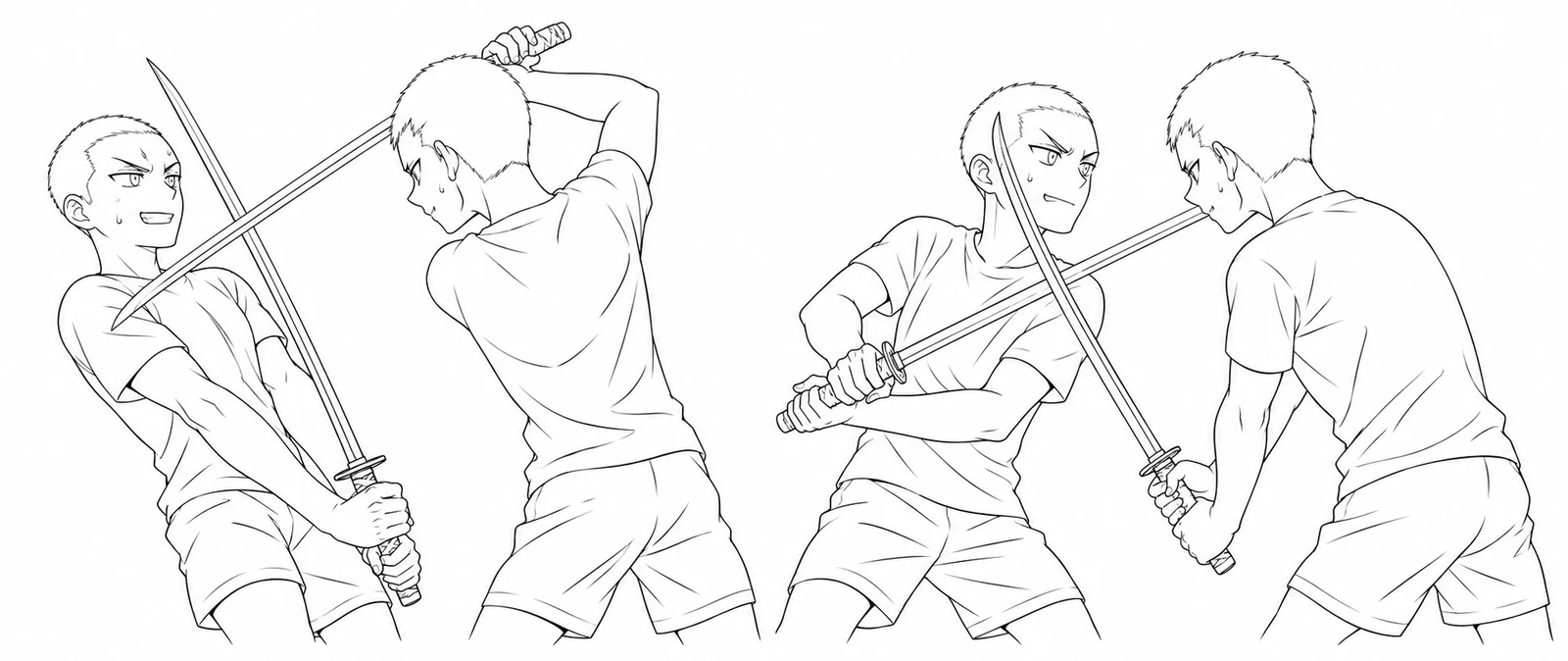
Once that works, push it further: swords crossing in front of the faces, or one fighter blocking while the other, seen from behind, cuts down.
 Construction study
 Construction study
Step 04 · Stances
How do you draw different sword stances?
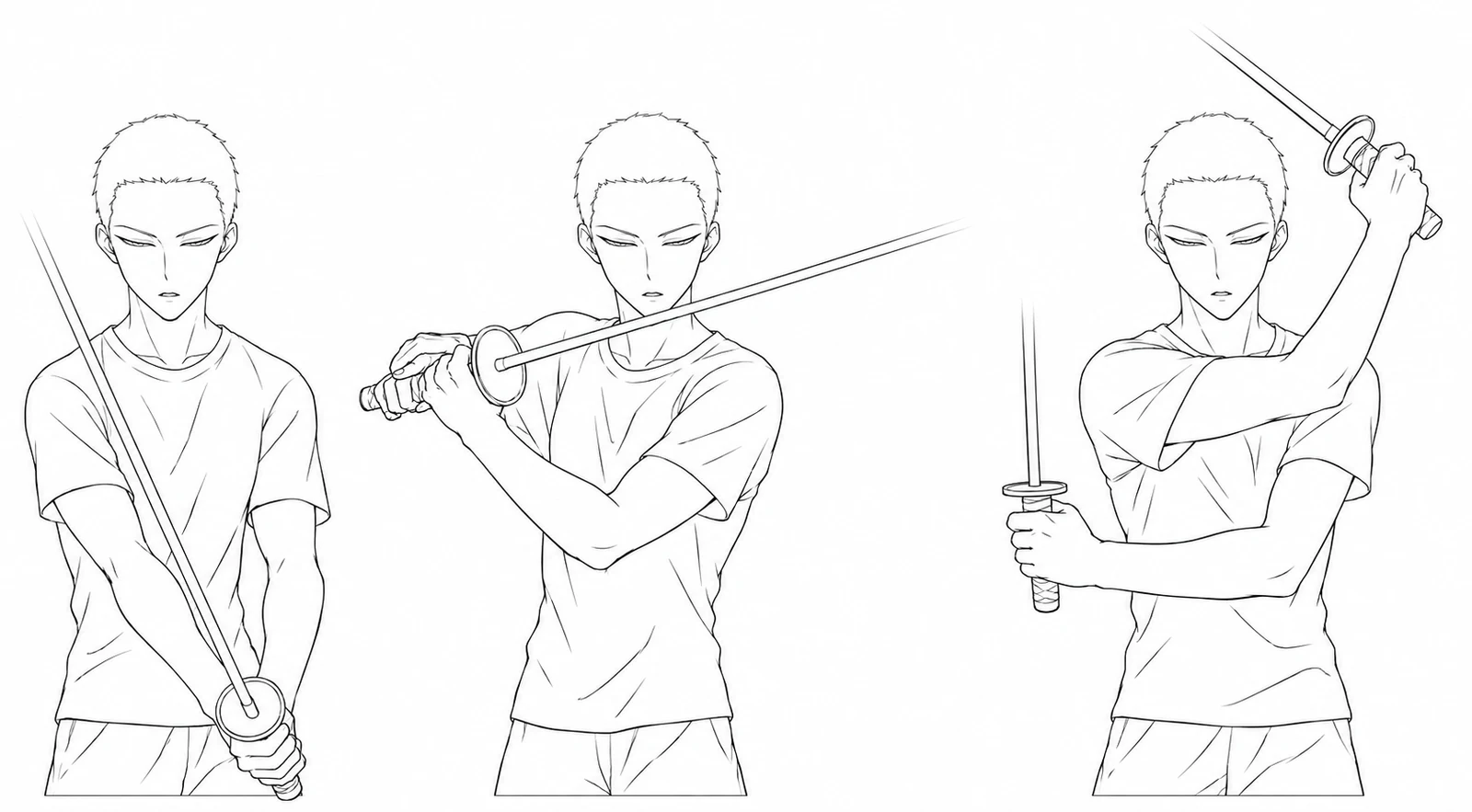
Tilt the sword, add a second sword, or keep the body still and move only the arms around the sword.In the middle of a real fight, a neat, by-the-rules stance isn't always possible. Hold the sword at a slight angle, break the posture a little or let the blade shake, and the character looks desperate. With two swords, the arms cross and the balance changes, because there is a blade in each hand.
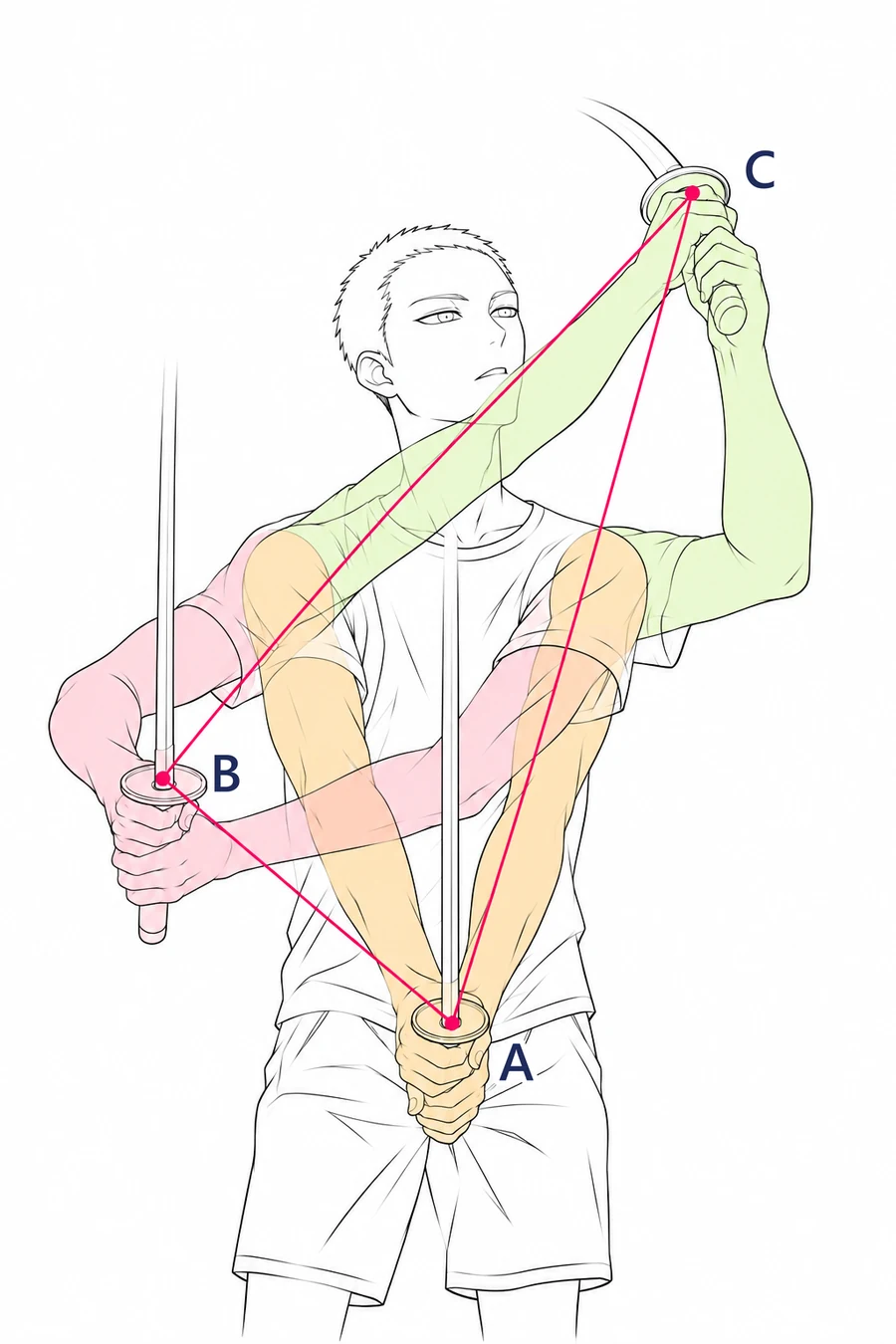
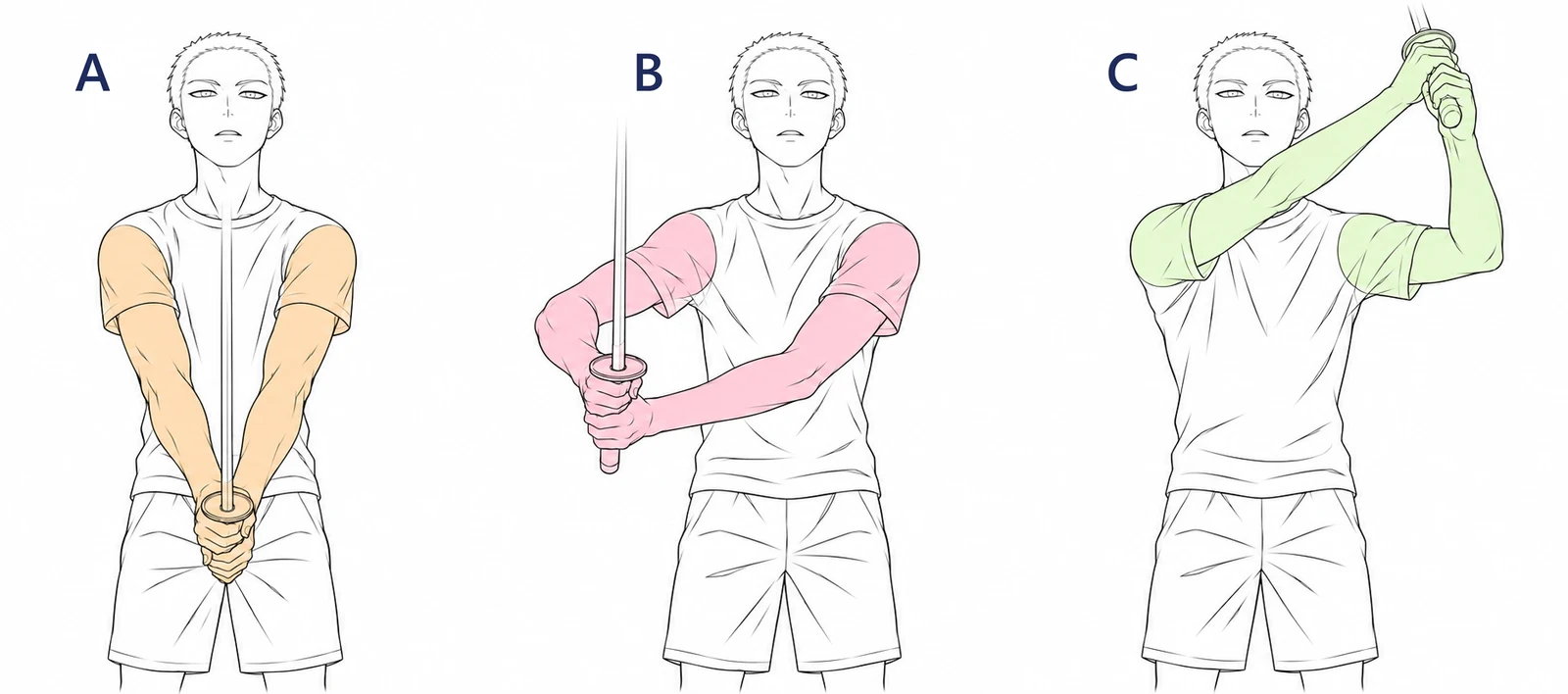
Here's a quick way to get new stances. Draw the body facing forward first, then draw both arms holding the sword normally (A). Now treat the sword as the center the arms move around. Move it a little to the character's right side and the left arm stretches across while the right arm bends and pulls back a little (B). Move it up to the character's upper left and the right arm stretches while the left arm bends, which turns into a raised sword (C). Same body, very different poses.
 Construction study
 Construction study
 Construction study
Step 05 · Pose ideas
How does a sword pose show who the character is?
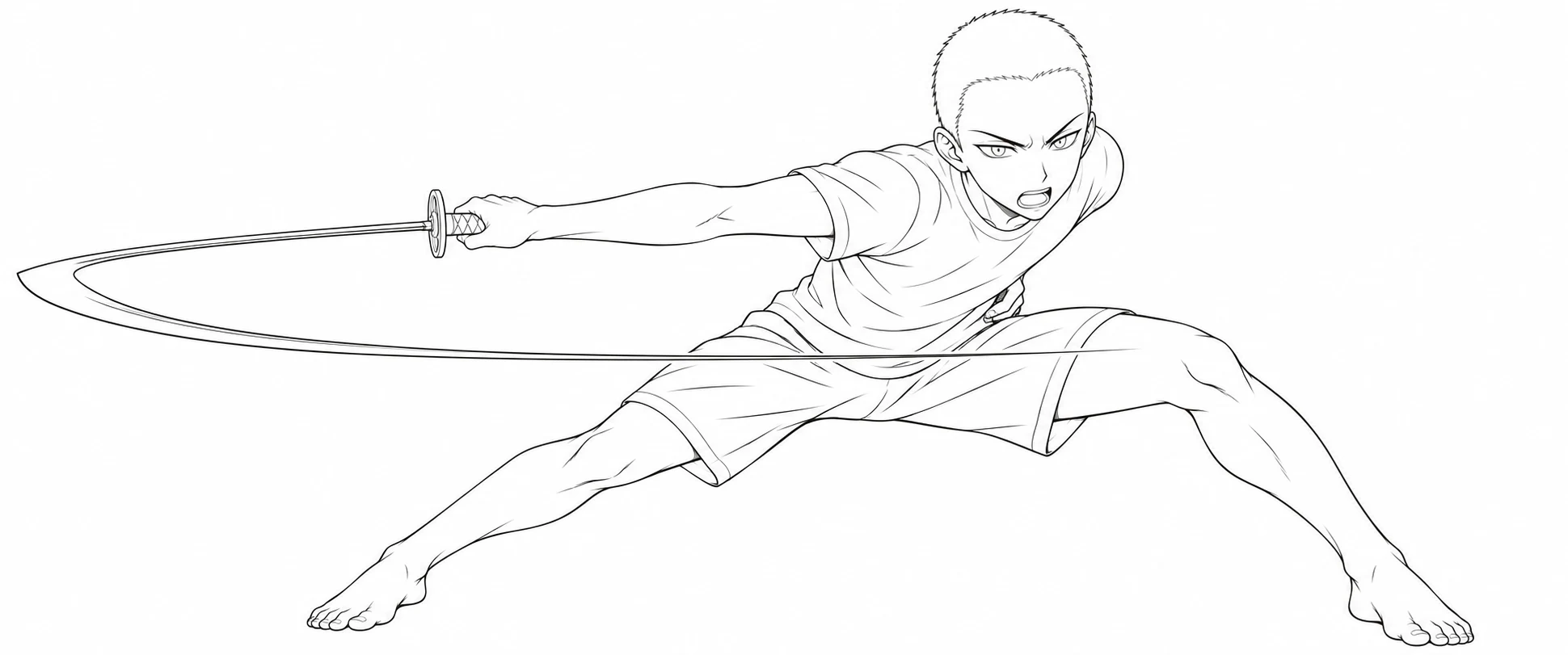
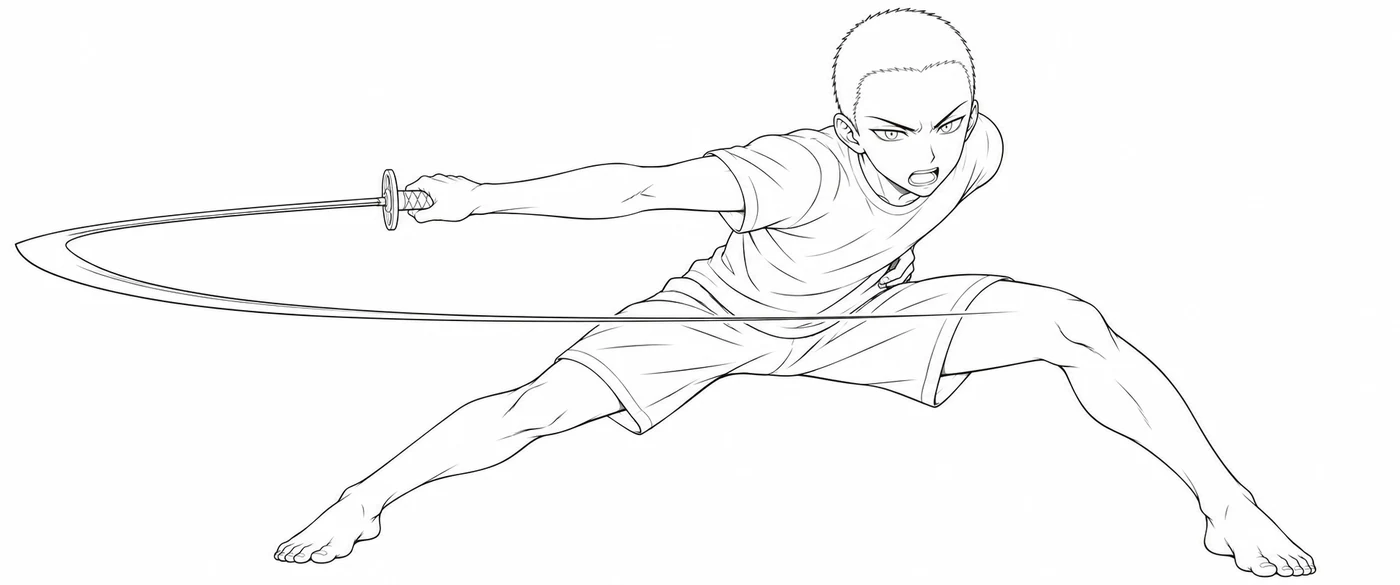
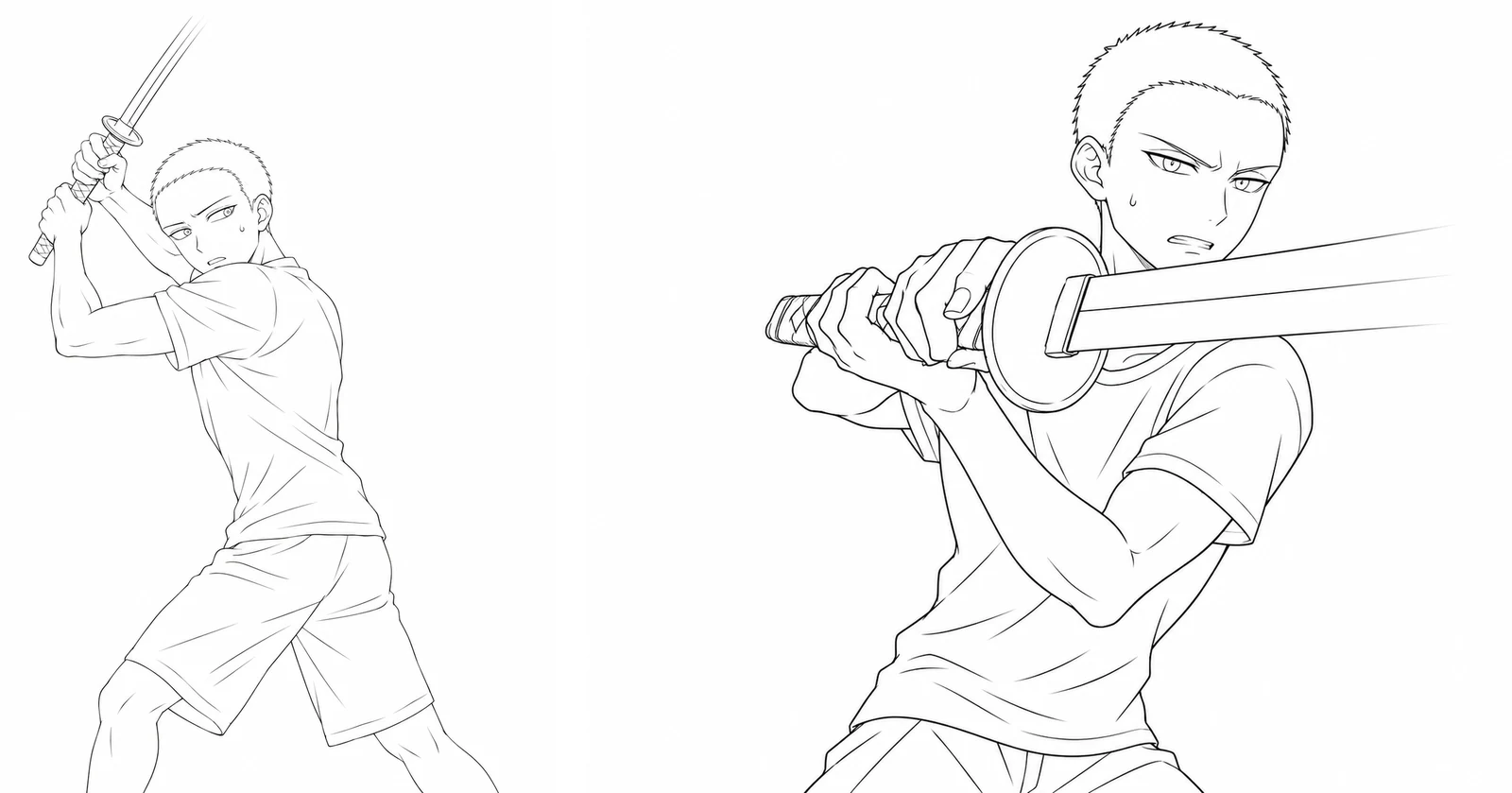
The stance tells the story: a nervous stance with the hips pushed back looks like a beginner, and a low, wide slash reads like a scene from an anime.A nervous face and the hips pushed back make a character look new to the sword. Push the sword far forward with too much force in the body and draw it big with strong perspective, and the character looks uneasy about the weapon in their hands.
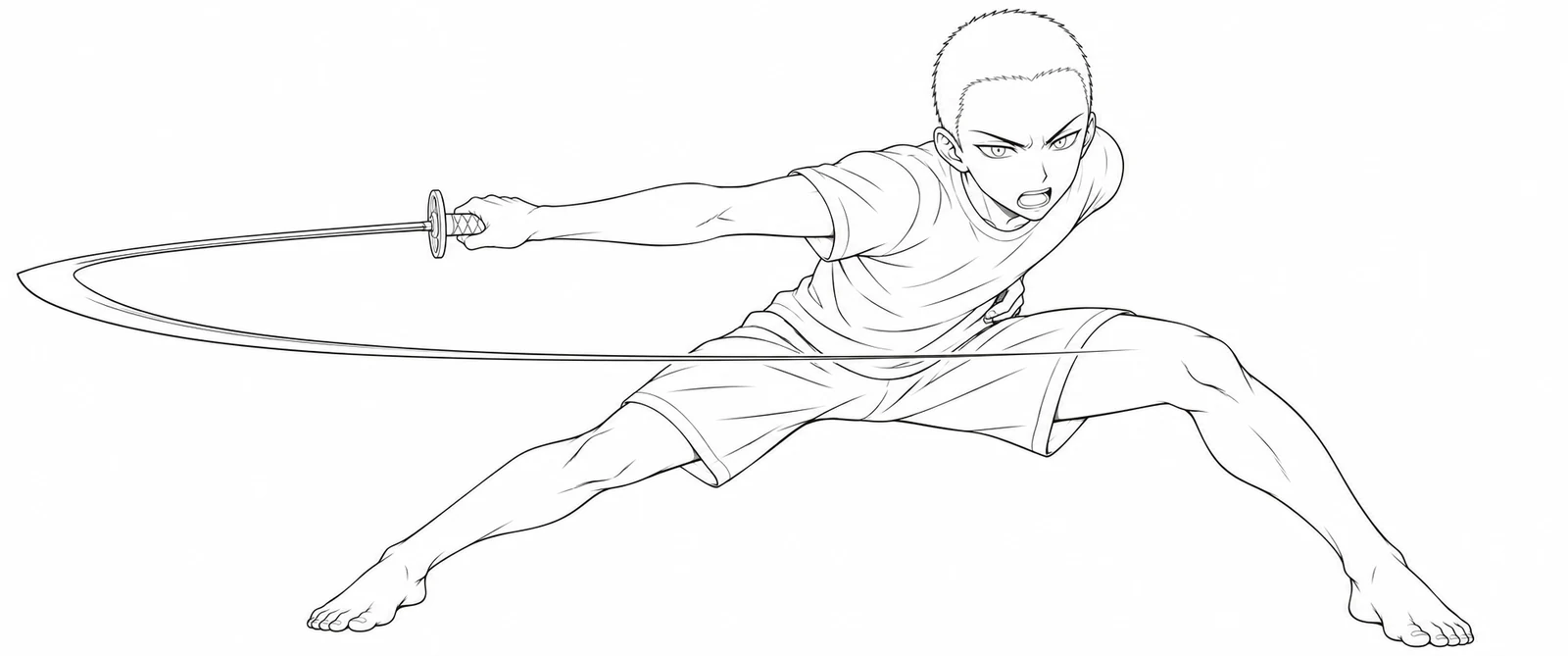
For a full slash, drop the upper body low and spread the legs wide to hold it up. Leave the trail of the blade from the draw to the cut, and the picture reads like one frame of an anime fight.
 Construction study
 Construction study
Where people usually get stuck
My character holds the katana like a baseball bat.
Separate the hands. The right hand goes a little behind the guard and the left hand near the end, both at a slant, with space in between.
The swing looks like only the arms are moving.
Bring the right shoulder forward and pull the left hand back. The blade draws a crescent and the body twists with it.
All my sword poses look the same.
Keep the body and move only the arms around the sword, or tilt the blade and break the posture a little.
Anime sword fight drawing FAQ
Where do the hands go on a katana handle?
The right hand goes a little behind the guard, with the index finger just touching the metal collar. The left hand goes near the end without covering the pommel. Leave space between them and hold at a slant.
Why shouldn't the hands touch on a katana grip?
When the blade hits something, the shock comes back into the hands. If the hands touch, the blade wobbles and the cut loses power. Space between the hands gives the shock somewhere to go.
How do I draw two characters in a sword fight?
Draw each pose on its own first, like one raised sword and one ready stance. Then turn one of them around so the two face each other.
How do I get feedback on my sword fight drawings?
When you join an Anime Art Academy course, a professional Japanese artist gives you personal advice and draws red-line corrections directly on your drawing. There is no limit on how many times you can submit. The only rule: post one drawing at a time, and wait for your teacher's reply before posting the next.